


By: Robert Beanblossom
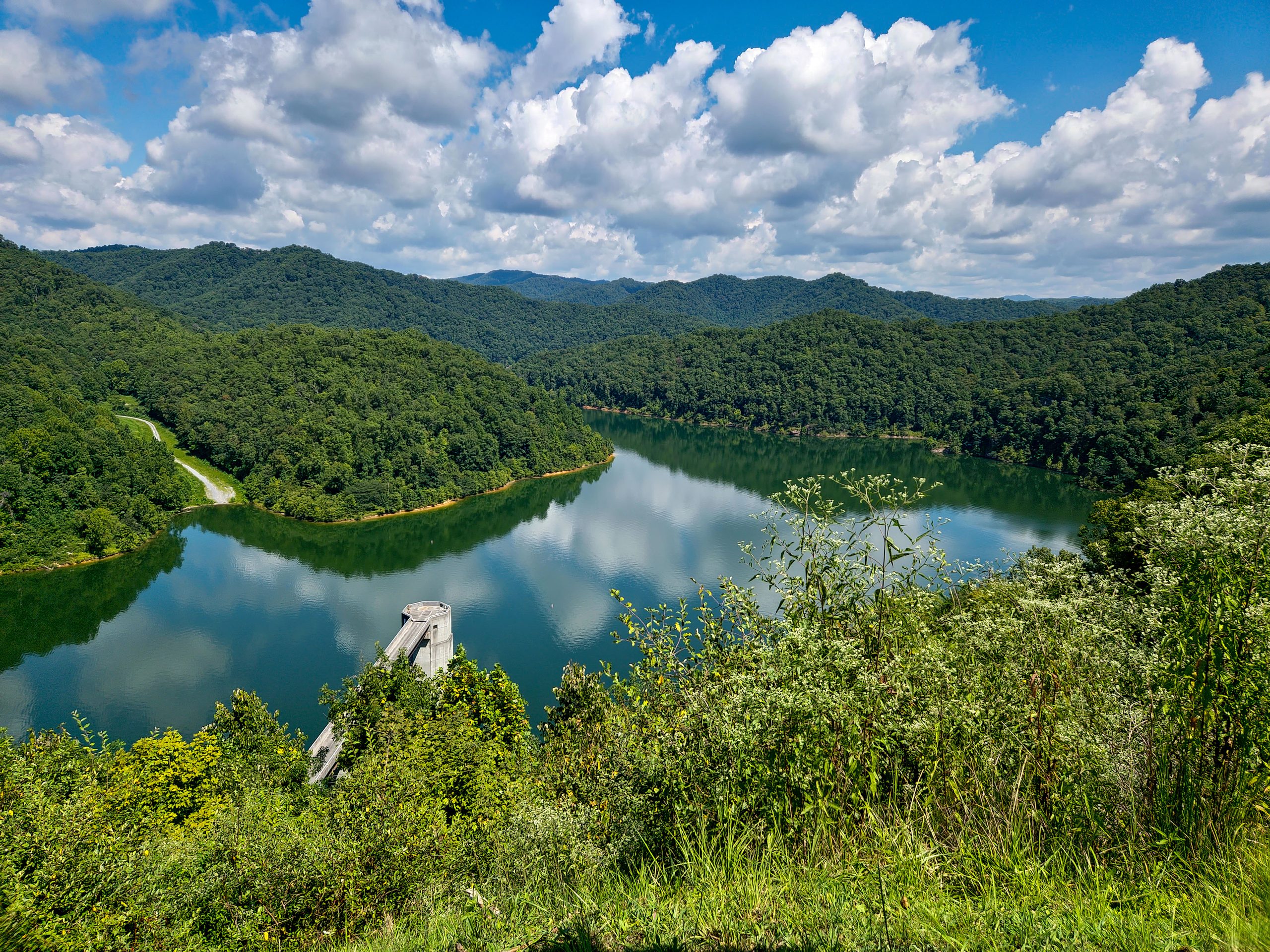
If you were standing on the balcony of the present-day R. D. Bailey Lake Visitor Center and looked “right smack dab’ in the middle of the lake, you would be viewing the former site of Codgertown, a small community that hugged the banks of the Guyandotte River along the Mingo-Wyoming County line before the construction of the reservoir led to its demise in the early 1970s.

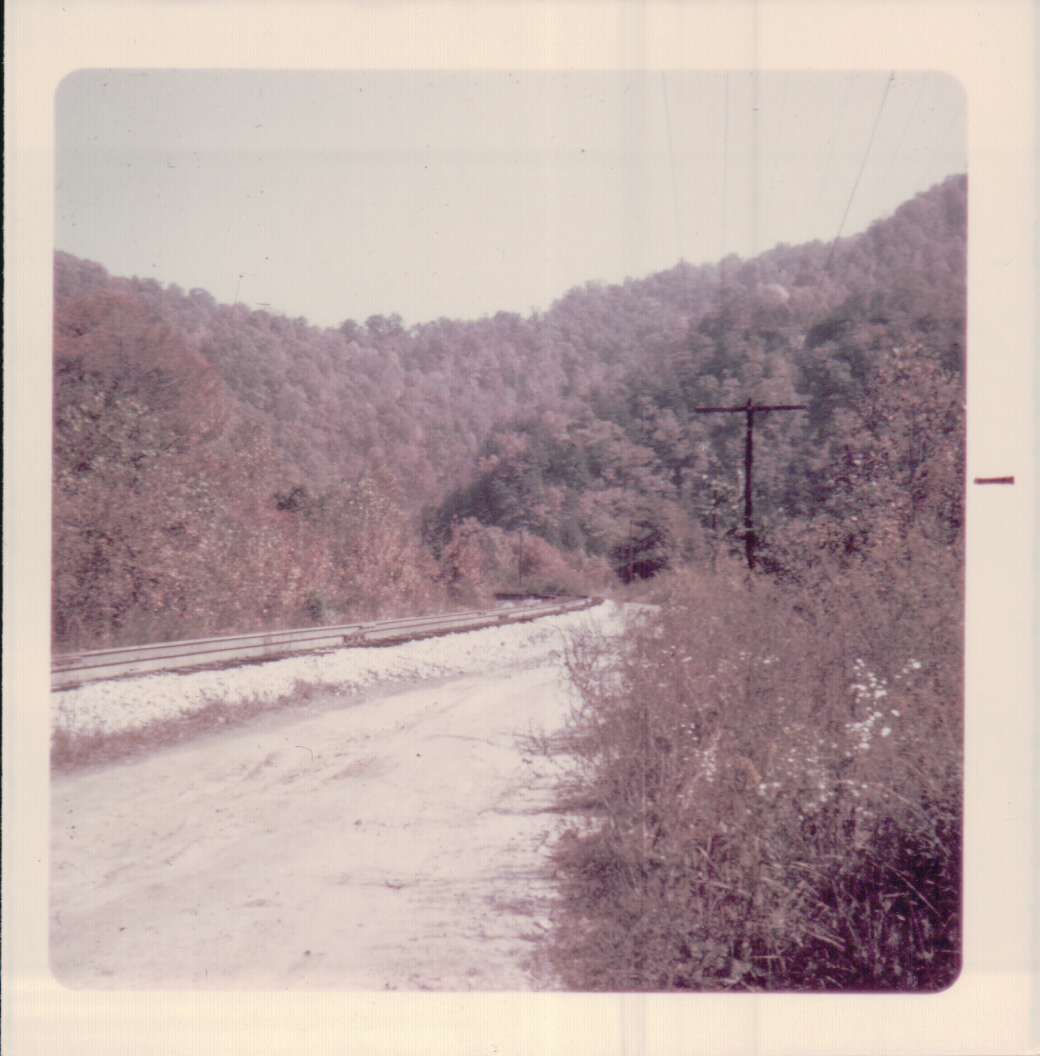
Codgertown was about two miles upriver from the town of Justice. It wasn’t even a hamlet. By the late 1950s six families lived on the Mingo County side of the river and about two or three lived on the Wyoming side. To reach the Wyoming side you either had to walk the railroad tracks or risk travelling on a narrow dirt road adjacent to it. Sometimes if the water level was low, you could ford the Guyandotte River opposite the mouth of Little Huff Creek and make it. My dad tried that once but tore the muffler off his car. Either way, you only reached the lower portion of the community. Access to the Wyoming County side required walking across a narrow railroad bridge, crossing another ford in low water, or by johnboat.
Growing up in Mingo County, my life intertwined with several individuals who either grew up or lived there. My first recollection of Codgertown may have even had an influence on my life. When I was five years old, we lived at Justice next to Arden and Arlene Walls. Arlene grew up in Codgertown and her parents – Mr. and Mrs. Duff Blankenship still lived there and invited all of us for Sunday dinner one March or April afternoon in the spring of 1960. I was about six years old and in the first grade. As we were walking back to Justice, we encountered a group of boys carrying these funny looking tools that I had never seen before. After exchanging idle small talk, they turned and headed up Lost Branch which lay between the two communities. That memory remained with me and years later I was able to figure out in retrospect that those “funny-looking tools” tools they carried were fire rakes and they were responding to a forest fire.
As I grew into my teens, Codgertown became a favorite fishing spot. My Dad, along with one or two of my uncles, would go there on weekends to stay up all night fishing for catfish, bass or carp or whatever else we could catch. I had a battery-powered transistor radio that I always carried with me. In the early evening before dark, I could usually get WLOG or WVOW from Logan and listen to Cincinnati Reds baseball games. After nightfall, I tuned to WOWO in Fort Wayne, Indiana – my favorite station back then. WOWO was a 50,000-watt powerhouse that broadcast all the latest 1960s rock and roll hits. On Saturday nights I listened to the Grand Old Opry on WSM in Nashville, Tennessee.
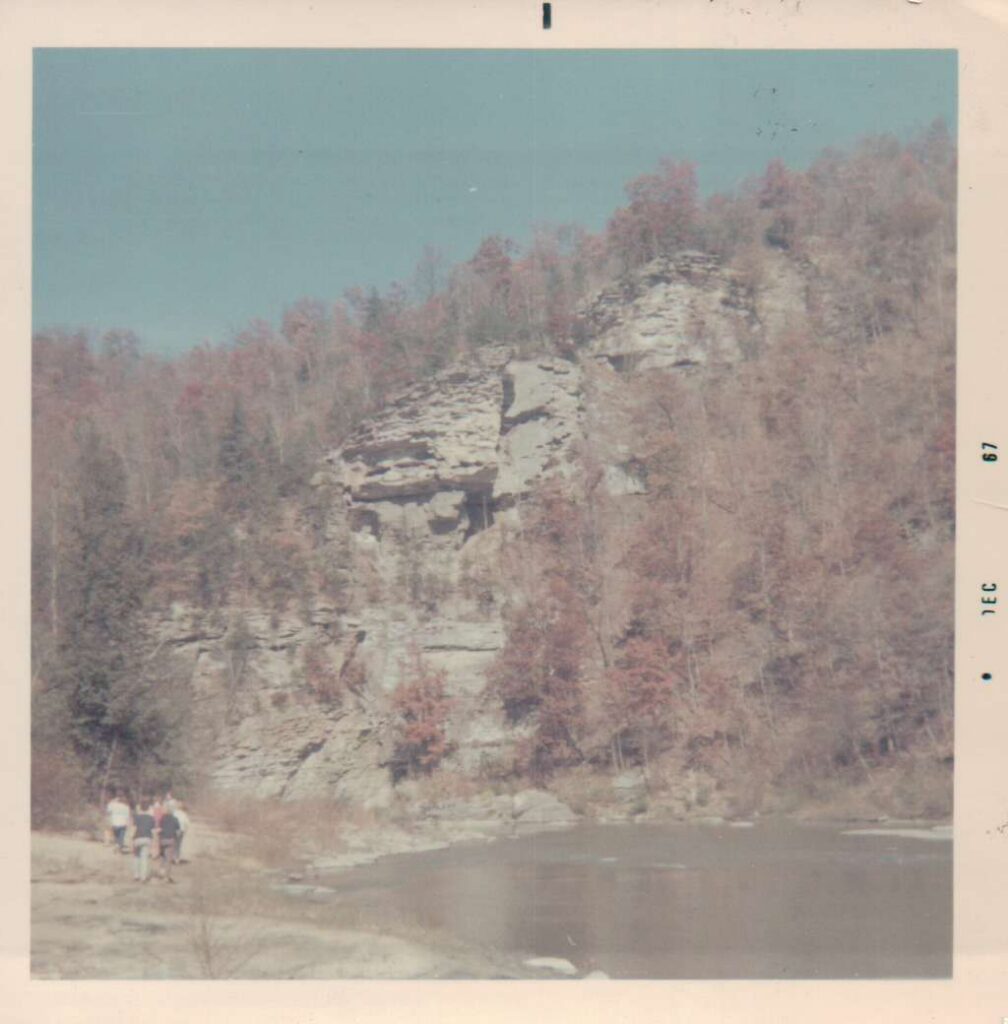
There were two good fishing holes. One we called the “Perry Hole” named for Mrs. Perry who still lived there and the other was further up but a little downstream from the railroad bridge. Sheer rock cliffs flanked that hole on the opposite side of the river. Just to the upstream side of those cliffs was a small trickle of a stream on the east side of the river. For some reason it was called Salt River, so this became the “Salt River” hole. At one time there was even a local gospel singing group called the “Salt River Singers.”
To me Codgertown was the nicest spot in Mingo County, and I loved hearing stories about the place. One of those that persisted for many years was the legend of “Ole Thump”. Several individuals fishing along the banks of the Guyandotte River near Codgertown late at night reported hearing a distinct, rhythmic thumping sound. Over time, this account circulated widely and became a well-known local ghost story.
The mystery of Ole Thump was finally solved during construction of the R.D. Bailey Dam. It was claimed that workers for the U. S. Army Corps of Engineers found out early in the construction that there was a prehistoric underground river flowing directly below the riverbed of the Guyandotte River in the area. It was widely accepted that Ol’ Thump was the result of rocks and debris moving and shifting below the Guyandotte River, causing an auditory illusion. What was happening was this: a large piece of rock would break away, and the sound would echo through the night air as it tumbled along the bottom -thump…thump…thump. Geologists dispute that explanation. There is no evidence to support the idea of a cavity or an underground river; but stories of Ole Thump ceased after construction of the dam.
My uncle Roy often told the story of hearing Ole Thump late one night while fishing. He packed up this gear and beat a hasty retreat to the safety of home. The legend may have sprung to life in 1948, when Ralph Justice, the brother of Cullen, wrote a book entitled The Ghost of the Guyan. The book details the early days of logging the watershed and describes Ole Thump.
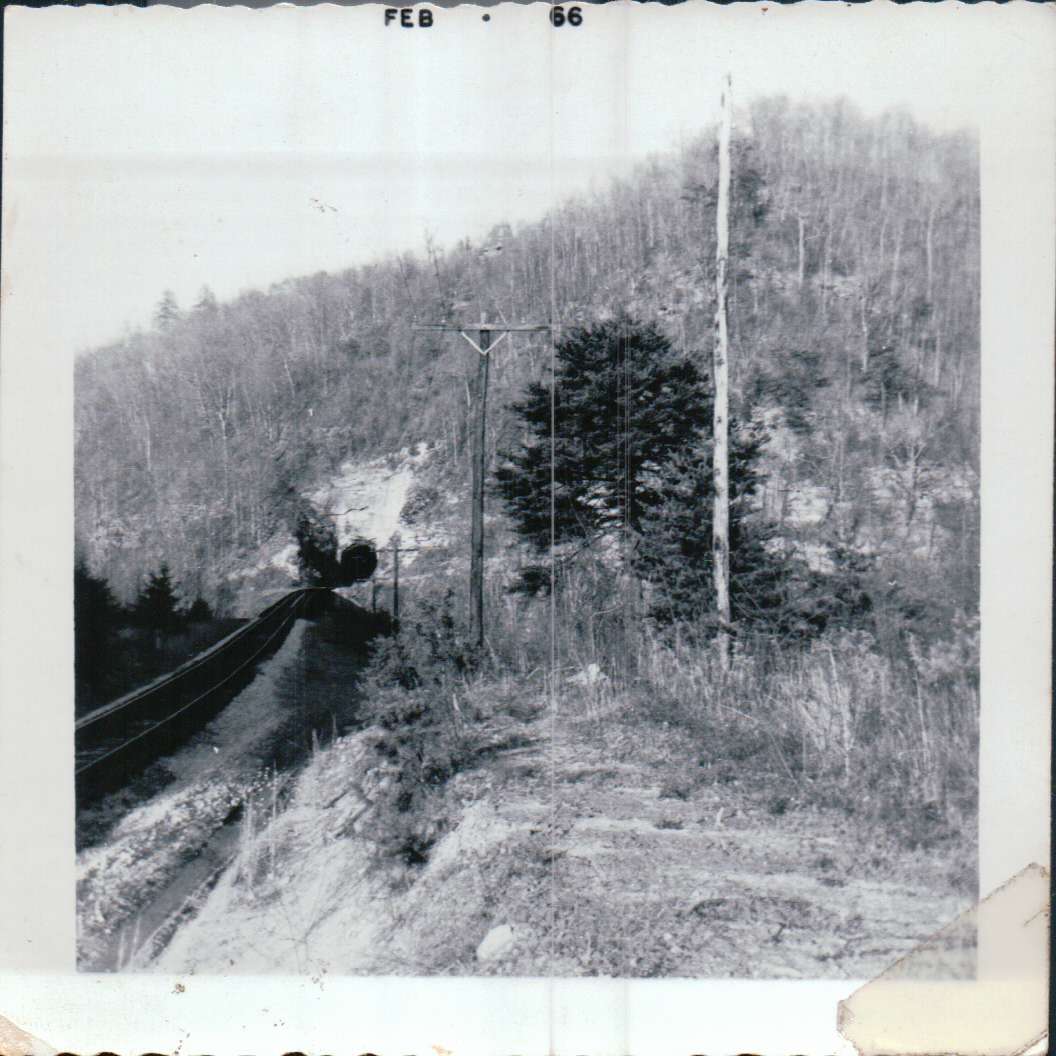
One of my favorite teachers at Gilbert High School was Zionel Walker and I especially liked his stories of Codgertown too. Zionel was my history teacher as well as a close family friend and grew up there. His parents were Verlin and Tressie Blankenship Walker and they lived across the railroad bridge on the Wyoming County side of the river. Tressie was the sister to Duff Blankenship. Zionel graduated from Gilbert High School in 1943. He related how he had to walk to Justice to catch the school bus. To get there he had to cross the railroad bridge. The bridge was a narrow structure several hundred feet long which held the ties and tracks only. If you were walking across it there was no way to escape a coming train except to run safely to land. What further made the bridge risky to cross was the fact the tracks immediately led into a long tunnel. If a locomotive was traveling downriver, you couldn’t hear it coming until it came out of the tunnel and by then it was almost on top of you. What was the scariest situation, according to Zionel, was when you were so far across the bridge that you had to run TOWARD the on-coming train to make it safely across!
His uncle Fred was caught on the tracks one morning mid-way across and with no time to run to either side, hung over the side clinging to the end of the ties holding the handle of his dinner bucket in his mouth until the train passed.
Zionel also told the story of arriving one morning at Gilbert High School shortly after the outbreak of World War II and was called from class and directed to immediately report to the principal’s office. When he arrived, he was surprised to find two FBI agents from Huntington waiting to interview him. They were performing background checks on anyone using or living near railroad bridges in the area. For a time, local individuals were employed to guard the bridge.
Zionel later was a staff sergeant in the Eighth Air Force and served his country as a waist gunner on a B-17 Flying Fortress in the European Theater. A member of the 367th Bombardment Squadron, 306th Bombardment Group, he earned the Good Conduct Medal, European African Middle Eastern Theater Ribbon, Army Occupation Medal (Germany) and World War II Victory Ribbon. He carried shrapnel in his arm the remainder of his life. After graduating college, he had a long and distinguished career as a social studies teacher at Gilbert High School.
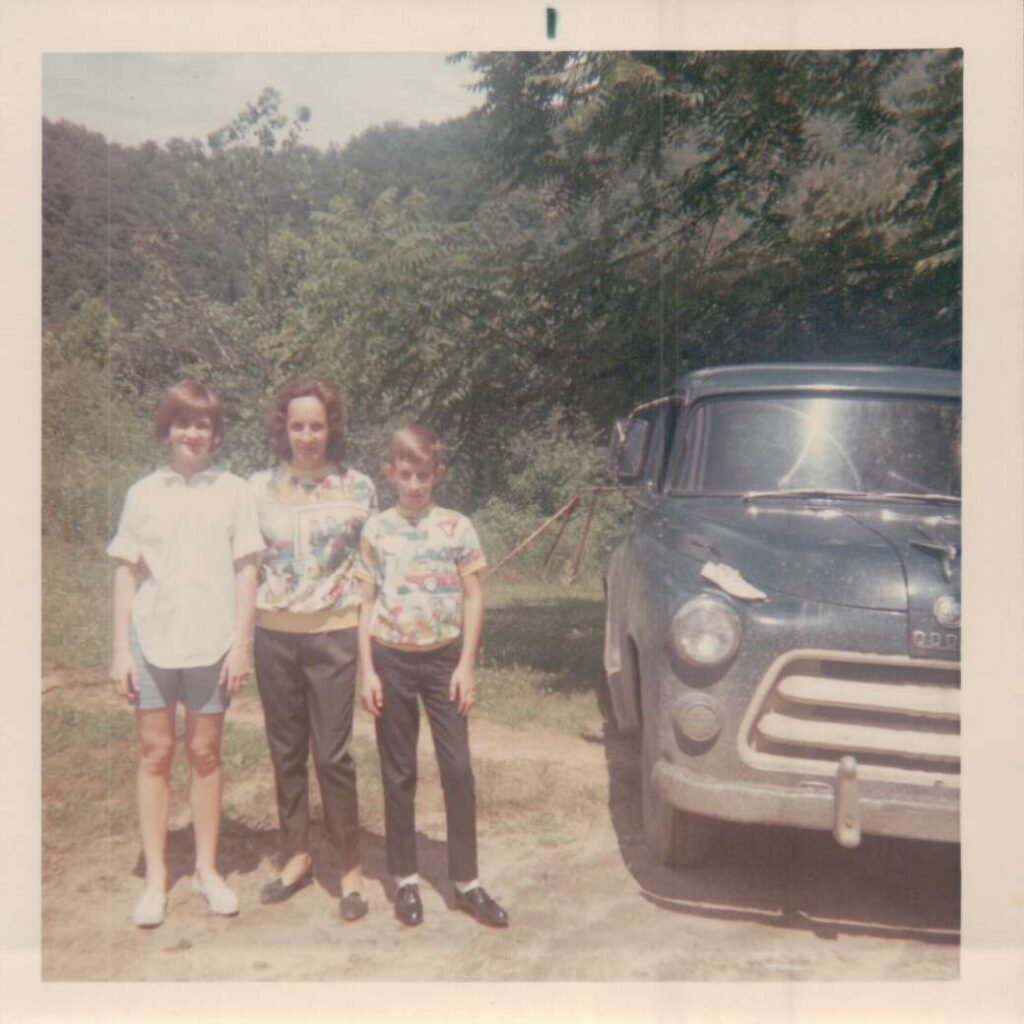
Charleta Wallace Brooks remembers growing up there. She related how her family moved from nearby Coal Mountain when she was about five years old and they lost their home to a fire. Her grandparents, McKinley and Murlie, owned a house in Codgertown that they moved into after the devastating blaze. According to her, “Growing up in Codgertown was just normal for my family. We really didn’t think anything of it. We had neighbors and did not feel isolated from the rest of civilization.”
She recalls somewhat of an idyllic childhood there. “We had a TV antenna up high in the mountains in front of our house. We had to go with daddy many times to adjust it. I played with paper dolls, and I would cut clothes out of catalogues to give them a larger wardrobe.
When she first moved there, Codgertown still had a school. Zionel Walker remembers starting his career there after graduating from college around 1950. When Charleta started the first-grade Dora Lou Justice was her teacher. The school was called Justice #2 and was located closer to the river than the homes in the community; but the school building burned on Saturday afternoon, February 14, 1959, when she was partway through the second grade, so she and her brother transferred to the “larger” school in the community of Justice along with about nine other students.
It was a two-mile, one-way walk along the railroad tracks to Justice each day. She and her brother, along with her dad, walked in all types of weather and both darkness and daylight. When she entered high school in the 7th grade, she would go to one of her aunt’s homes in Justice to wait until it was time to catch the bus. When school was over, she stayed at a grocery store owned by Clell Allen at the upper end of town until “Daddy got off from work and picked us up to walk home again in the evening.”
“I always had perfect attendance.” she recalls.
Justice #1 or Justice Grade School, as it was more commonly called, consisted of two wooden buildings. The larger of the two contained two classrooms with a foyer. In the early 1960s, the first and second grade was taught by Maxine Steep in one room; the other was for the fifth and sixth grades with the teacher – Cullen Justice – doubling as principal. The third and fourth grades were taught in the other, smaller building by Joan Perry. Both buildings were heated by a coal-fed, pot-bellied stove that was set in one corner of each room and two outhouses provided meager toilet facilities. There was no hot lunch program but beginning with the administration of President John F. Kennedy in the early 1960s students could buy individual cartons of milk at reduced prices. For ten cents a student could purchase three cartons of milk – “two white and one chocolate.” The only organized recreation was a volleyball game held each recess with Cullen Justice as referee, and special holidays. Easter egg hunts, Halloween, Valentine’s Day and Christmas were celebrated in a big way and were an opportunity to raise much needed funds for the school. It closed in 1965.
Like anyone my age, my most indelible grade school memory is of a late November day in 1963. I was in the fifth grade. A low-pressure system had moved through the area the previous day bringing much needed rain but that Friday – the 22nd – was especially warm and sunny – unusual for that late in the fall. All of us kids were enjoying the weather and the afternoon recess with Principal Justice at his customary place refereeing his volleyball game. When he blew his whistle ending recess all of us scampered back to class but once seated, wondering why he had not returned. Unbeknownst to us, he had been called over to the post office, which sat across U.S. 52 from the school. Pearl Cook, the postmistress at the time, told him of the assassination of President Kennedy. Returning to the classroom he informed us of what had happened, tried to continue teaching and failed, then dismissed classes for the weekend. Like me, most other kids returned home sobbing- a traumatic, ugly day forever etched in our collective memories.
Charleta also relates how she and the other kids in Codgertown swam in the river during the summer although it frequently ran black with pollution from coal mines further upstream and played in the snow in the winter.
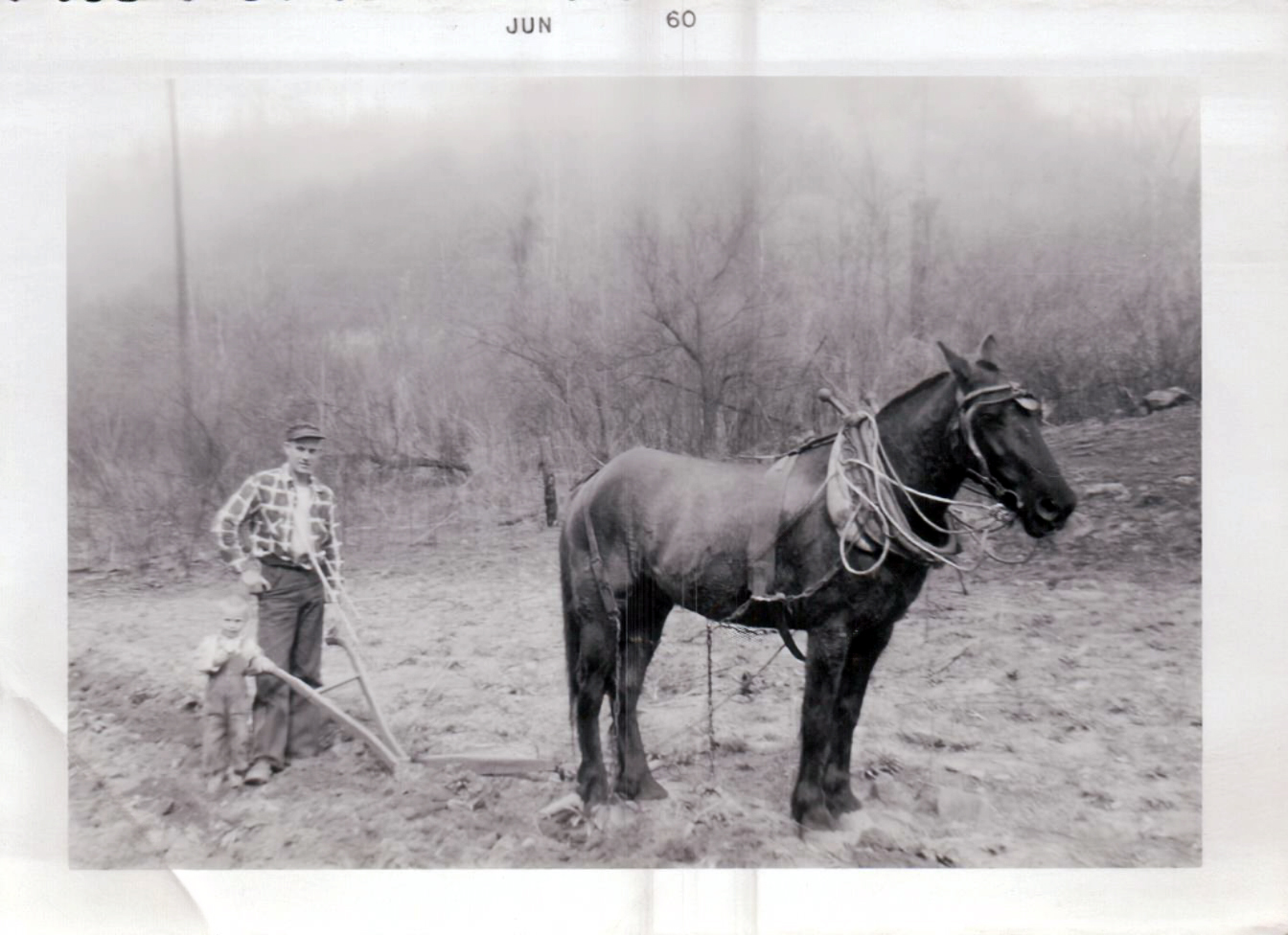
“We had horses, pigs and chickens. We put potatoes in a big hole in the ground so they would last all year. I watched my dad and others butcher a hog. We helped make apple butter and molasses outside from sugar cane which our neighbor, Opal Perry, grew.

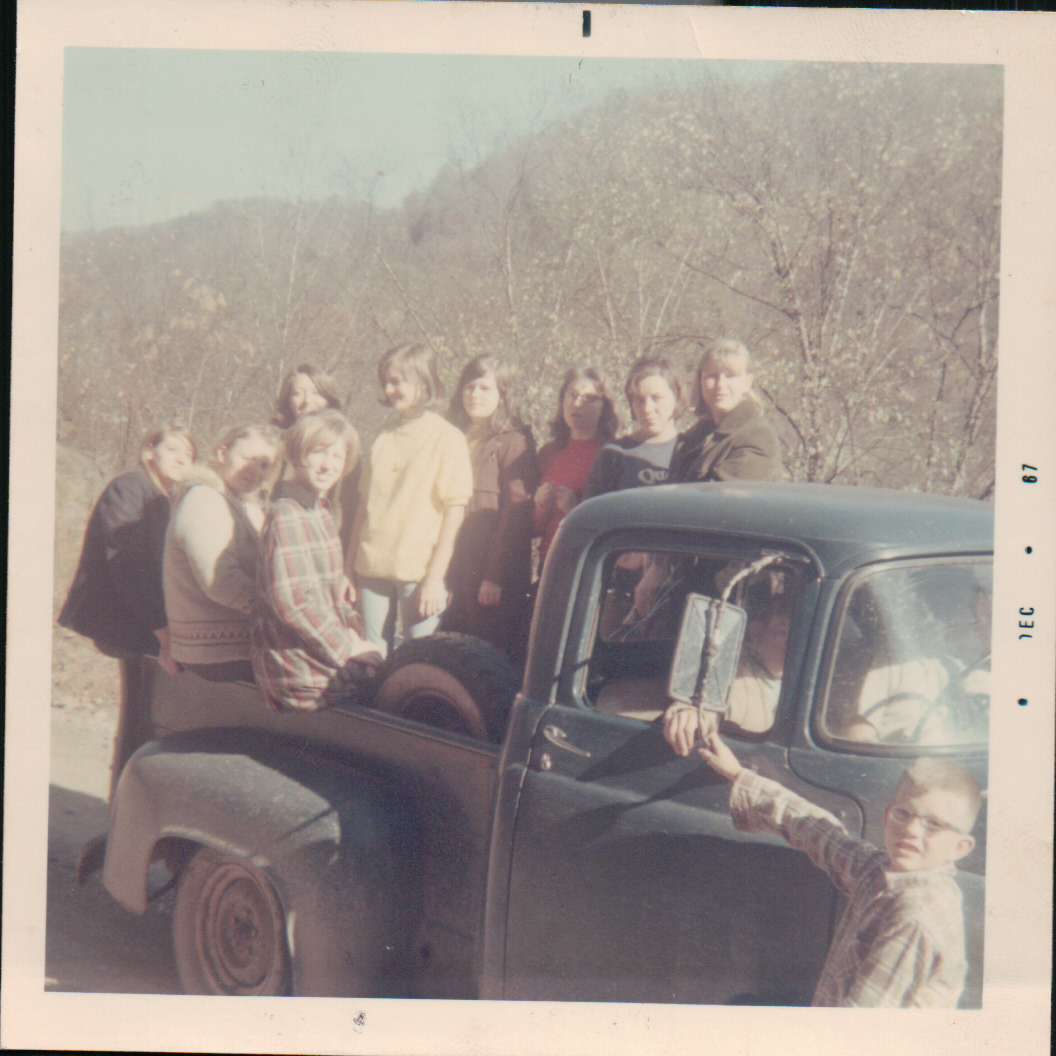
Charleta fondly recalls spending a lot of time with the neighbor’s kids. “When I was in the seventh grade and onward, I had pajama parties with several close friends staying with us. Daddy would take a few of us girls to Welch every Saturday night to a dance held at the theater and then return on Sundays to take in a movie.”
Along with other families, the Wallace’s lived in Codgertown until the US Army Corps of Engineers purchased their property to make way for the construction of the R. D. Baily Dam. “I was happy to leave there and move to Justice.”
At the upper end of Justice at the mouth of Justice Hollow was a swimming hole called “Boat Landing.” There the road climbed the hill to the railroad tracks and then ran parallel to the tracks to Codgertown. Bob Wallace would often leave his car there and walk the rest of the way home. On March 7, 1963, heavy rain across southern West Virginia caused the Guyandotte River to flood.
It was about 9:00 that night that my dad decided to take a look. Driving up to Boat Landing, he saw that Bob’s car was about to become overcome by the rising water. On a whim, he decided to try his car key on the vehicle, and it worked so he was able to move it to higher ground and save Bob’s vehicle!
That flood spurred efforts to secure federal funding for a dam on the Guyandotte River. The city of Logan along with other cities and towns in the valley had suffered catastrophic losses. West Virginia’s congressional delegation secured federal approval, and construction was begun in June 1967, but floods, budgetary woes related to funding the Vietnam War, and contractual difficulties caused delays. The entire project cost $180 million and was finally completed in 1980. The dam was the first rock-fill dam developed by the U.S. Army Corps of Engineers with a concrete face, a complex and difficult job. The 310-foot-high dam is the second highest in West Virginia (Summersville Dam is highest at 390 feet), and measures 1,400 feet across. In conjunction with its construction was a major project to relocate the section of railroad impacted by the project.
Another interesting story that happened in 1969 occurred at the upper end of Justice where U.S. 52 crosses the Guyandotte River. On the night of June 11th, the large steel bridge, carrying traffic across the river, was dynamited around 4 a.m. causing heavy damage as well as rattling windows of homes throughout the community.
Subsequently, three persons, including two juveniles, admitted to investigating officers they had dynamited the bridge, along with a smaller one, “just for kicks to harass the people of Justice and to make a little noise.” Dennis Stepp, then a teacher at Man Junior High School, was convicted later and sentenced to federal prison. A section of the bridge’s west bound lane was damaged and steel girders ripped loose. Traffic was restricted for a time until repairs were made.
In Justice during the summer of 1967, the owner of the local ESSO station, Dallas Justice, constructed a small motel to accommodate the construction workers for the project and his son added a restaurant in 1970. Economic growth was brief, however, and Justice remains a small hamlet along the banks of the Guyandotte River while Codgertown is but a memory.


Robert Beanblossom
Beanblossom, Robert. "Codgertown." Goldenseal West Virginia Traditional Life, Summer 2026. https://goldenseal.wvculture.org/codgertown/