By: Edwin Daryl Michael
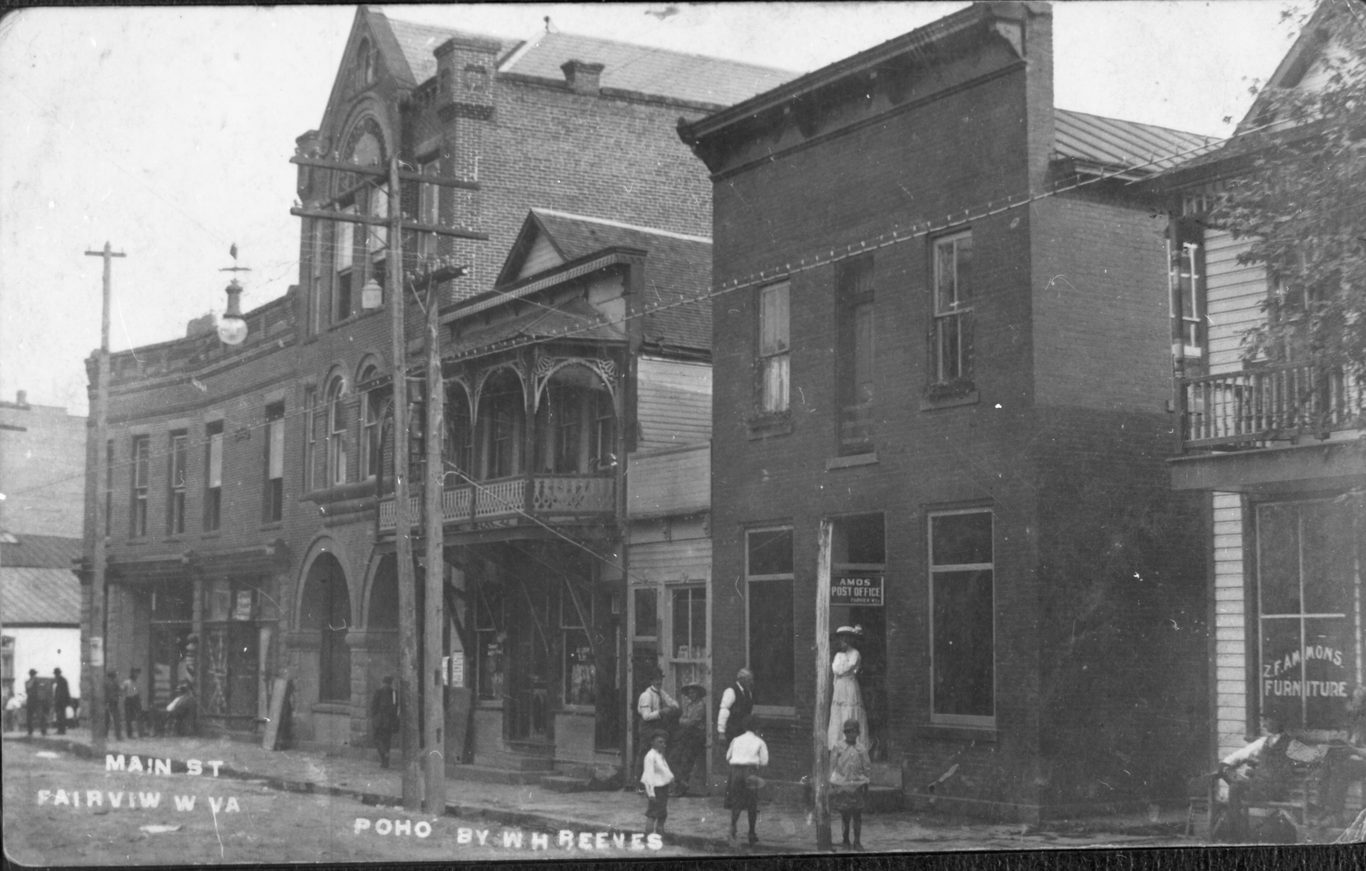
Many West Virginia towns experienced a name change sometime in their early history. In Marion County, Eldora was formerly Bobtown, Fairmont was once named Middletown, Farmington was Willeyville, Valley Falls was Nuzum’s Mills, and Logansport was Beaty’s Mills. The town of Fairview had two other names: originally Paw Paw City, then Amos. The original town was laid out in 1845, and was incorporated in 1891.
William Duvall, the first settler in the area along Paw Paw Creek, where Fairview is now located, owned 6,000 acres of land. William Basnett operated Fairview Inn in the early 1800s, selecting that name because the site had a clear view, or “fair view” of the surrounding countryside.
The original name, Paw Paw City, was chosen because the wooded area bordering the local creek contained countless paw paw trees, and produced a large crop of paw paws. These fruits are the largest wild fruit produced in the woods of West Virginia. Tasting somewhat like a banana, the individual fruits are yellowish-green in color and approximately two inches wide and three inches long.
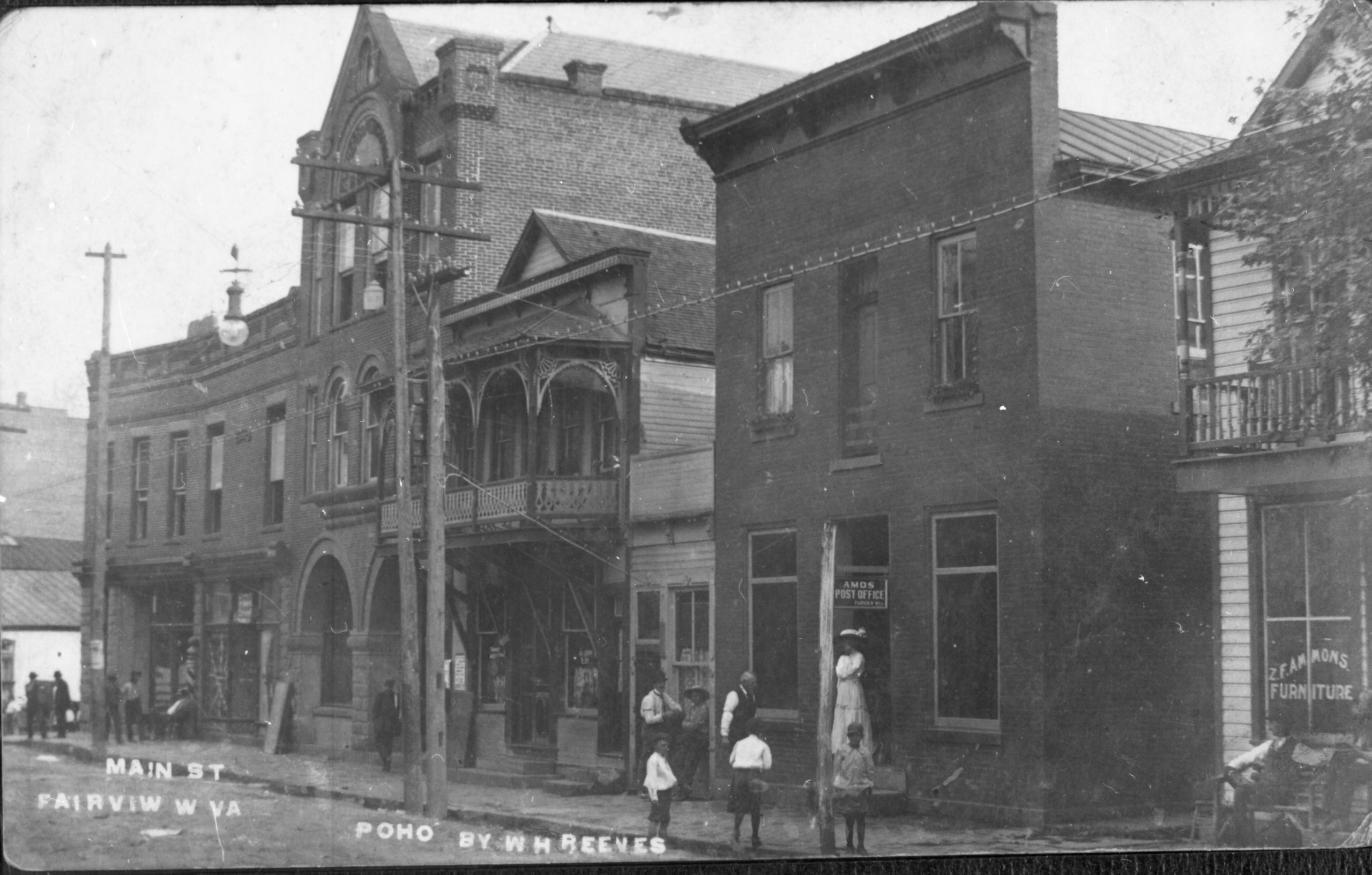
The original location for the postal facility to service the Paw Paw City area was in the nearby settlement known as Basnettsville. The original proposed name for the post office was Fairview. However, because a post office named Fairview already existed in Hancock County, the U. S. Post Office Department required that the post office in the Marion County town be assigned another name. The name “Amos” was chosen to honor one of the town’s leading merchants, Peter Amos, who owned the town’s grocery and general store. Peter was born in 1816 near Basnettsville and lived on land inherited from his father. Oil was discovered on his land in 1845, and according to the 1870 census, he had a net worth of over $20,000.
After several years, the Amos postal facility was moved to its present location and officially named, Fairview Post Office. How the conflict of two post offices with the same name was resolved by the U. S. Post Office Department is unknown. Incidentally, there have been at least ten communities named Fairview in West Virginia during its history – in nine counties.
Although the post office was named Fairview, the name of Amos was retained for several years. My great-grandparents, Joseph T. Myres and Addie Ammons Myres owned a large farm just over the hill a mile or so from the Amos Post Office, on upper Plum Run. My grandfather, Harrison Gump, grew up on a farm a couple mile north of the Amos Post Office. I was born on Plum Run, and as a youngster remember walking over the hill to Fairview on several occasions.
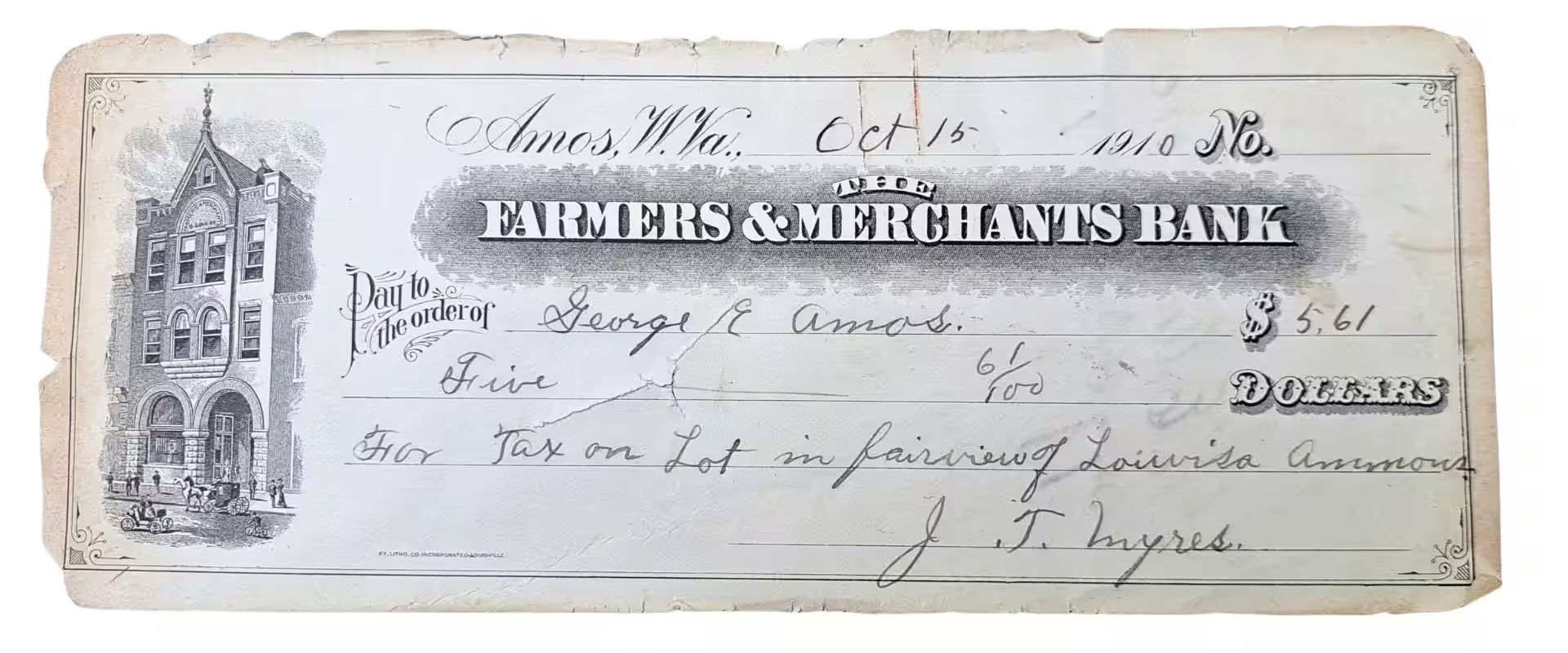
Several printed items bearing the town’s name, Amos, were saved by my grandparents and passed down to me. One of the oldest documents is a cancelled check written by my great-grandfather, Joseph T. Myres, on The Farmers & Merchants Bank, Amos, on October 15, 1910. This $5.61 check was for “Tax on Lot in Fairview of Louuisa Ammons”, my great-great grandmother. It was made payable to George E. Amos. Why property taxes were paid directly to an individual is puzzling.
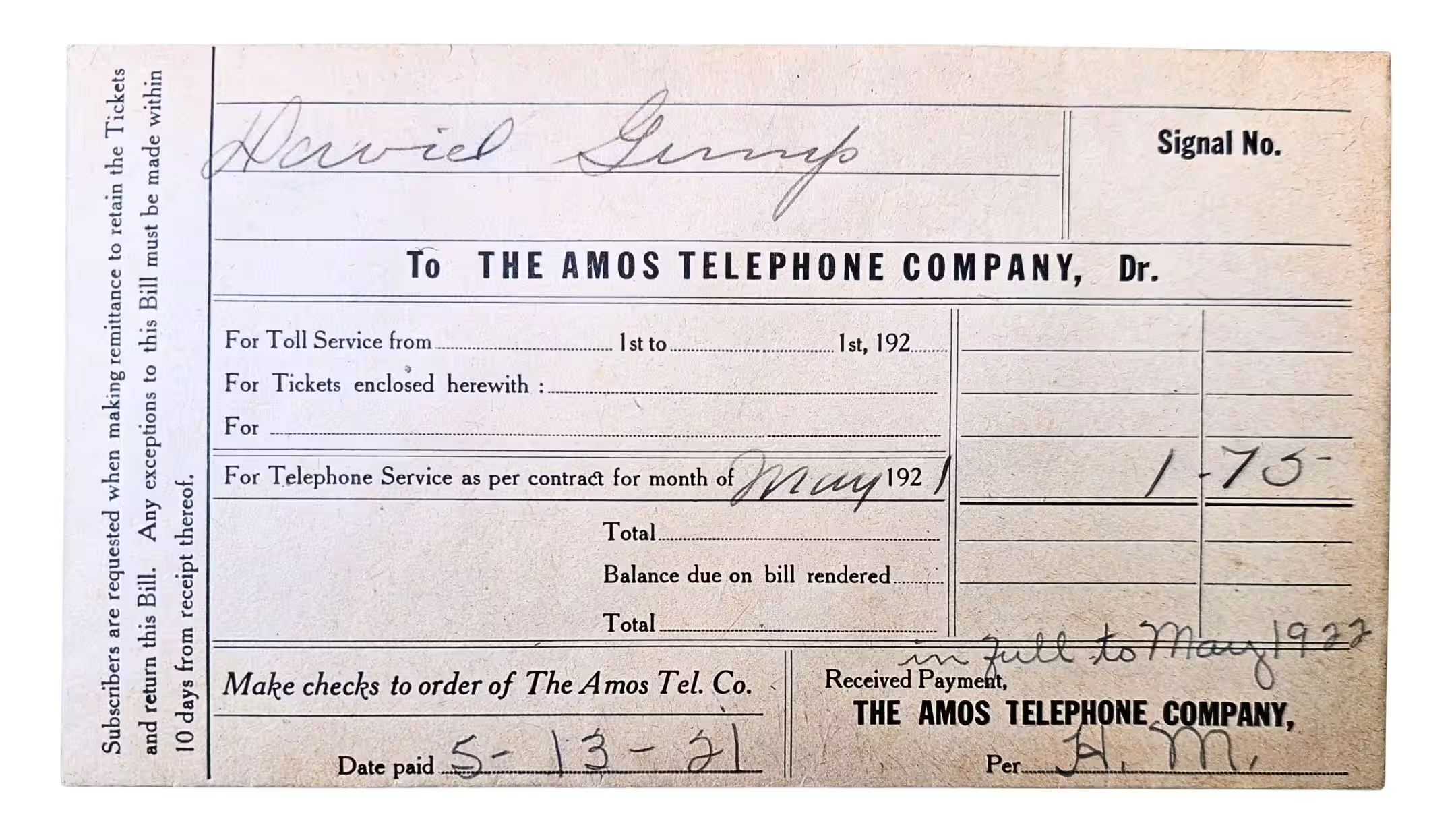
I also possess a dozen receipts ($12.00 to $18.00) from the Amos Telephone Company for annual phone rent paid during the 1920’s – in receipt for payment by David Gump, another of my great-grandfathers. Also, of special interest is a Class “A” Automobile Certificate, issued to W. D. Gump by the State Road Commission for an Overland Tour 23, in June 1923.
The U. S. Post Office Department provided free delivery to houses within established towns in 1863, but those persons living in rural areas were required to travel into town to retrieve their mail. Most farmers, including my great-grandparents and grandparents, walked or rode a horse to the nearest post office to get their mail—usually weekly.
Rural Free Delivery for United States rural households began in 1896, with the first experimental deliveries being to rural areas around Charles Town, Hall Town, and Uvilla, West Virginia – in the eastern panhandle. In 1902, Rural Free Delivery became an official part of the Post Office Department in all states, and thousands of mail boxes were erected on posts along existing dirt roads. One of the most anticipated deliveries was the Sears, Roebuck & Co. Catalogue. First published in 1893, it rapidly expanded to over 1,000 pages. This bulky “book” featured an unbelievable variety of items, including: cars, clothing, houses, livestock, patent medicines, and sporting goods.
Another item frequently appearing in rural post office boxes was a postcard. My grandfather, Harrison Gump, gifted me a set of 45 picture postcards mailed to him by various friends between 1908 and 1912. The condensed messages squeezed tightly in the small space available resemble those sent today on Twitter and Facebook. Before the days of telephones, postcards were a relatively quick and inexpensive method of communicating with friends and neighbors. Although it is not known what the postcards, themselves, cost, the Benjamin Franklin stamps used to mail them cost one penny.
Farmers did not own automobiles during the first decade of the 1900’s, and the telephone did not come to that area until 1915-1920. Farmsteads were so widely separated throughout the maze of hills and hollows that the most efficient means of communicating was by mail. Letters and postcards were picked up, and delivered, by postmen who traveled by horse-and-buggy, or simply rode horseback when the roads were too muddy or the snow too deep for buggy travel. My other grandfather, Harry Michael, was a mailman, and delivered mail from the Mannington post office.
Penny postcards were introduced by the U. S. Post Office Department in 1869. In 1898, Congress authorized the use of “private mailing cards,” but they could not legally be called “postcards.” It was not until 1901 that manufacturers of private mailing cards were allowed to use the term, “Post Card.” Those picture postcards manufactured during 1901-1907 had an undivided back where the stamp could be affixed, and the address written. In 1907, Congress allowed the back to be divided so the sender could write a message on the left side and the postal address on the right side.
Only one postcard in my grandfather’s collection has a stamp printed directly onto the card by the U. S. Post Office Department – a one-cent stamp bearing the portrait of President William McKinley. Addresses on the postcards were in a style recommended by the U. S. Post Office Department: person’s name on first line, town on second line, and state on third line. On some, the route number was given on the fourth line. For those postcards coming from out-of-state, “Marion County” was on the fifth line.
All of my grandfather’s surviving postcards were addressed to the Amos Post Office, and delivered to his rural home. Postmarks on the postcards included such names as Amos, Hundred, Mannington, and Wana. My grandfather attended public school at Willow Brook School, located on Benefield Creek, two miles north of Fairview. He graduated at 14 years of age, after completing the eighth grade, and based on his success in life obviously had learned his “reading, writing, and arithmetic.” When most of this correspondence occurred, my grandfather was 20-21 years old, quite handsome, stood over six–foot tall, and apparently attracted the attention of several young ladies.
Many messages on these postcards were written in ink with a quill pen, and on several cards the penmanship can be described as excellent. However, the style of writing was not what would be grammatically correct today. The message on many postcards appears as one long sentence. Careful reading reveals several short sentences without periods, and the first word of each sentence capitalized. Several quaint phrases and words were used. One of the most unusual was, “How you was.” Rarely was a question mark used with this phrase. “Haft” and “haint” were used, as was “scrap.” One of his female friends wrote on different cards, “I won’t scrap with her,” and “Come up so we will have a scrap,” Lawrence and I had a scrap,” and “I won’t scrap with her so she wishes L was here.” Interpretation of some words is difficult because of abbreviations, spelling, legibility, or colloquial use not recognized today. Examples are: “ans,” “colecture,” “dident,” “ecluse,” “haint,” “offal,” ‘physiognomy,” “rec,” and “rember.”
It is amusing to note that secret messages were often hidden under the stamps. Usually a small note would indicate that my grandfather should look under the stamp to learn who the postcard came from, or to reveal some other highly personal message. Unfortunately, on none of the postcards is the hidden message now legible. We can only surmise that scraping off the stamp obliterated the message, or my grandfather purposely scraped off the message so his sister, Eva, could not read it.
Another quaint method of sending a “secret” message involved writing words and sentences backwards, from right to left. To read these postcards, it is necessary to hold the postcard up to a mirror. Without doing so, it is nearly impossible to interpret words and read sentences. My mother, Isolene Gump Michael, remembered this “fad” being common when she was a teenager – some girls practiced writing in this “code” until they became proficient at writing words and sentences backwards.
Messages on the postcards are quite interesting, and provide a small window into rural life in West Virginia and the subjects that were of interest to teen-agers. Although my postcards reveal few details about rural life during the early 1900’s, there are references to church meetings, baseball, chestnut hunting, parties, sleigh riding, and finding girls.
Some examples of the postcards follow:
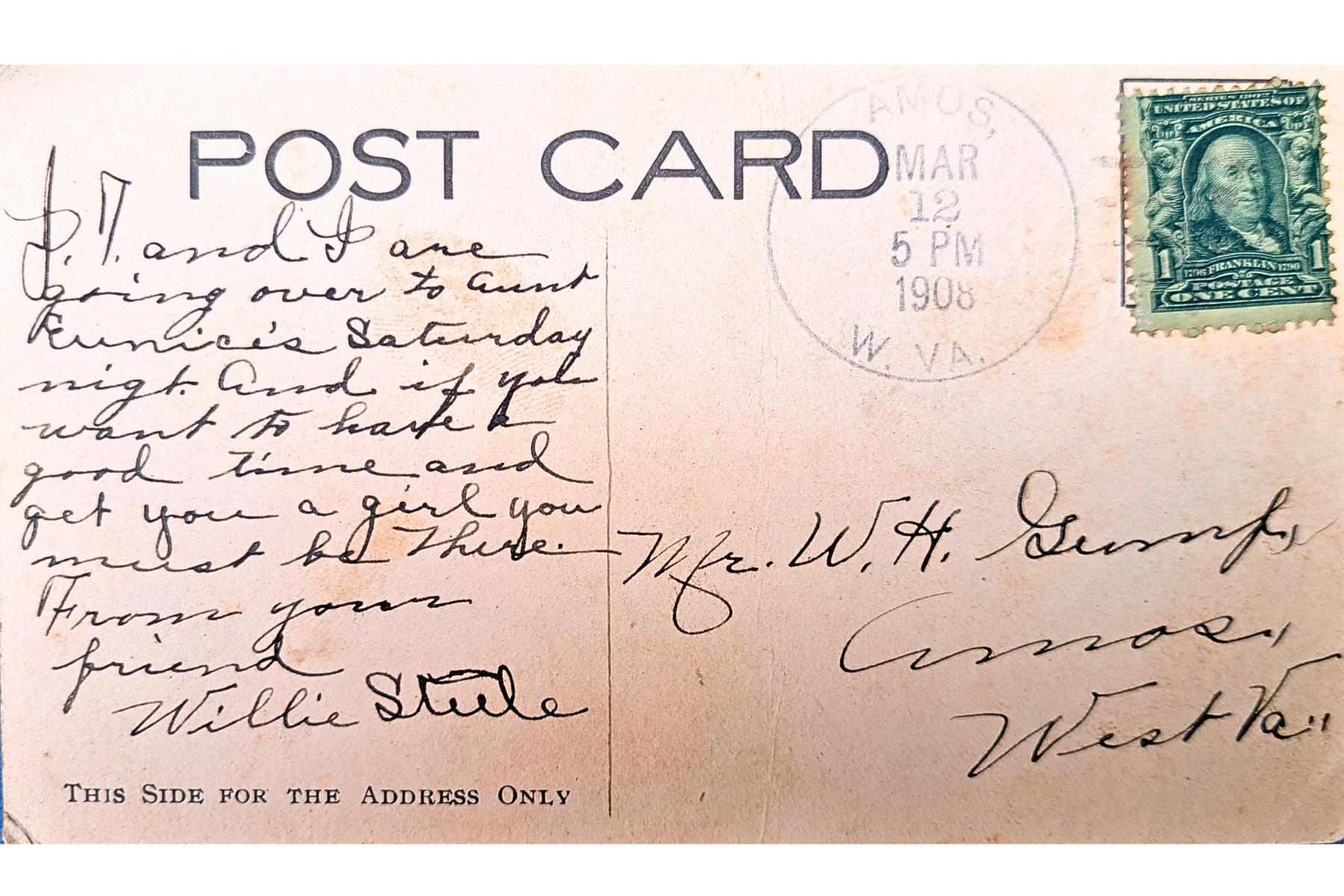
March 12, 1908 – Amos
“J.T. and I are going over to Aunt Eunies Saturday night and if you want to have a good time and get you a girl you want to be there. From your friend” …. “Willie Steele”
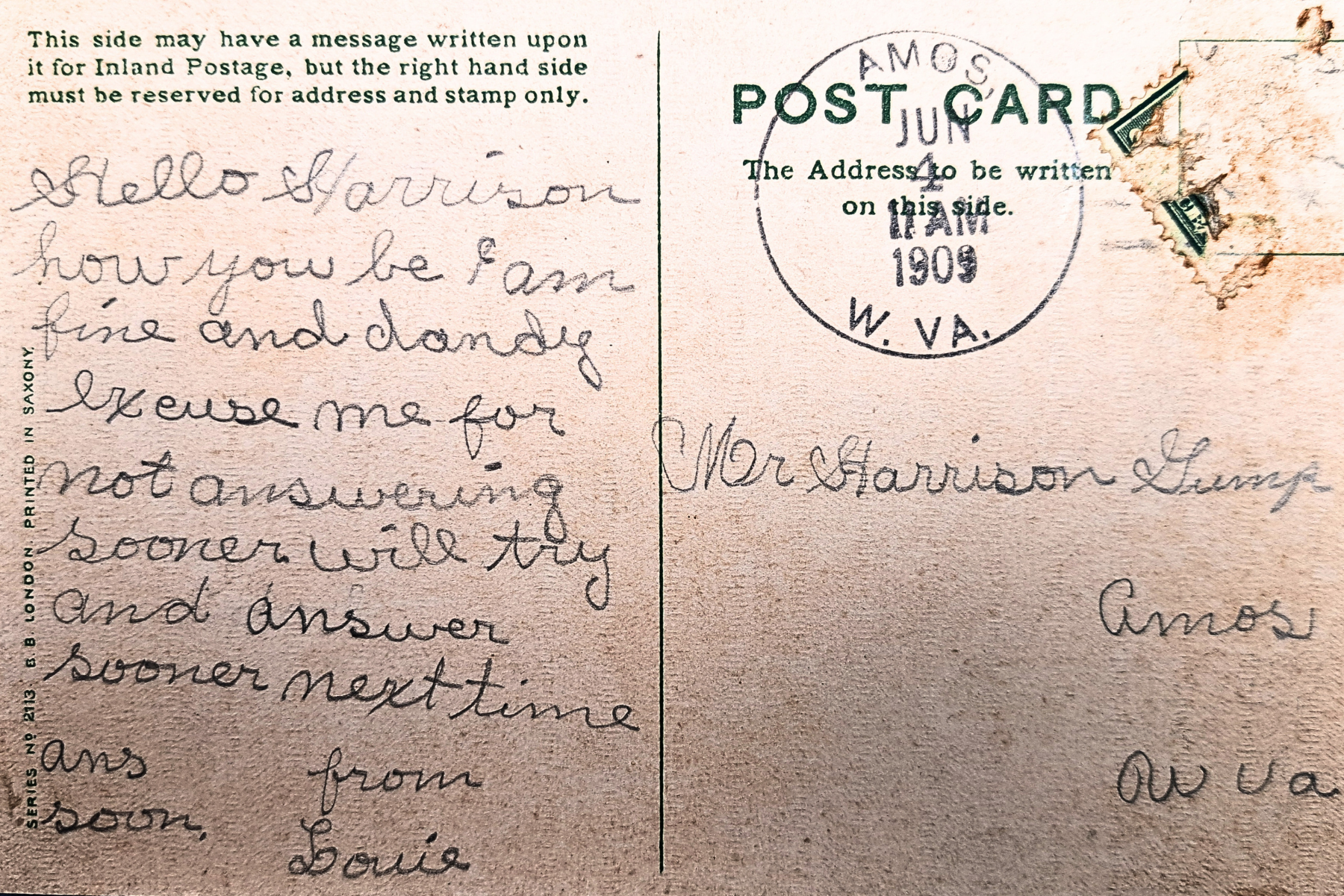
March 27, 1909 – Amos
“Hello Harrison how you was I am all O.K. thought you had a good time the last night of school. I wouldn’t care if Literary was still going on yet. Yours as B.4. guess who. answer soon” .… ”LW”

Edwin Daryl Michael
Michael, Edwin Daryl. “Paw Paw City… Amos … Fairview.” Goldenseal West Virginia Traditional Life, Summer 2026. https://goldenseal.wvculture.org/paw-paw-city-amos-fairview/