


By: Candy Thompson
When it comes to exploring the wonderful heritage of West Virginia, exploring the founding of the railroad industry in our state comes to the top of my list. I went searching on the internet for answers and this led me to the West Virginia Railroad Museum located in Elkins.
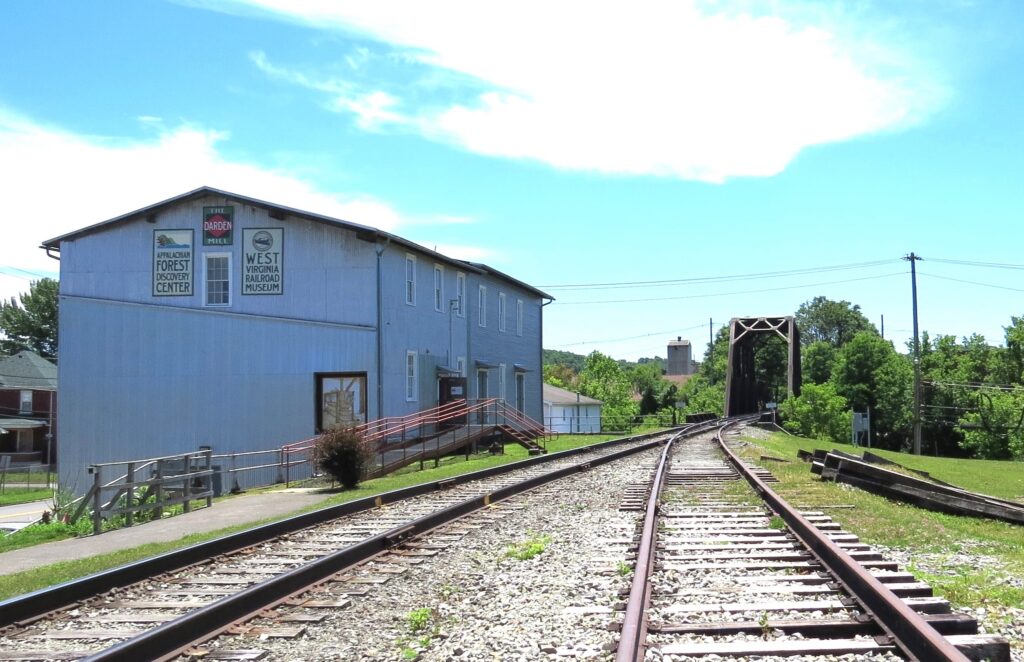
The WV Railroad Museum is located in the Old Darden Mill which was built in 1902. Grains like flour, cereals and animal feed were originally milled here and shipped by rail to other surrounding cities across West Virginia. The building is now owned by Citizens for Historic Opportunities in Preservation and Education in Randolph County (C-Hope).
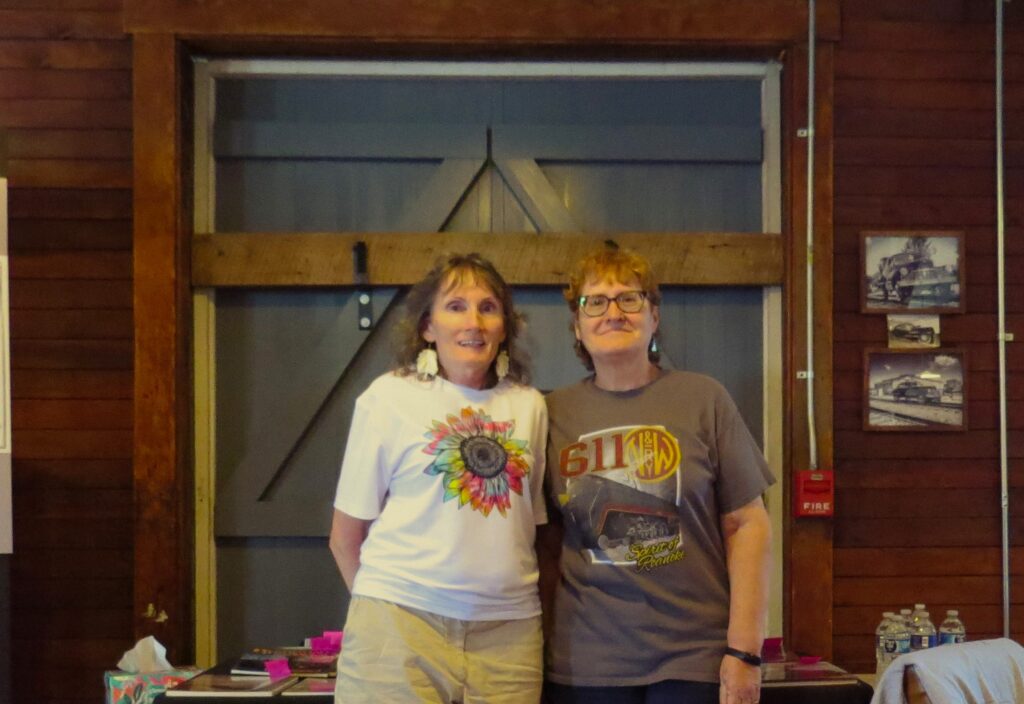
When my husband and I went to visit the museum our tour guide was Paula Bashford, who was a retired railroad engineer. I found this to be very intriguing, I had never seen or met a female engineer. Her husband, Edward, was also retired from the railroad, he was formally a freight conductor.
The tour started with learning about Henry Gassaway Davis. In 1886, he founded the West Virginia Central & Pittsburgh Railway. As his railroad expanded a number of new towns popped up along the routes of the tracks. In 1890, Leedsville was renamed Elkins after his son-in-law and business partner, Stephen Elkins.
In the beginning, to establish communications between the various train stations, they used Morse code. For example, to transmit the word train; t is dash, r is dot dash dot, a is dot dash, i is dot dot and n is dash dot.
- .-. .- .. -.

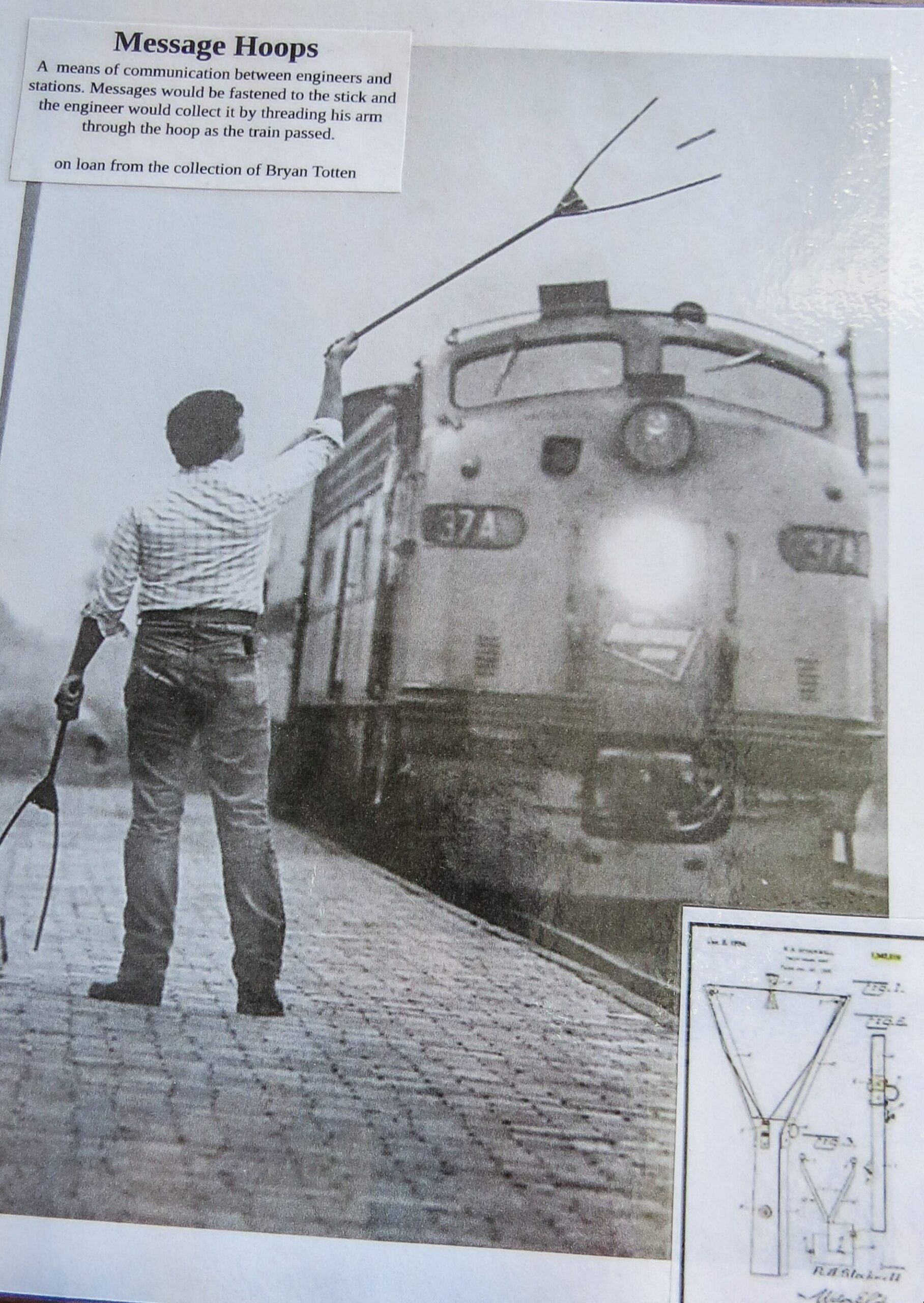
The stations would communicate with trains by using message hoops. The hoops were held out by a worker while a train passed by. A worker on the train would grab the hoop and remove the message. Then he would toss the hoop back to the worker standing by the tracks. Flags were used for communication also. For example; a green flag meant go and a red flag meant stop. A yellow flag with a red flag indicated there was a temporary speed reduction followed by a stop signal.
Railroad foremen used time book ledgers to record workers’ names, hours and wages. Train engineers used them to log their time, which engine they were driving and their trip origin and destination.
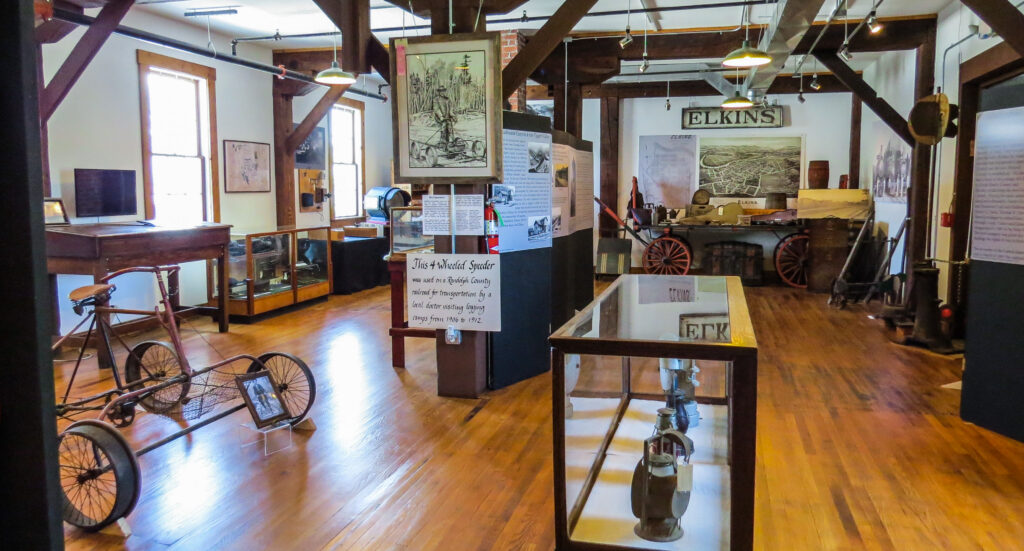
There was a 4-wheel speeder on display as well at the museum. During its time of use, you would pedal it like a bicycle and it would run on the track rails. This specific one was used by a Randolph County railroad doctor visiting logging camps from 1906 to 1912.
Other displays included a Fairbanks track Scale Beam. It was used to weigh empty train cars that were repaired or rebuilt at the Elkins railyard. State and federal regulations required the new weight of the empty cars to be stenciled on the side of the train car. Various brass padlocks and keys were used for securing switches, signals and buildings.

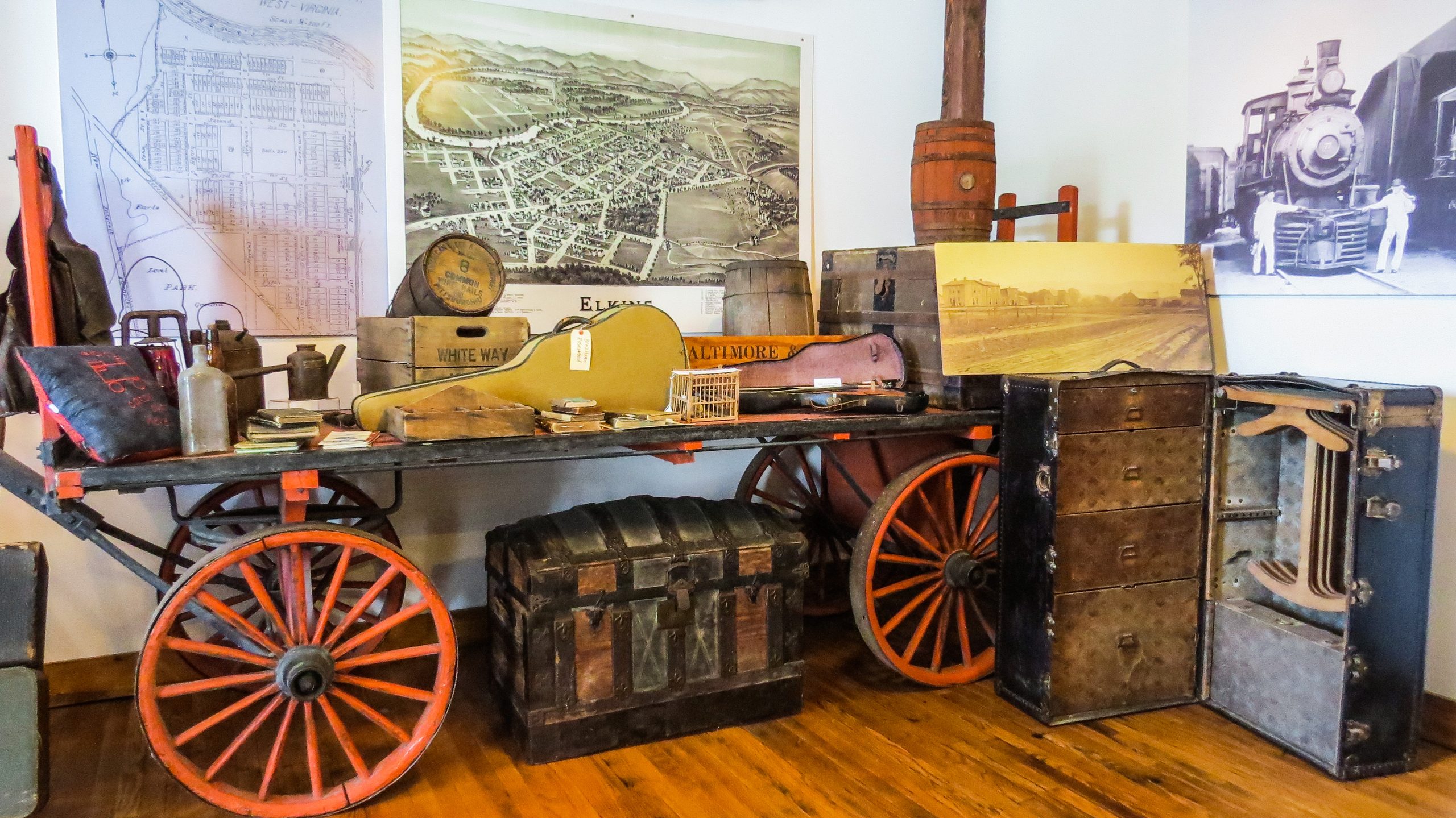
At the one end of the museum were two long baggage carts. They were designed to be pulled by hand. The carts have a metal frame and a wooden base. The base of the cart was built to run parallel with the level floor of the baggage car of the train. This made it easier for the clerk to move items on and off the train. On the carts were many different items people traveled with dating back to the early 1900’s.
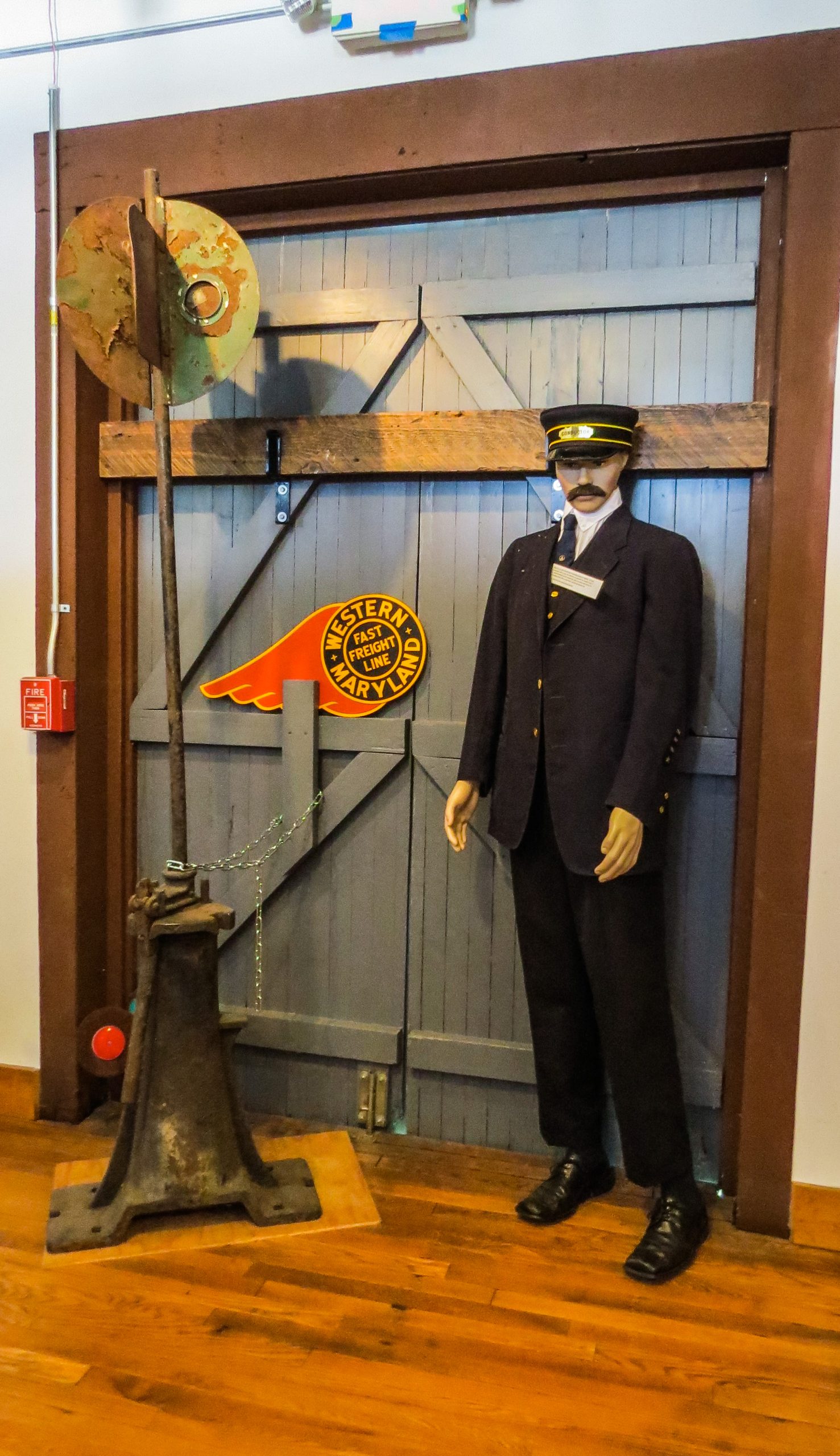
Display cases containing old railroad spikes, letter correspondences, railroad lights, lanterns and many other items, from the early days of railroading. Pictures lined the walls of old time locomotives, train cars, advertisements and workers. An old black and white picture of Elkins and a historical town map hung above one baggage cart. Railroad signs and signals were placed around the museum. A handsome mannequin dressed up as a conductor stood beside an old time train signal. I could almost hear him say, “All aboard”. And then, “Tickets please”, as he punched each ticket every passenger presented to him.


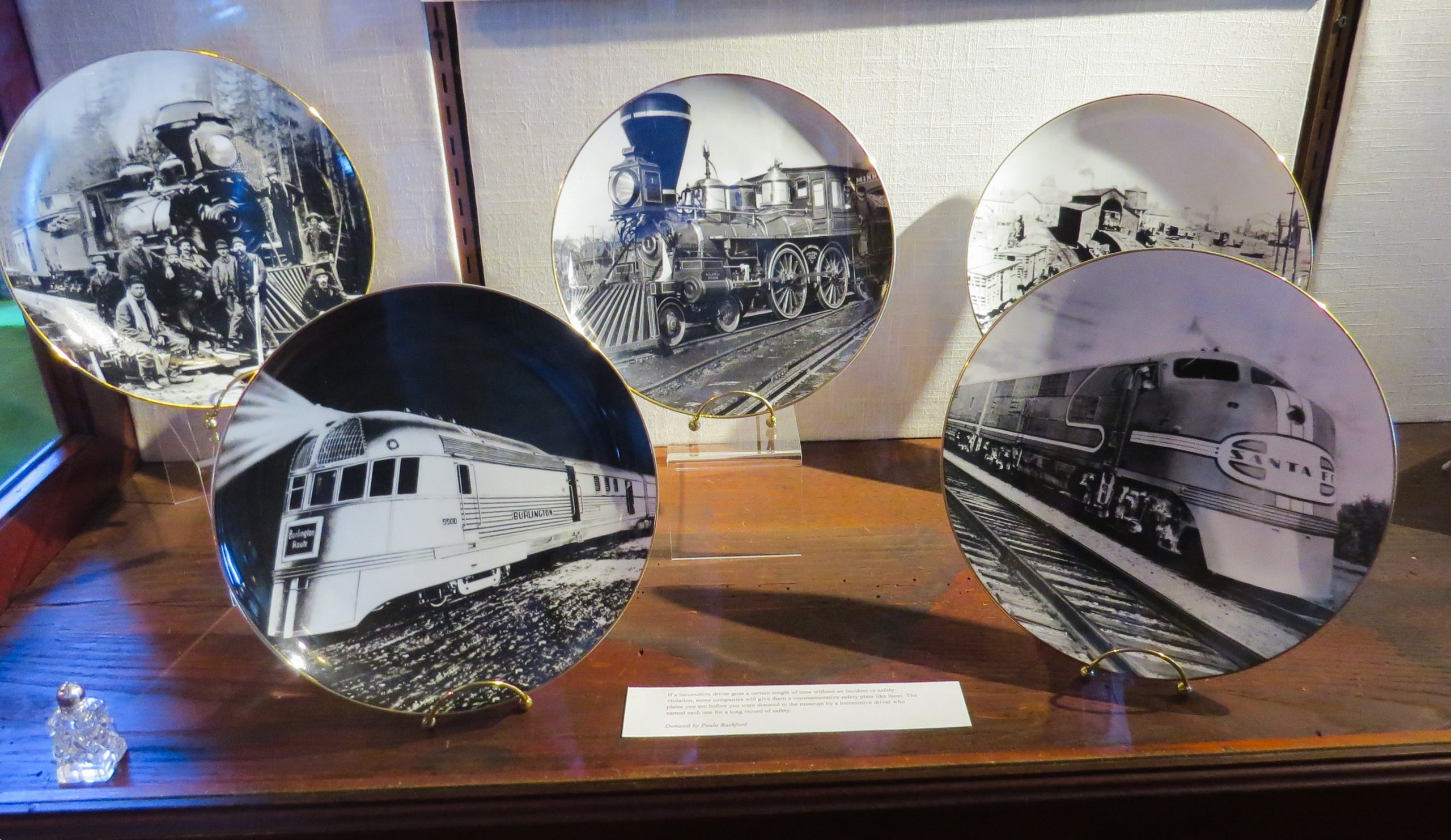
There were five commemorative safety plates on display. These plates used to be given to railroad workers that worked one year injury free. Our tour guide Paula had received these plates for her years of railroad service, having no safety or incident violations. She had donated them to the museum.

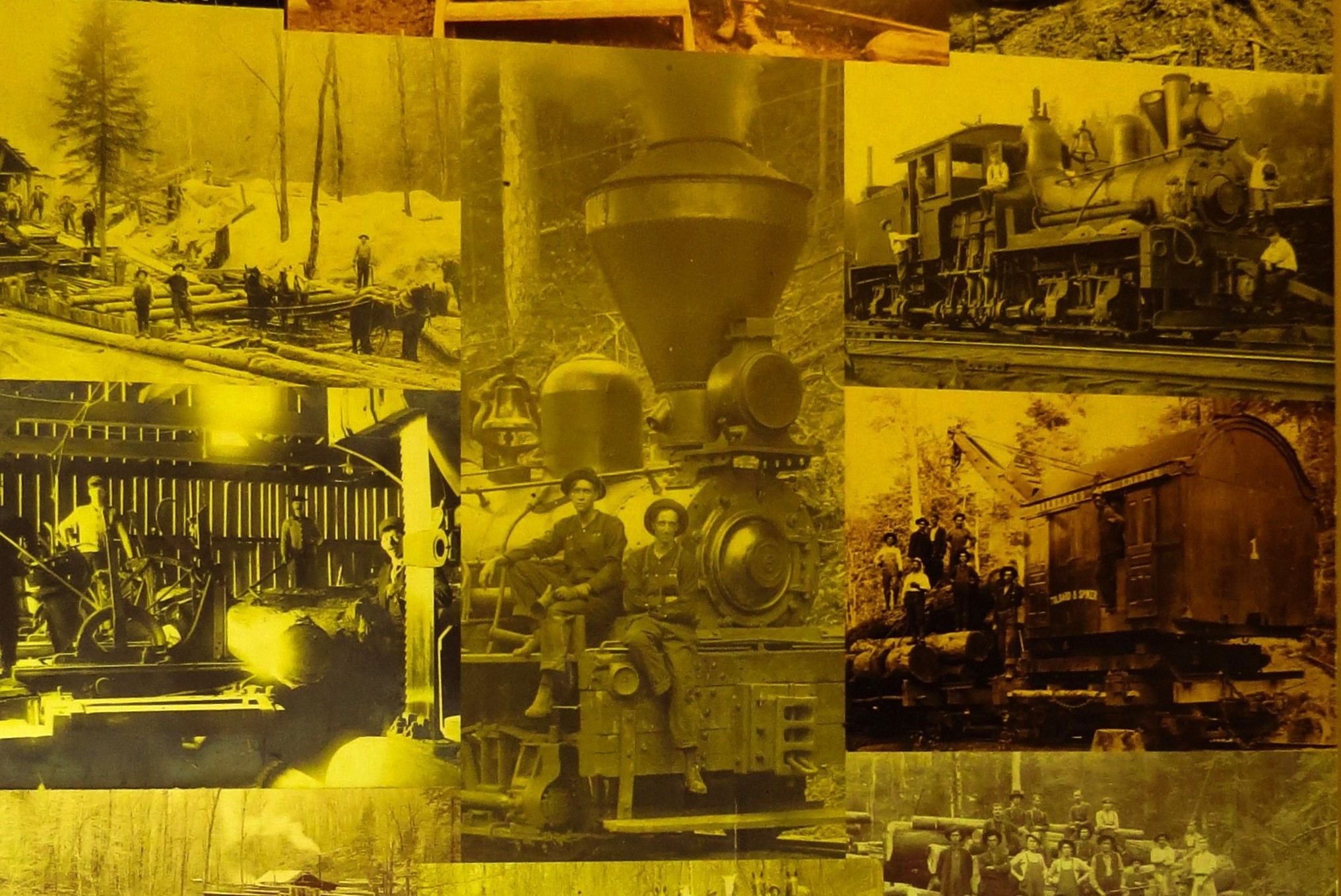
So much history is on display at the West Virginia Railroad Museum. This is the perfect place to come and learn about it, along with a very informative guided tour. I was simply amazed at all the exhibits, detailed facts and real-life stories that brought this museum to life. All of it comes together to tell the historical journey of our West Virginia Railroad industry.
On the 1st floor of the Darden Mill, you can also visit the Appalachian Forest Discovery Center, where you can explore information about West Virginia’s Indigenous roots and their connection to the Appalachian forest.
Visit the West Virginia Railroad Museum
Address: 101 Railroad Avenue, Elkins, WV 26241
Phone: 304-637-4810
Website: https://wvrailmuseum.wordpress.com/
Open: April 30th – October, Friday – Sunday, 9:30 am – 4:30 pm
Admission: $5 adults and children under 12 are free


Candy Thompson
is a 6th-generation resident of Preston County. She is a U. S. Army veteran. She is happily married to her husband Larry, and enjoys baking, her flower beds, photography, and writing. She is the published author of “My WV Jones Family: Pictures, Memories and More” and several stories in Chicken Soup for the Soul books. She is a longtime contributor to GOLDENSEAL.
Thompson, Candy. "West Virginia Railroad Museum." Goldenseal West Virginia Traditional Life, Summer 2026. https://goldenseal.wvculture.org/west-virginia-railroad-museum/