by Nancy S. Hoffman

This nostalgic look back at the process of making apple butter in the form of a letter from one sister to another is sure to stir up memories of crisp fall mornings with the smell of woodsmoke and cinnamon apples floating on the breeze for those who have ever lent a hand in making apple butter the old-fashioned way. For another look at the process, see “Apple Butter Time,” by Tina Ladd in our Winter of 2020 issue. – ed.

Dear Louise, I just had to write to you and explain what I have been doing. One morning, about two weeks ago, I woke up to the flute-like song of a woodthrush. Now, you know the woodthrush is one of the later bird songsters of the fall. So, my attention turned to my mental list of chores needing attention before the snow started to fly. The smell of dry leaves came through the dimity curtains in my bedroom. “Ah,” I thought, “Best I get out of bed and down the back stairs to the kitchen and cook my oatmeal.” You know, Louise, it is quite a chore at my age to get out of bed with “arthuritis”, but once I am up and going, I still seem to be quite a whirl.
So, it was while I was eating my oatmeal on the swing on the back porch that I looked out over the old orchard and noticed the northern spy apples were glowing with their green-red colors. Yes indeed, it was time to start the makings of that delectable apple butter. I called my neighbor Dollie and said to her, “Dollie, how would you like to help me make apple butter?” She said, “Kathleen, are you joshing me?” I said, “No, Dollie, I am serious.” We then laid out plans. We surveyed our pint and quart jar collections and decided we had enough for a full turn of apple butter from Mae Smith’s old twenty gallon apple butter kettle.
“I grabbed hold of the six foot long yellow poplar stirring stick and started to stir, keeping in mind the rhythm of holding the stirrer on the bottom of the kettle to allow the stirrer to move those twenty copper pennies around.”
Then, we made a trip out to the northern spy apple trees and sure enough, Louise, we found sufficient apples to make four bushel baskets full. It takes four bushel of apple snitz to fill the apple butter kettle. I thought maybe “arthuritis” may act up, but with the activity going up and down the ladder I must have had the right kind of exercise, so I did not have an ache or pain.
Next, we carried the baskets of apples to the porch where we could have a comfortable place to work and visit…you know Louise, I caught up on all the recent and some old happenings. I will fill you in on the ‘latest’ when I come to visit you at Thanksgiving.
Anyway, we made use of the old apple peeler to peel the apples. Do you remember the way we used to try to see how long a peeling could get with that old hand cranked apple peeler? Well, that sight sure brings back memories of childhood when we used to make a playful joy out of helping Mamma peel apples. Dollie cored the apples and placed them in crocks of salted water. We worked the rest of the day and the next day also on those apples. We placed wooden lids on the snitz-filled crocks and placed them in the milk house. Next, we spent the rest of that evening gathering up locust wood to be used as firewood to make heat under the copper kettle.
Harry had to go to town to get some chewing tobacco so I sent my want list with him and he brought back thirty pounds of white sugar, ten pounds of brown sugar, one vial of oil of cinnamon, three dozen wide mouth jar lids, three dozen regular lids and some great northern beans. I figured soup beans and cornbread would be a sure hit about noontime when we would be real hungry from stirring apple butter, and it was a hit.
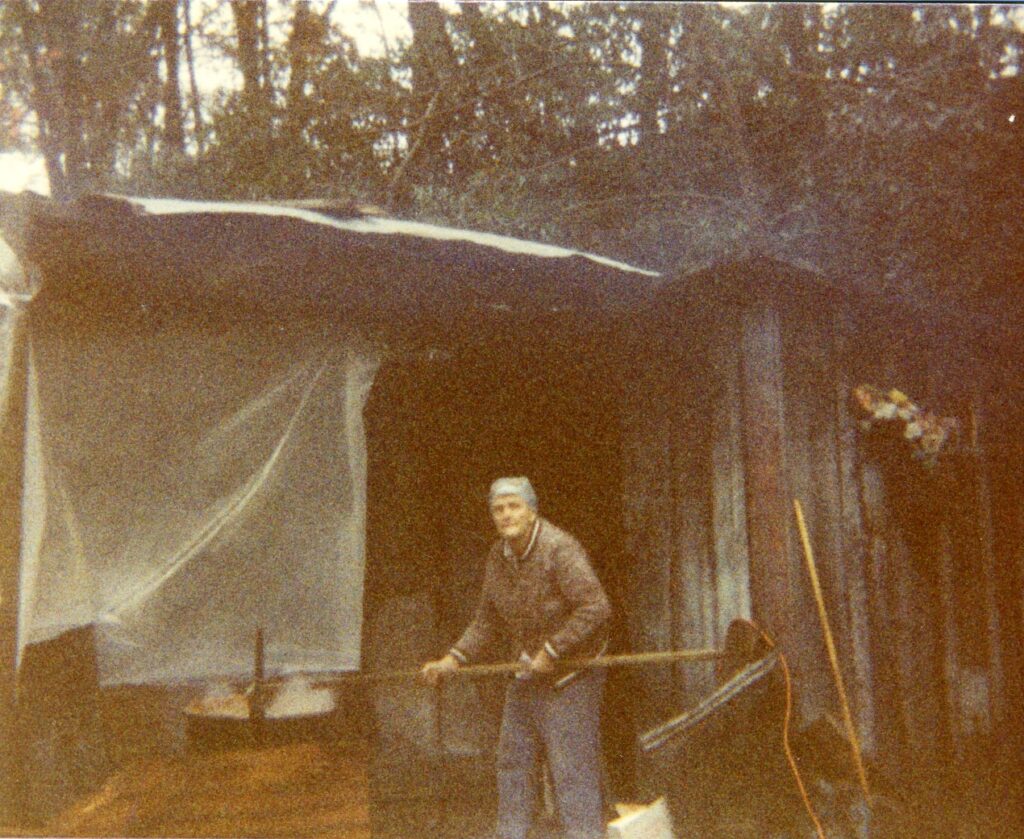
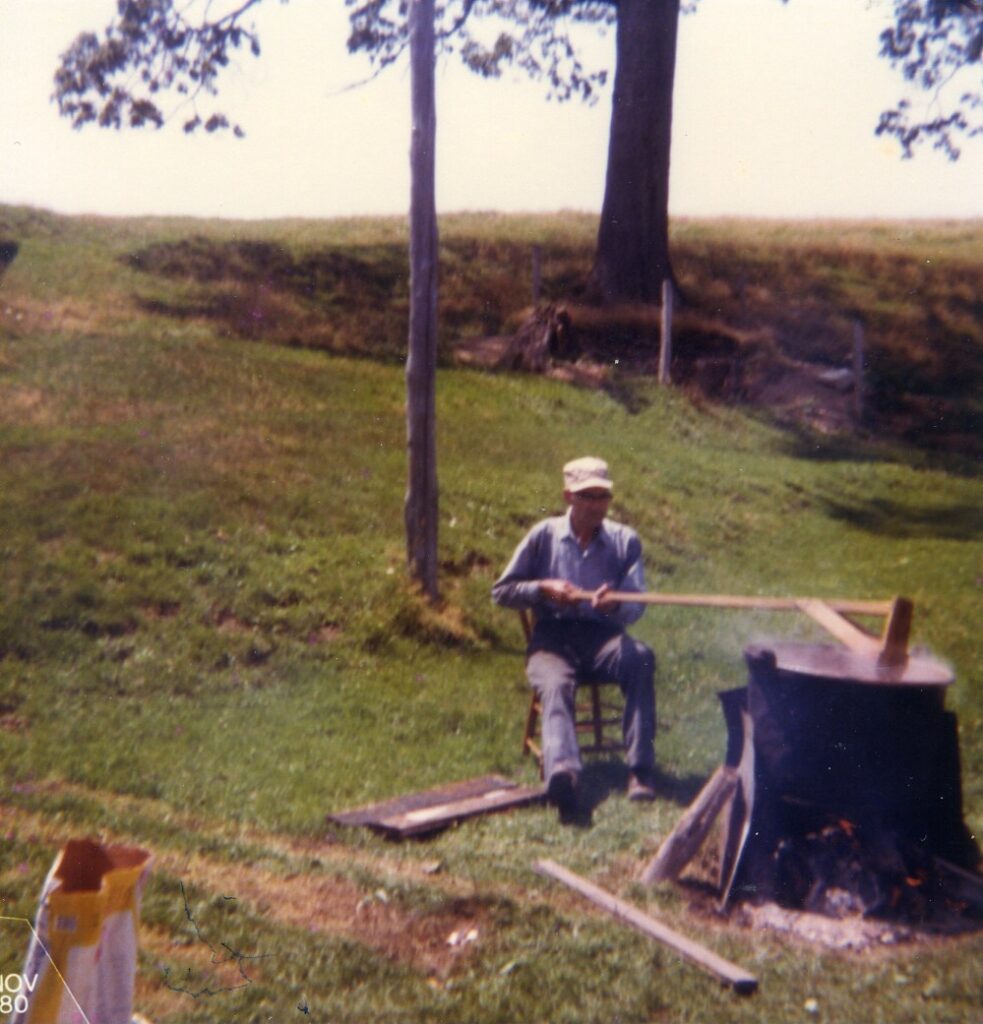
Well, Louise, the alarm went off at about five o’clock the next morning, and you know the birds were not awake because it was still dark. I did not have any trouble at all in getting out of bed that morning, because of my enthusiasm about making apple butter. The light of day was just breaking when I took a pan of salted vinegar water out to the woodlot to scrub out the copper kettle. Louise, do you remember how shiny that kettle can get when it is first cleaned up? Well, the pungent smell of salted vinegar water remains in your nostrils for quite a few minutes, but is soon gone once you get the wood fire going.
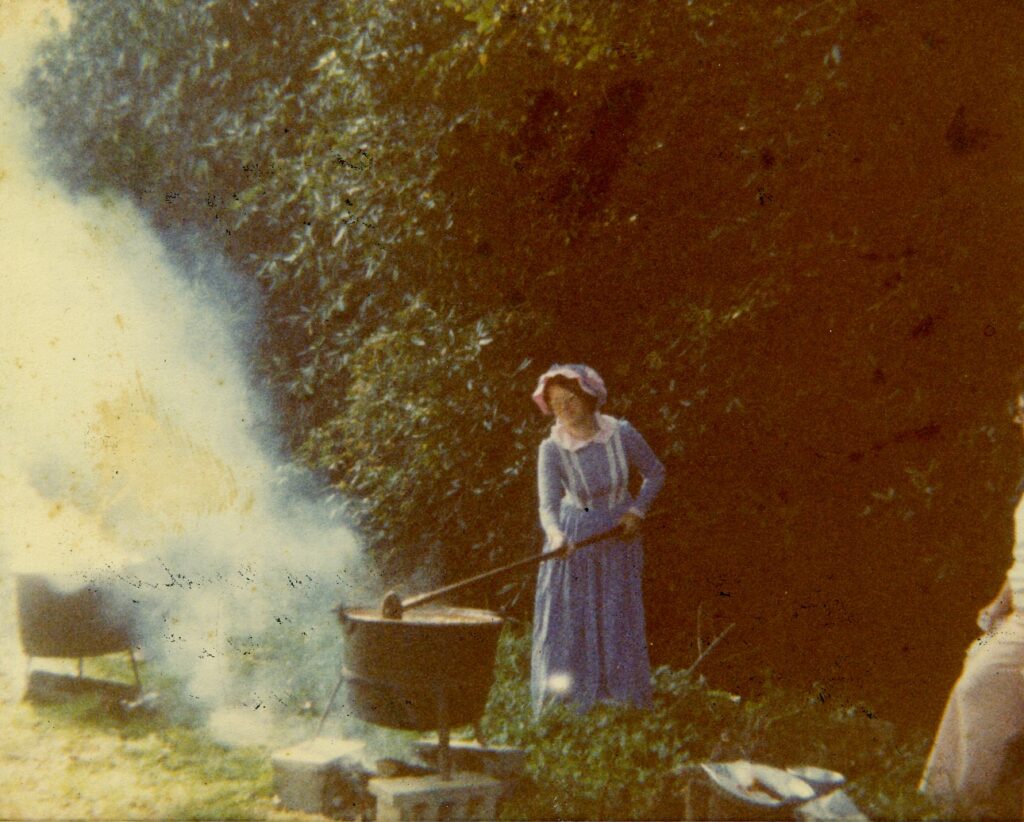
The next process is to empty the kettle of the pungent water, and rinse it with clean water. Harry had a gallon of cider left from last fall’s cider-making so we put the cider in the kettle, threw in twenty copper pennies to keep the sauce from sticking on the bottom of the kettle and then leveled the kettle on an iron stand. The iron stand, you know, holds the kettle off the ground to allow for a wood fire underneath.
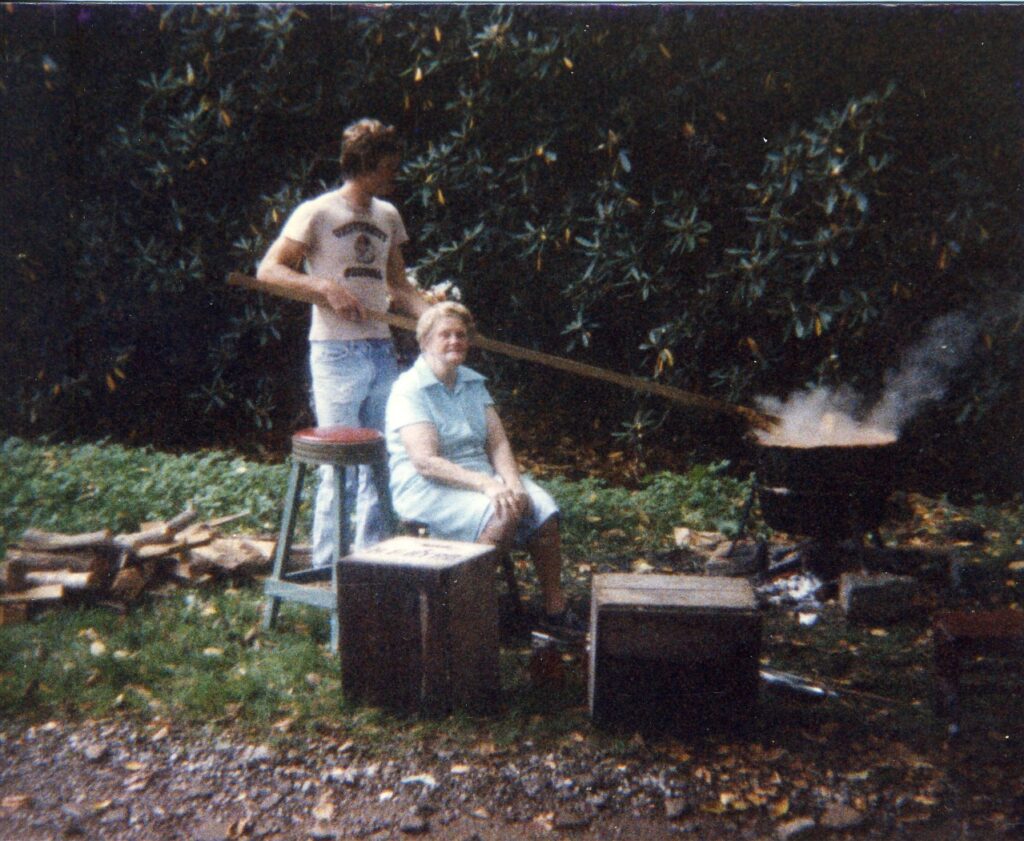
Dollie arrived and helped me carry the snitz filled crocks from the milk house and we poured the snitz into the kettle. Harry was so helpful in arranging the locust wood under the kettle so as not to touch the wood on the bottom of the kettle. He rumpled up some old newspapers and struck a kitchen match against a rock and a sunset colored fire was started. I grabbed hold of the six foot long yellow poplar stirring stick and started to stir, keeping in mind the rhythm of holding the stirrer on the bottom of the kettle to allow the stirrer to move those twenty copper pennies around. At the same time, I kept up my own rhythm of balancing my hip joints with the stirrer. The young generation should learn about this rhythm. It would sure calm them down.
Well, Louise, Harry and I kept the vigil of stirring until Oren and Myrtle arrived at about eleven o’clock. We then took turns stirring. After about four hours of diligent work the snitz had turned into a thick umber color. The sugars and cinnamon were added. The smell of cinnamon cooking in the apples further cleared out my nostrils of the salted vinegar water.
During the final hour of cooking we took turns stirring, eating our soup beans, and reminiscing. We then tested a small dollop of apple butter on a china dish and sure enough there was no water leaving the plumpness of the dollop. This is a test for doneness. We had placed pans of glass jars on a handy table near the heat of the fire and were finally ready to ‘take off” our finished product. Harry pulled the burning wood embers away from under the kettle and then relieved me of the stirrer. He kept stirring so the apple butter would not stick to the bottom of the kettle. My, how I disliked giving up that rhythm, but I needed to turn my attention to filling jars.
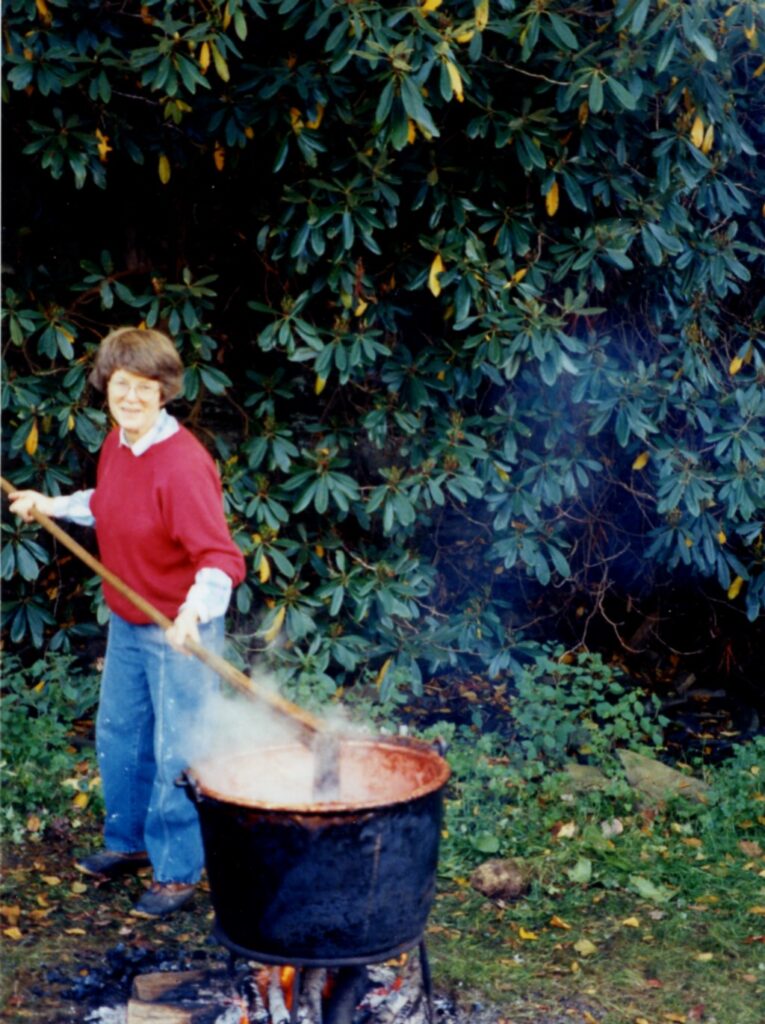
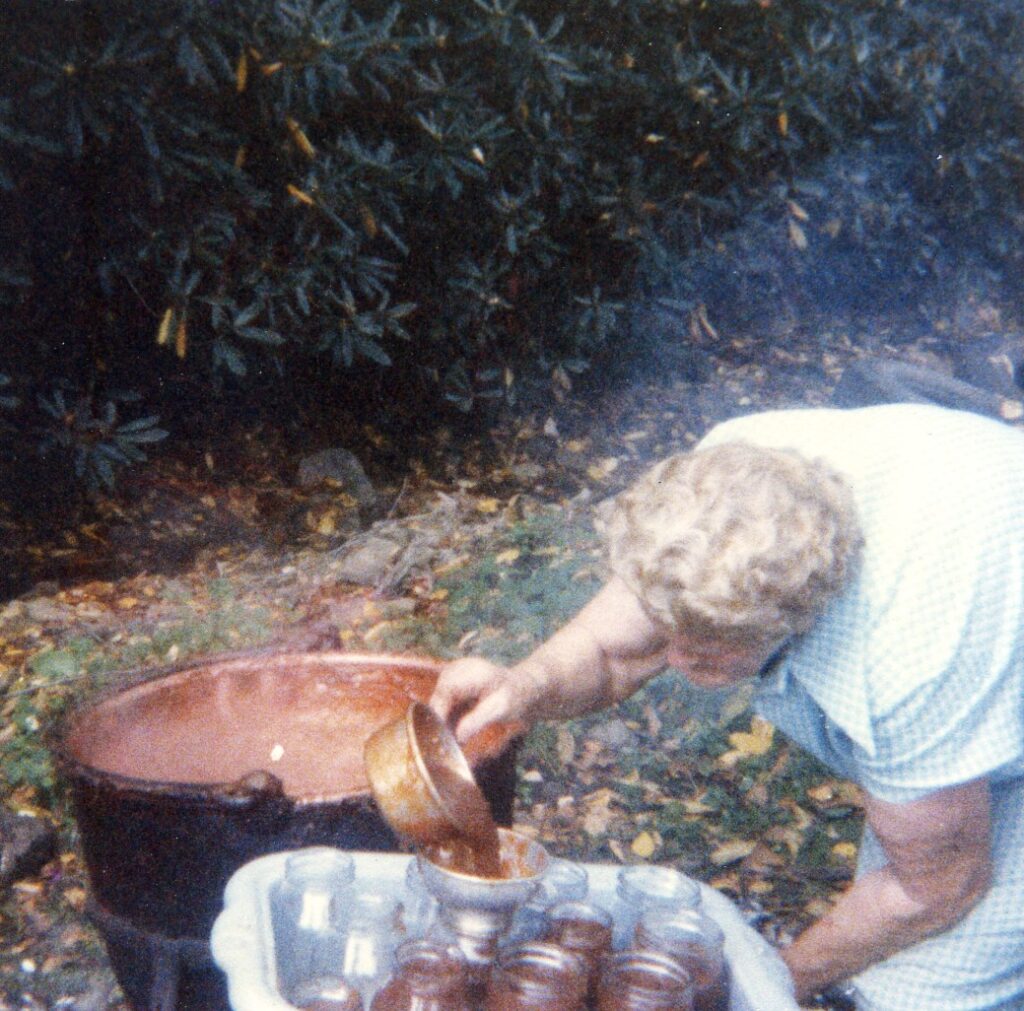
I used a small handled pan to dip the apple butter out of the kettle into the jars. Dollie came behind me and placed the flat lids and rings on the jars. We then carried the pans of jars into the warmth of the kitchen as an October chill had started to settle in. We did not want to stand a chance of the chill to crack our glass filled products. Dollie checked each jar for any remains of stickiness. I then turned my attention to preparing salted vinegar water to once again clean the kettle. It was just about dark when clean up was finished, and do you know what, Louise? We heard the evening song of the woodthrush.
I must get on with my list of chores to be finished before winter sets in. By all reports, it is going to be a very bad winter. I hope these lines have brightened your thoughts. We will look forward to our annual Thanksgiving visit with you. I will bring the apple butter.
You sister,
Kathleen

NANCY S. HOFFMAN
reports, all. “A LETTER HOME .” Goldenseal West Virginia Traditional Life, Fall 2025. https://goldenseal.wvculture.org/a-letter-home/