By Candy Thompson
“The Monarch Butterfly was designated West Virginia’s official state butterfly on March 1, 1995 by the Legislature, after declaration by Senate Concurrent Resolution No. 11.”
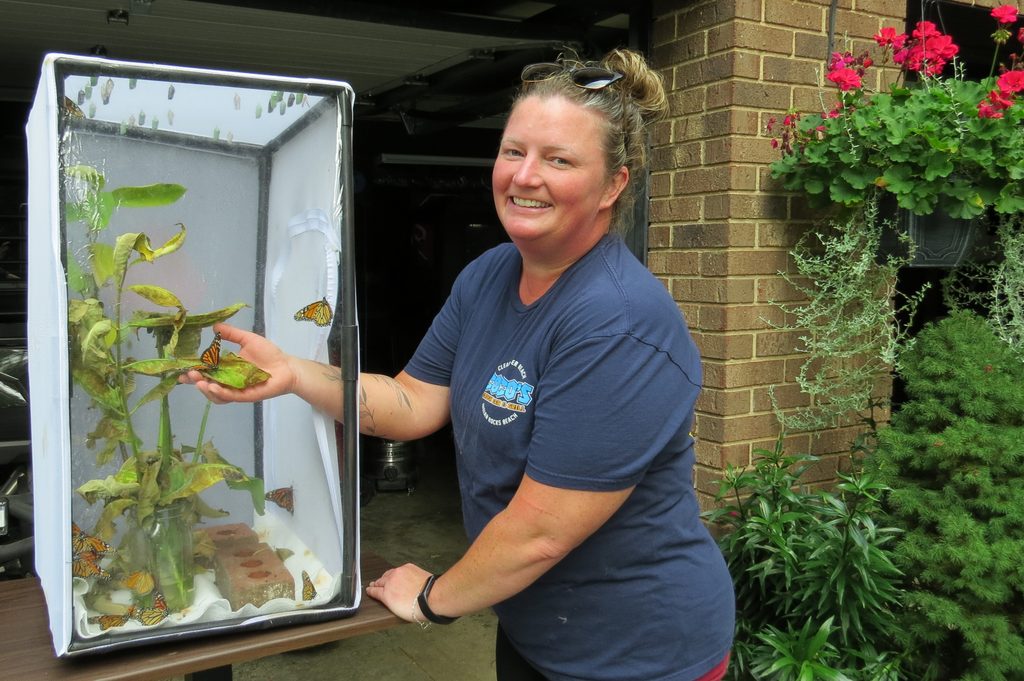
There is nothing more beautiful than the vision of orange and black monarchs softly fluttering through your hands. Watching them swirl and rise upward until they disappear into the horizon. Preston County resident Jenna Born, embraces and lives this vision every summer.
Jenna tells me she got started raising monarchs five years ago. She was taking her dog Vader for a walk on a sunny afternoon. As they were walking, she spotted this very large black, white, and yellow striped caterpillar on the underside of a milkweed. She googled the caterpillar and discovered it was a monarch. She then started reading and searching for more information about monarchs on the internet. She came upon the website MonarchWatch.org and decided to get involved in helping to protect and preserve monarch butterflies.
MonarchWatch.org enlightens interested individuals about research and education concerning the raising of monarchs. This includes information about their habitats and what you can do to help. The monarch was previously placed on the “extinction” criteria list for insects. But thanks to the efforts of Jenna and other concerned butterfly hobbyists, the monarch has now moved up to the “vulnerable” criteria.
Monarchs have four cycles/stages of life: egg, larva, pupa (or chrysalis), and adult. In the first stage, or the egg stage, the female butterfly will lay about 300 to 1,000 eggs. They hatch in three to five days.
When Jenna places her order on MonarchWatch.org, she orders from forty to sixty monarch larvae at a time. Jenna says, “I place orders of this size several times throughout the summer months.” The orders arrive overnight in a box with a cold pack inside. She places her orders so the first order arrives at her home around the middle of July.
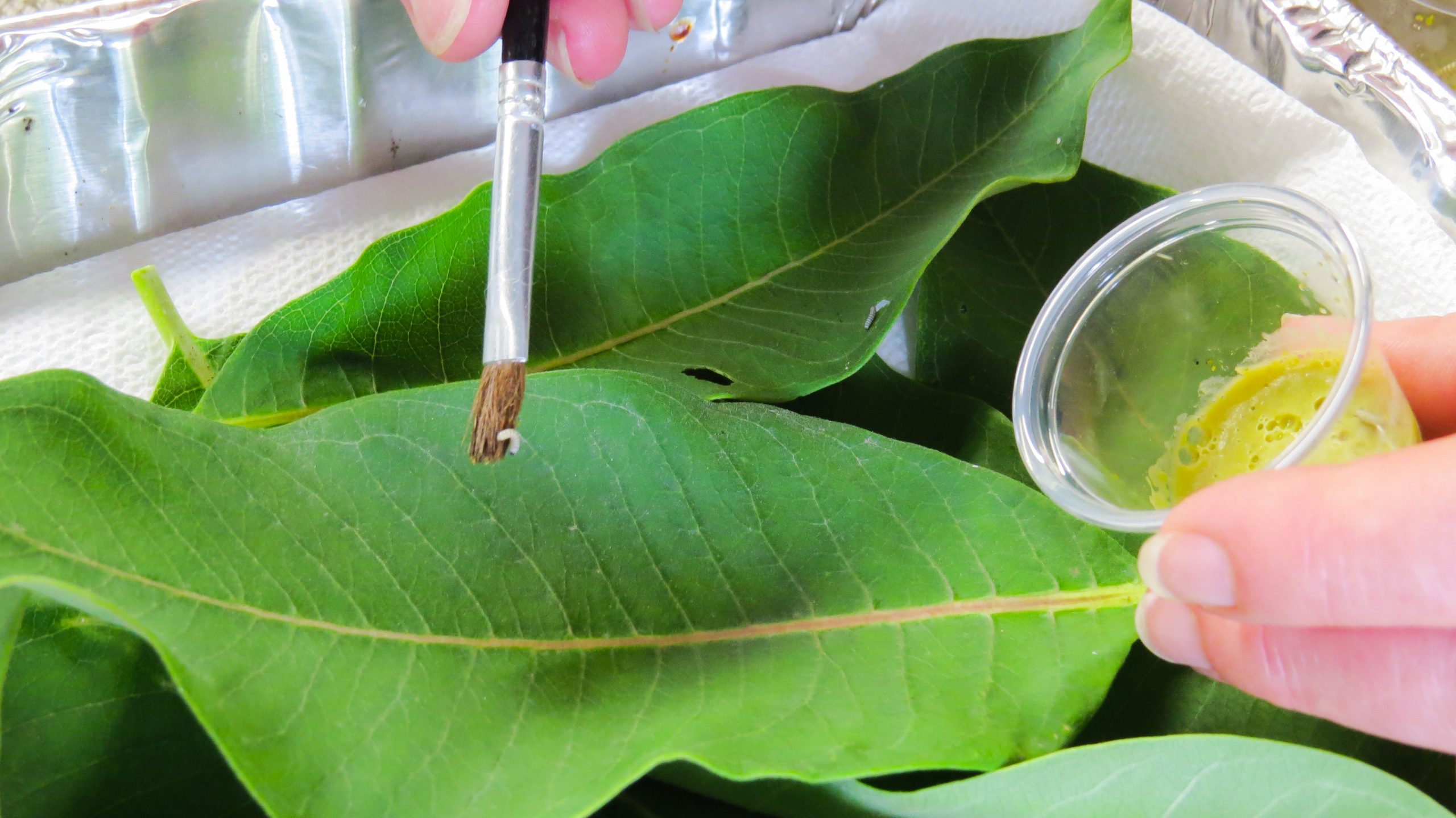
The larvae are shipped in little plastic ounce containers with lids. Each container has five larvae inside. Jenna uses a foil cake pan with a lid to start them in. Milkweed leaves are spread and layered inside the pan. She will replace the wilted milkweed leaves as needed, basically every other day.
She then very carefully takes an artist’s paint brush and removes the delicate larvae from the plastic containers and places them on the milkweed in the pan. They are so tiny, measuring only about one-fourth to half an inch in length.
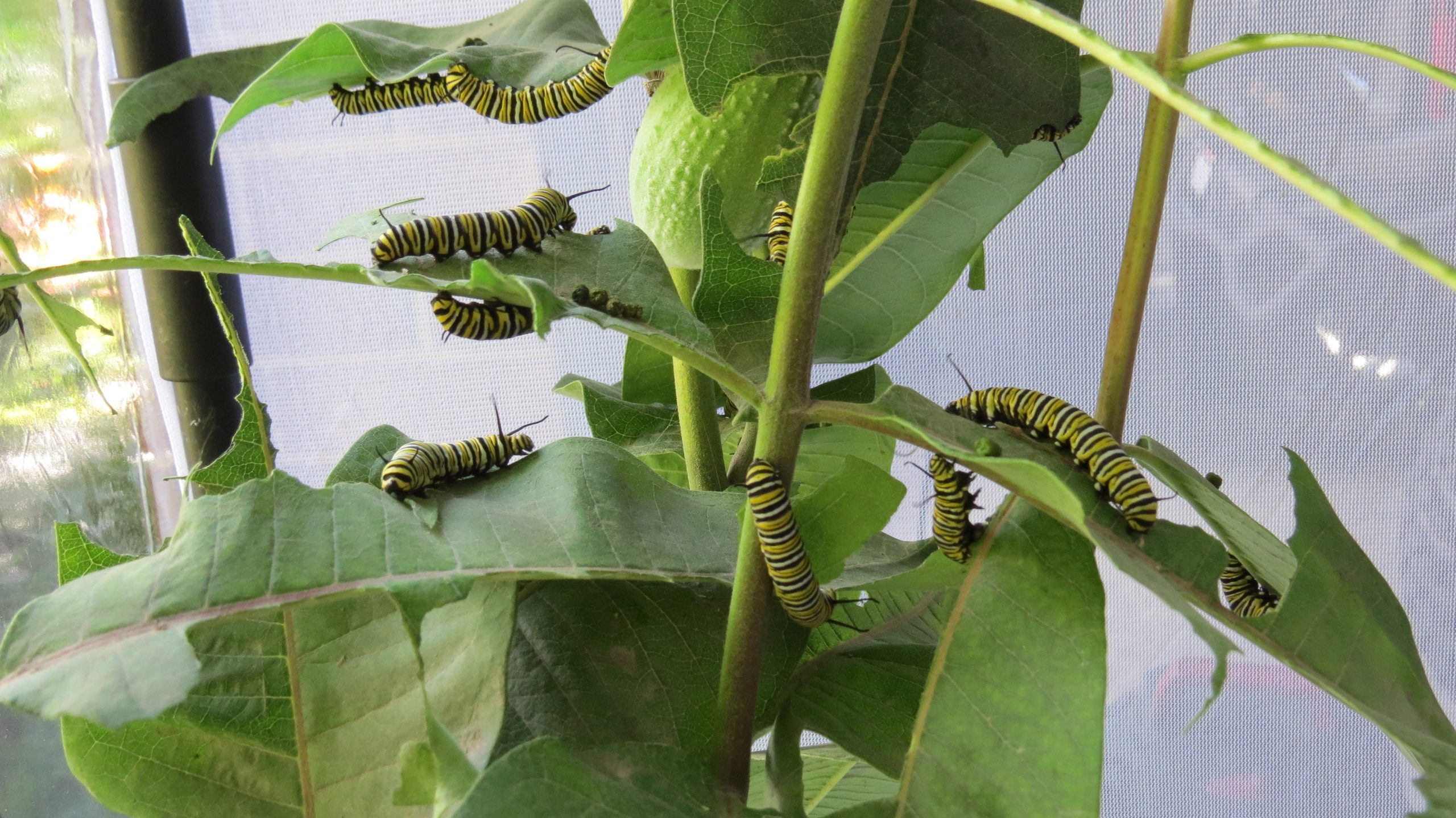
This second stage, the larva (caterpillar), ranges from ten to fourteen days. The larvae will only stay in the original foil pan for about 5 days, because of their growth in size. Jenna then needs to transfer the larvae to a netted butterfly cage. Milkweed plants will then have to be changed every day because of the larvae’s immense appetite.
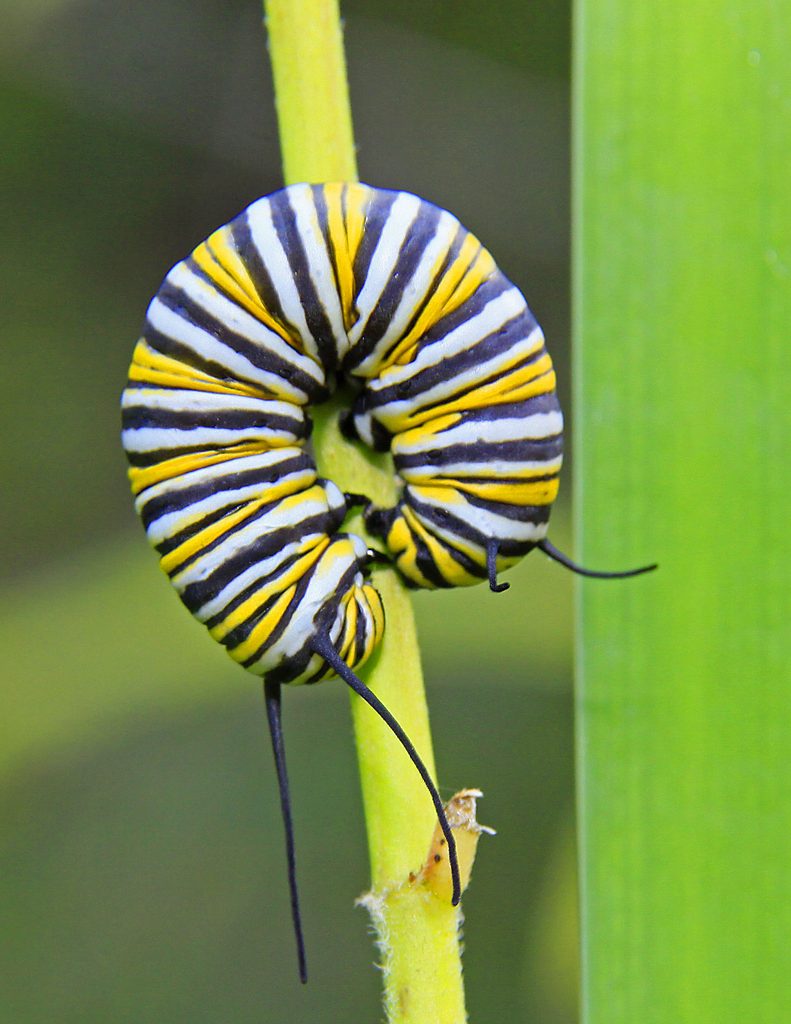
Jenna has found an easy way of doing this. She takes the milkweeds out of the butterfly cage and lays them on a towel that is spread out on a flat surface. The larvae cling to the milkweed. She then washes and rinses the jar out. She puts freshly picked milkweed in the clean jar and adds fresh water. She quickly and carefully picks each larva off the old, partially eaten milkweed leaf and places them on the fresh milkweed. She places clean paper towels on the bottom of the cage and places bricks around the edges of the paper towels to hold them in place. The jar with milkweed and larvae is placed back inside the cage. During this time, as the larvae are growing, they also molt. Shedding their skin five times.
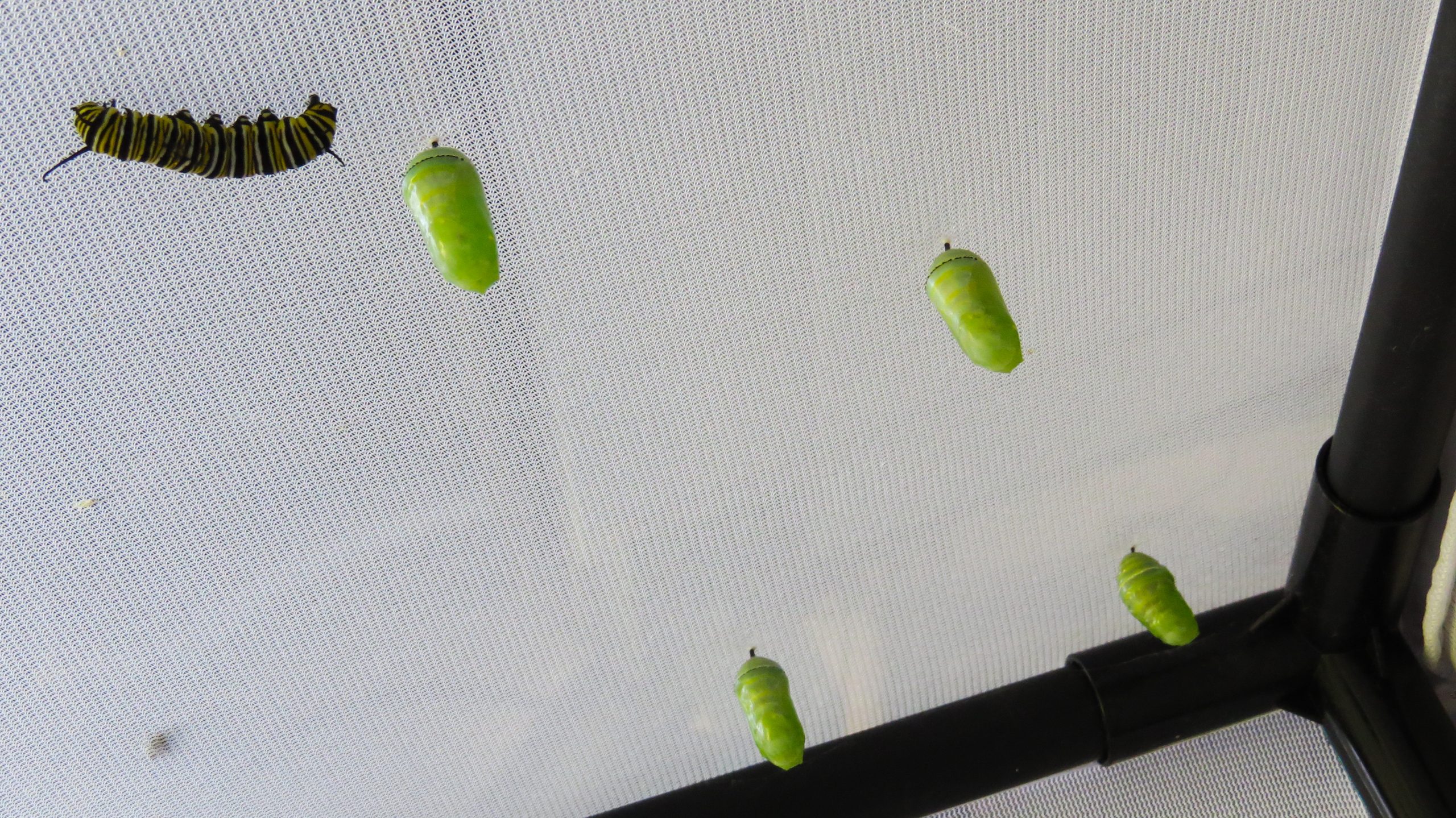
At the fifth molting, the larvae then enter the pupa (chrysalis) stage. The larvae will climb to the top of the cage, hang upside down in a “J” shape, and split their skin open to reveal a green cuticle. It will wiggle until it’s inside the cuticle. The larva then becomes a pupa. The pupa stage lasts about ten to fourteen days.
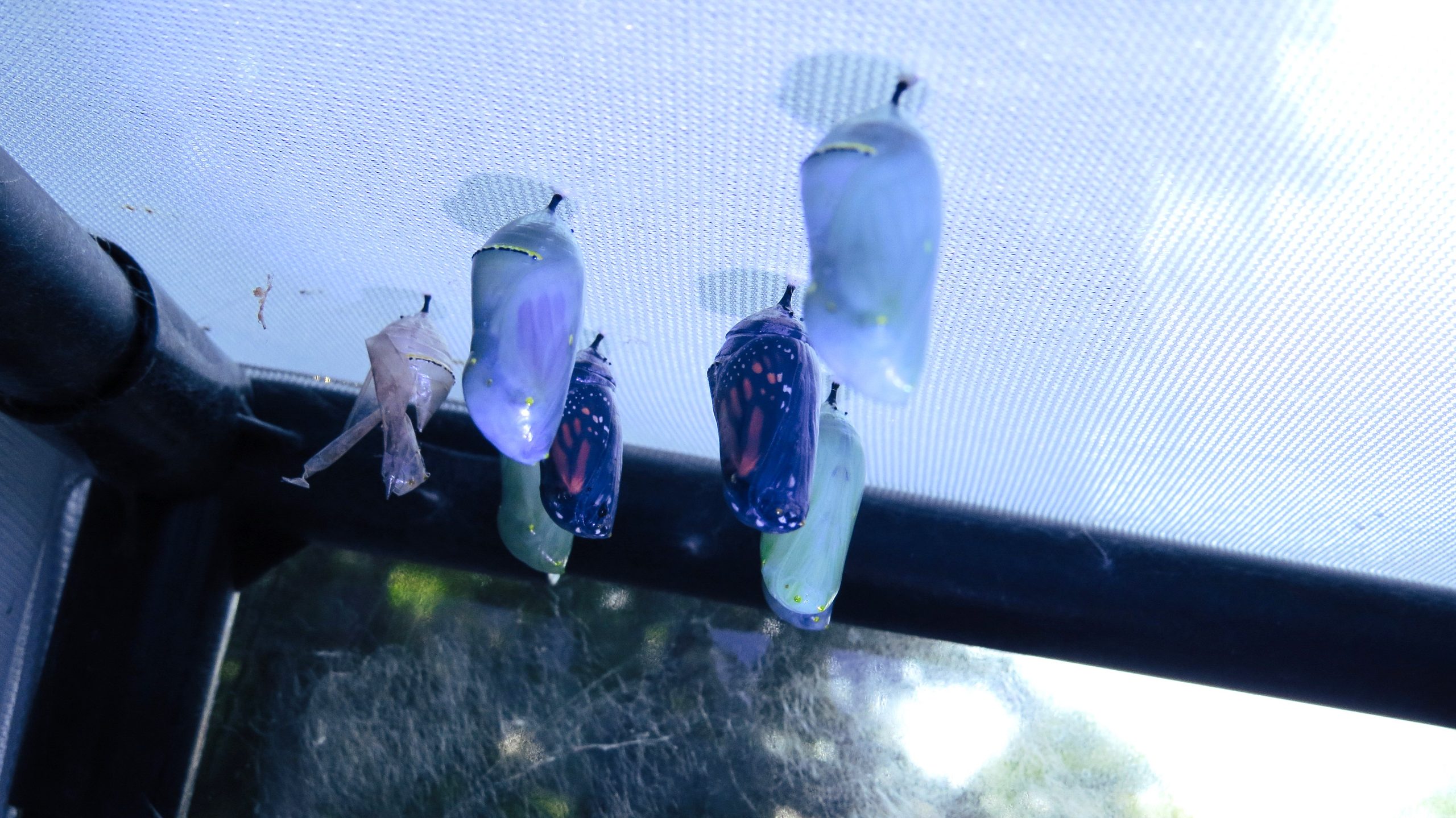
At the end of this stage, the chrysalis case finally becomes transparent, and the adult butterfly will emerge. The newly hatched butterfly will pump the fluid (this fluid is called meconium) out of its body and into its wings to expand them. Once the wings are fully expanded, the monarch will hang in place until the wings dry. This takes about a day. Then the butterfly is ready to take flight.
As I learn all of this from Jenna, I patiently wait to be a part of the release of these monarchs. I feel honored to be a part of the spellbinding event. On the day of the release, Jenna slowly reaches her hand into the netted cage. A monarch climbs upon her fingers and into the palm of her hand. She carefully backs her hand out from inside the cage. The butterfly gradually opens and closes its wings. Then, it casually takes flight, floating upward into the sky. One by one, Jenna does this until all the monarchs are released. Jenna says, “Releasing the monarchs never gets old. I feel an accomplished feeling of joy inside, as I watch them fly away.”
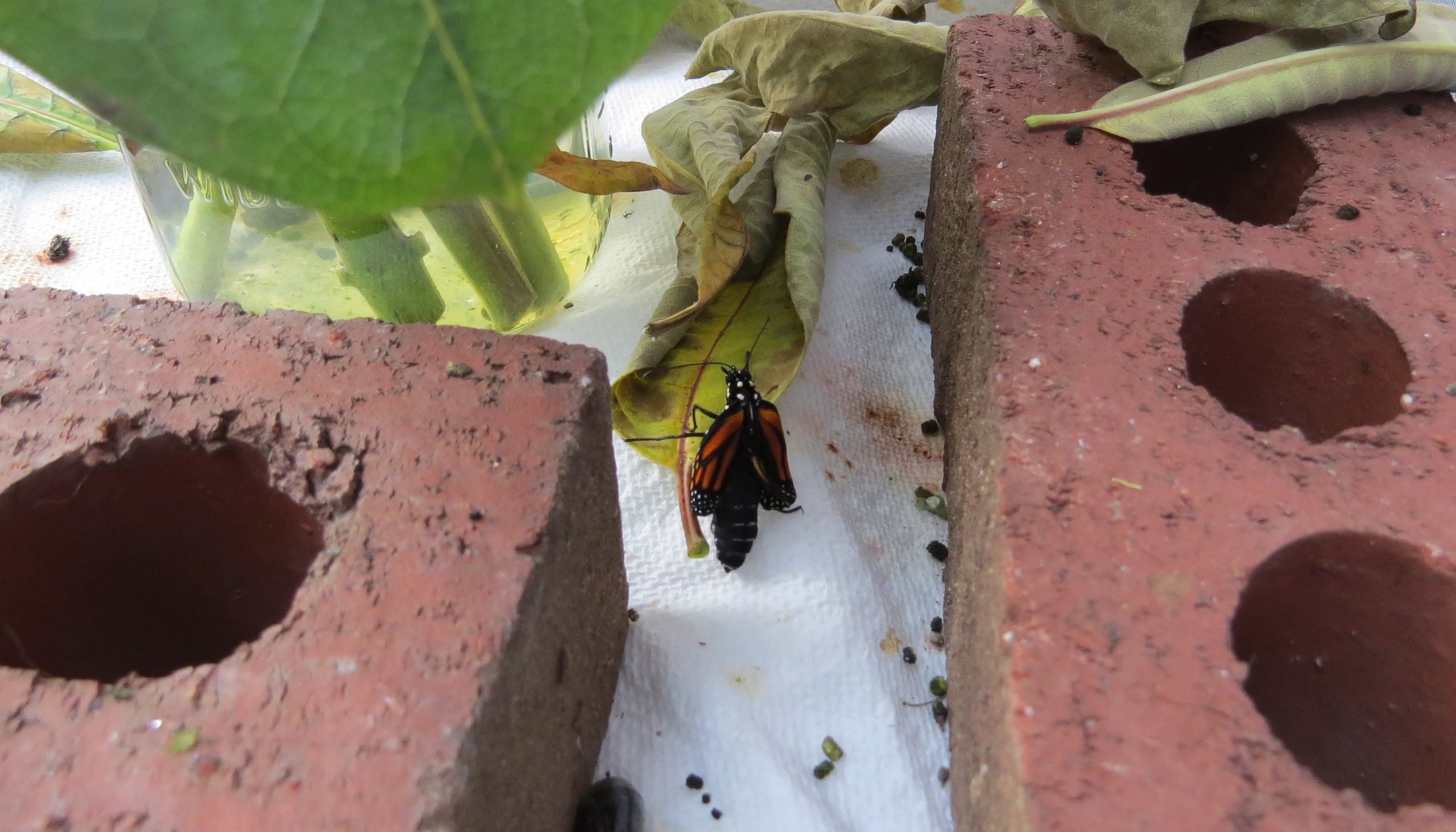
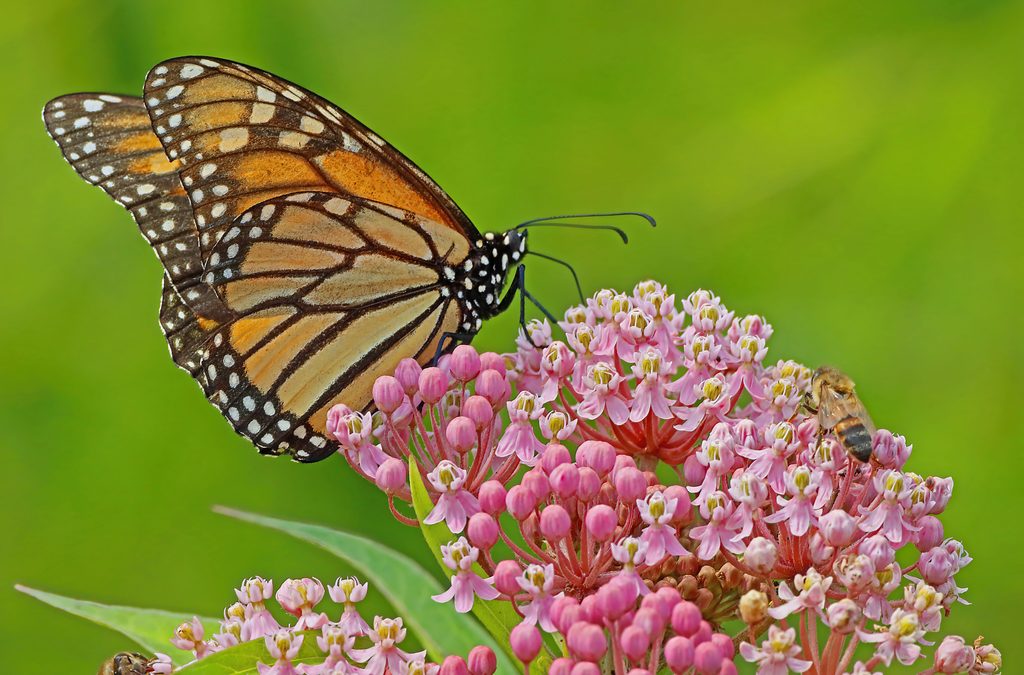
This has been quite a fascinating learning experience for me, watching the different growth stages a monarch passes through. And I learned how to tell a male and female monarch apart. The males have a black spot on each of their hind wings; females don’t. Females are darker in color than males. Also, males are larger in size than females.
Jenna states,”I have encouraged my mom and nieces to get involved with raising monarchs. If you need an interesting and educational activity to get involved with, helping to save the monarchs is the ideal hobby. It’s a rewarding hobby you can grow with as you learn.”
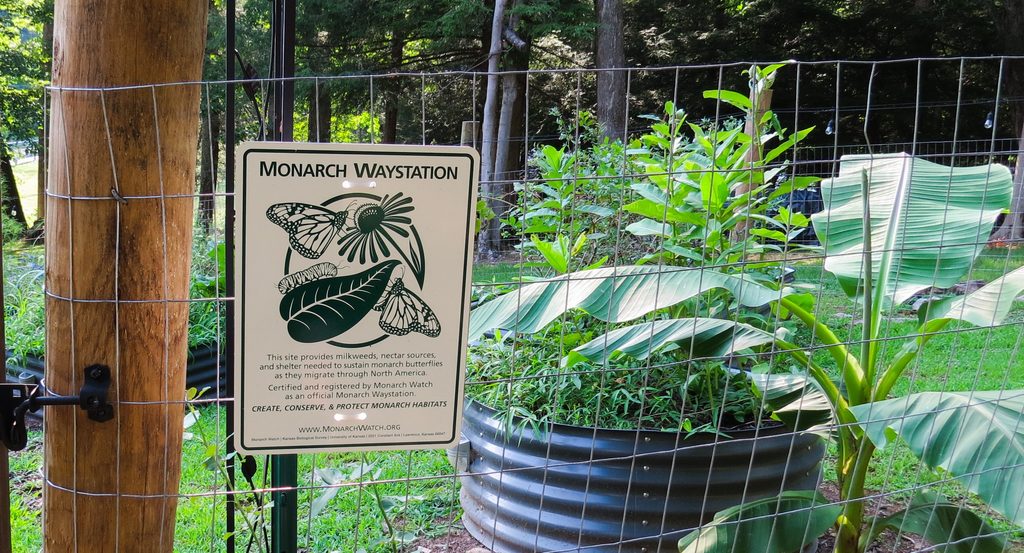
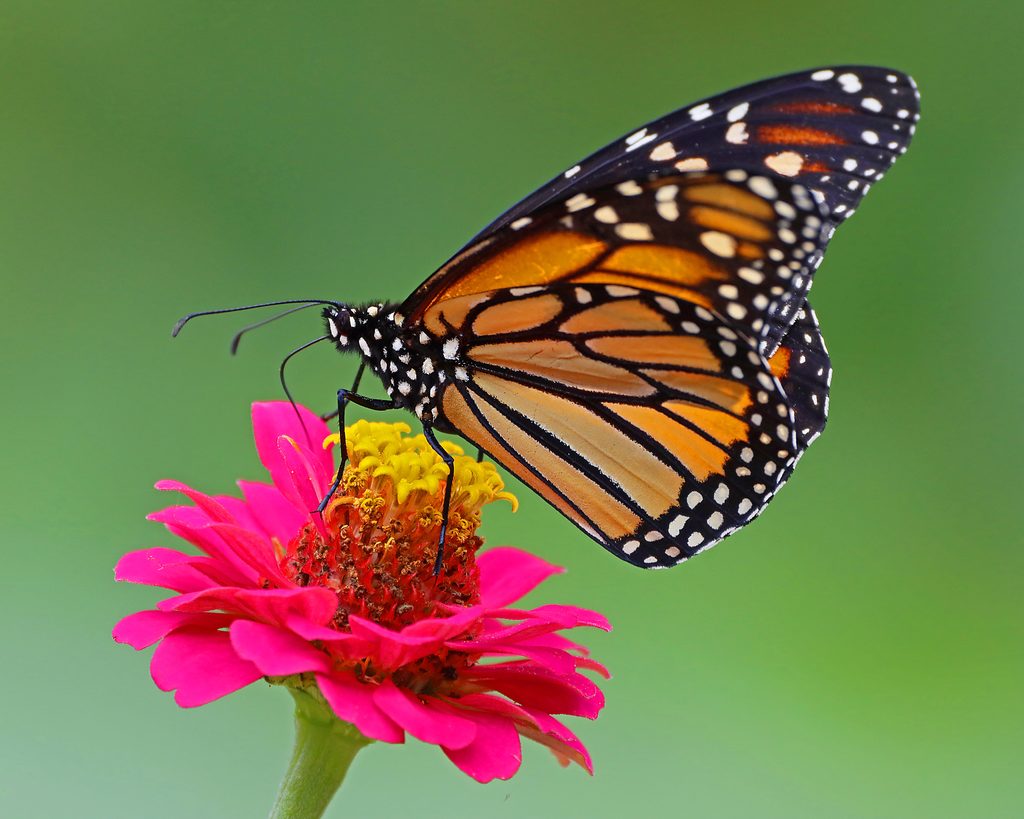
Jenna’s yard is certified as an official Monarch Waystation by Monarch Watch. In her yard, she has several different types of milkweeds, coneflowers, zinnias, and salvias—and that is just to name a few of her nectar flowering plants! As of June 27, 2024, there were 47,897 Monarch Waystation habitats registered with Monarch Watch.
For information on creating a Monarch Waystation and seeing what you can do to help save the monarchs, visit www.MonarchWatch.org

CANDY THOMPSON
Thompson, Candy. “Bringing Nature Home by Raising Monarchs.” Goldenseal West Virginia Traditional Life, Spring 2026. https://goldenseal.wvculture.org/bringing-nature-home-by-raising-monarchs/