By Samuel Peters
On a crisp autumn day in Jefferson County, rain-hazed and washed in that soft Appalachian gold light, there sits a shop that smells like sugar, nostalgia, and old stories. True Treats Historic Candy is the kind of place that blurs centuries the moment you cross the threshold. A visitor stepping inside might feel, for a beat, that the 21st century has loosened its grip and allowed the world of colonial Salem, Civil War encampments, or an 18th-century apothecary to rise softly back into view.
Harpers Ferry has always been a place where history congregates. At the confluence of the Potomac and Shenandoah rivers, where three states meet, the town witnessed Thomas Jefferson’s rapture over the landscape in 1783, saw George Washington choose it as the site for a federal armory, and became forever marked by John Brown’s 1859 raid. The town changed hands eight times during the Civil War, its armory destroyed, its streets battered by conflict. By the early 20th century, Harpers Ferry had become a quiet village, its industrial base gone, its future uncertain until preservation efforts in the 1940s gave it a new purpose as a destination for those drawn to the layers of American history embedded in its streets.
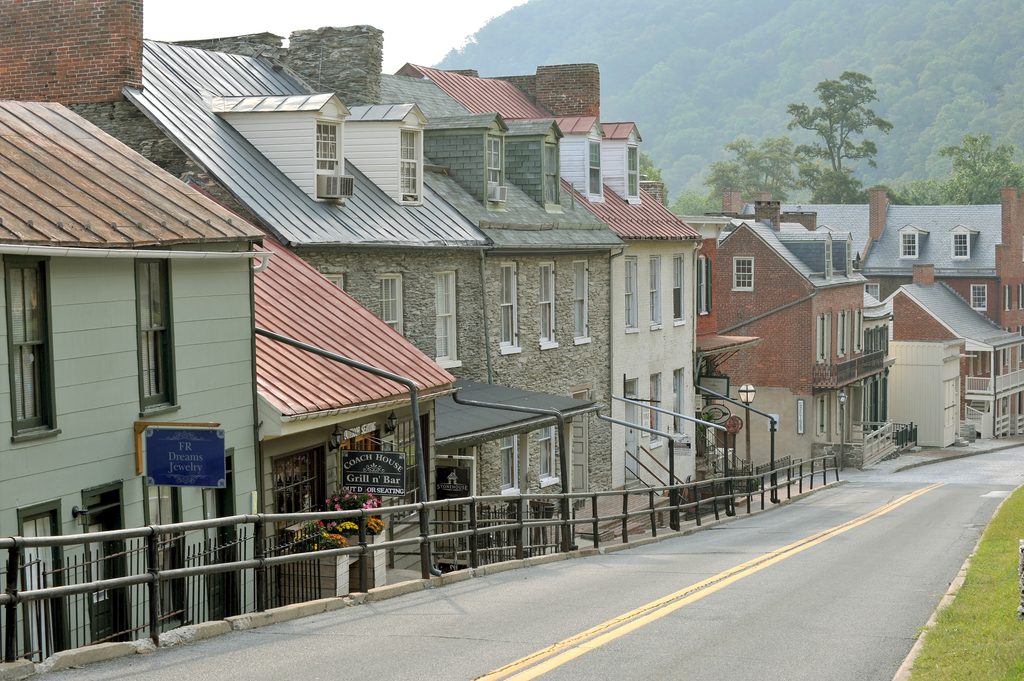
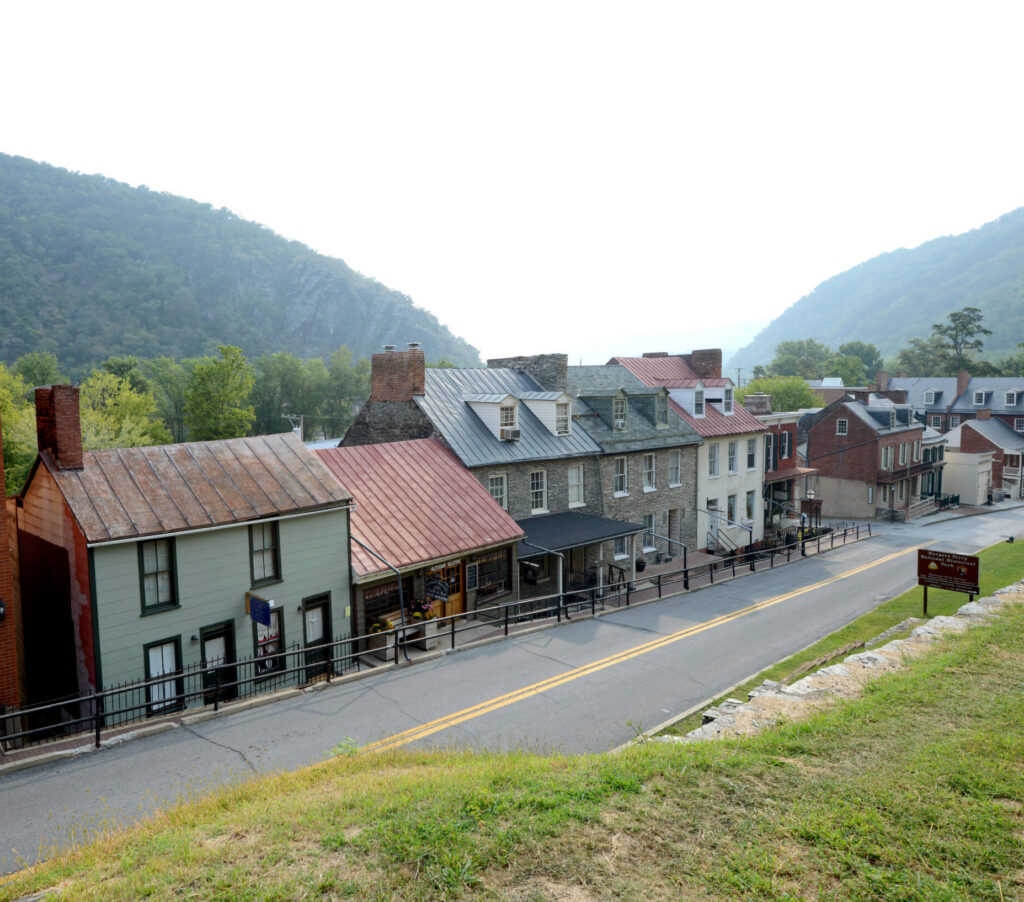
Into this setting came True Treats in 2010, occupying a red brick building on High Street dating to 1843. The structure itself speaks to the era when Harpers Ferry was a thriving armory town, its workers housed in government-built homes that lined the steep hillsides above the river. The building sits in what locals call Upper Town, above the flood-prone lower district that the National Park Service later restored. These upper streets, narrow and steep, were designed for wagons, not cars, and walking them today still feels like entering another century.
“The shop is inseparable from the town’s history. It feels less like a modern storefront and more like a living cabinet of curiosities. Shelves run chronologically around the room so that candy becomes a timeline: ancient resins on one end, nostalgic 20th-century favorites on the other.”
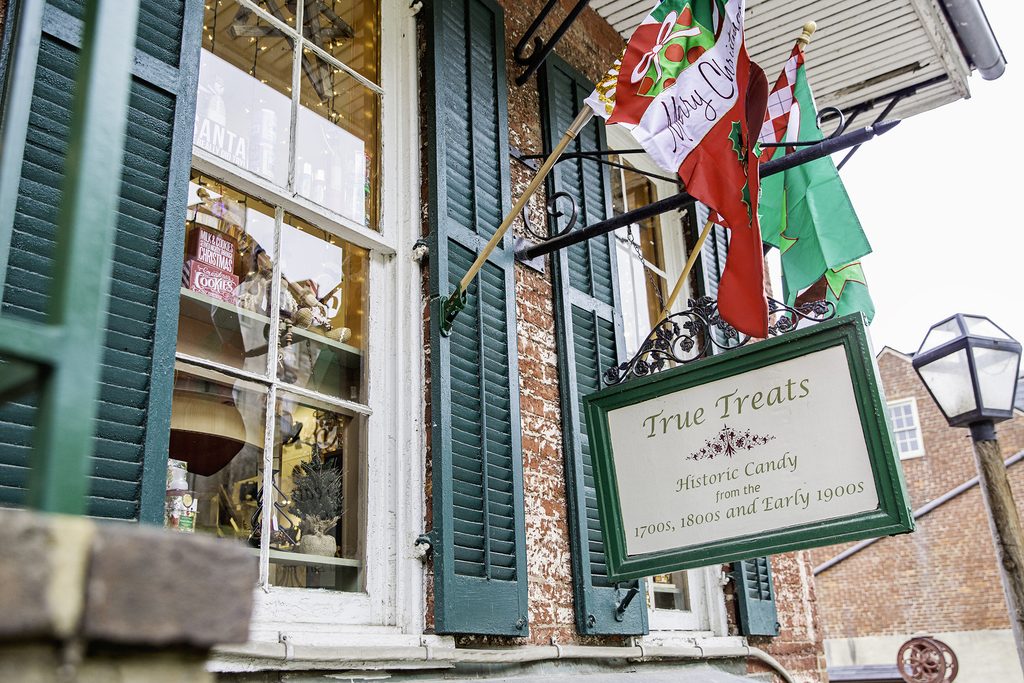
True Treats describes itself as the nation’s only research-based historic candy store, not as a marketing slogan but as a literal mission. Its purpose is not simply to sell sweets but to preserve and share the story of how candy has shaped trade, medicine, ritual, and everyday life across thousands of years. “Candy is deeply embedded in our culture, influencing such things as slavery, the American Revolution, medicine, the birth of the FDA, war rations, marketing, the upsurge of the Industrial Revolution, and the shakedown of Prohibition,” founder Susan Benjamin wrote in her book, Sweet as Sin.
Benjamin, Massachusetts-born, didn’t begin as a confectioner. She taught writing and literature in Boston, moved into communications, participated in a White House initiative under two presidents, and wrote books on business and culture. But somewhere along her academic path, a fascination took root: why people crave sweetness, how sugar became powerful, and what early candies actually tasted like.
Her research drew her deep into old cookbooks, diaries, apothecary manuals, colonial trade documents, Indigenous foodways, and advertisements with fonts so ornate they could double as lace. Eventually, she realized that all this scholarship needed a home that the public could touch, smell, and taste. After starting as a wholesaler in nearby Shepherdstown in 2004, she opened the retail shop in Harpers Ferry in 2010, and the town became the natural setting for this work.
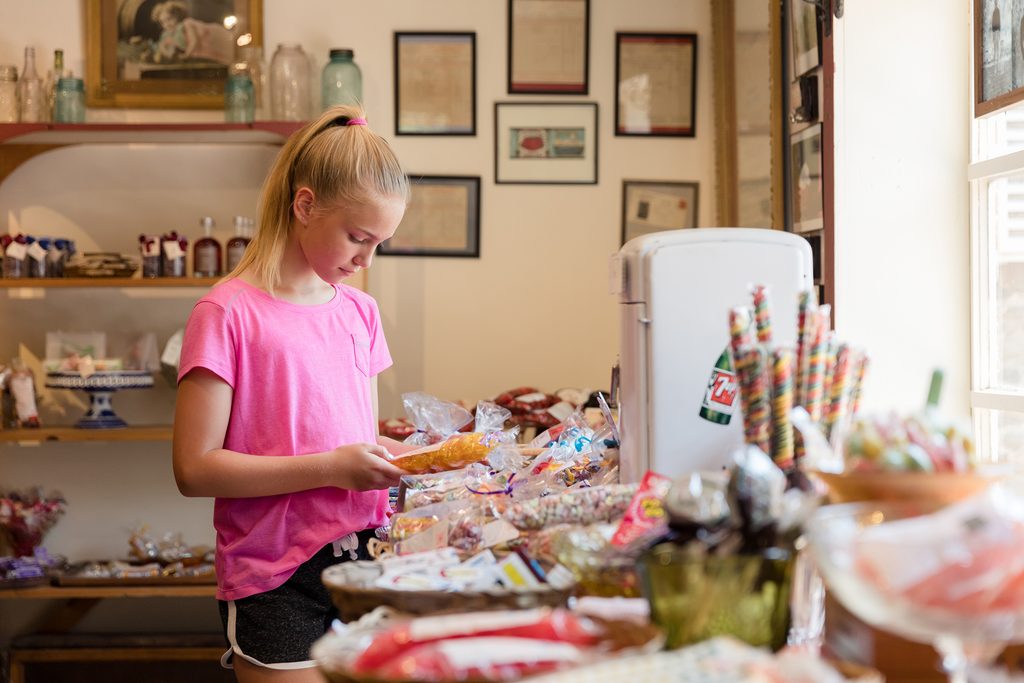
The shop is inseparable from the town’s history. It feels less like a modern storefront and more like a living cabinet of curiosities. Shelves run chronologically around the room so that candy becomes a timeline: ancient resins on one end, nostalgic 20th-century favorites on the other. According to Tasting Table, the shop holds more than 600 products from across centuries, each one labeled with stories, provenance, context, era, and purpose.
The journey typically begins with the oldest treats. Early confections weren’t candy in the modern sense, but aromatics, medicines, and functional flavorings. Tree resins, once chewed in ancient Mediterranean cultures, sit alongside roots and barks used by Indigenous peoples for relief, ritual, or simple enjoyment. The store offers ancient Greek chewing gum and Iroquois hickory bark as examples of humanity’s earliest relationship with sweetness. That small section alone feels like an anthropological exhibit, the kind that hints at how sweetness began long before refined sugar existed.
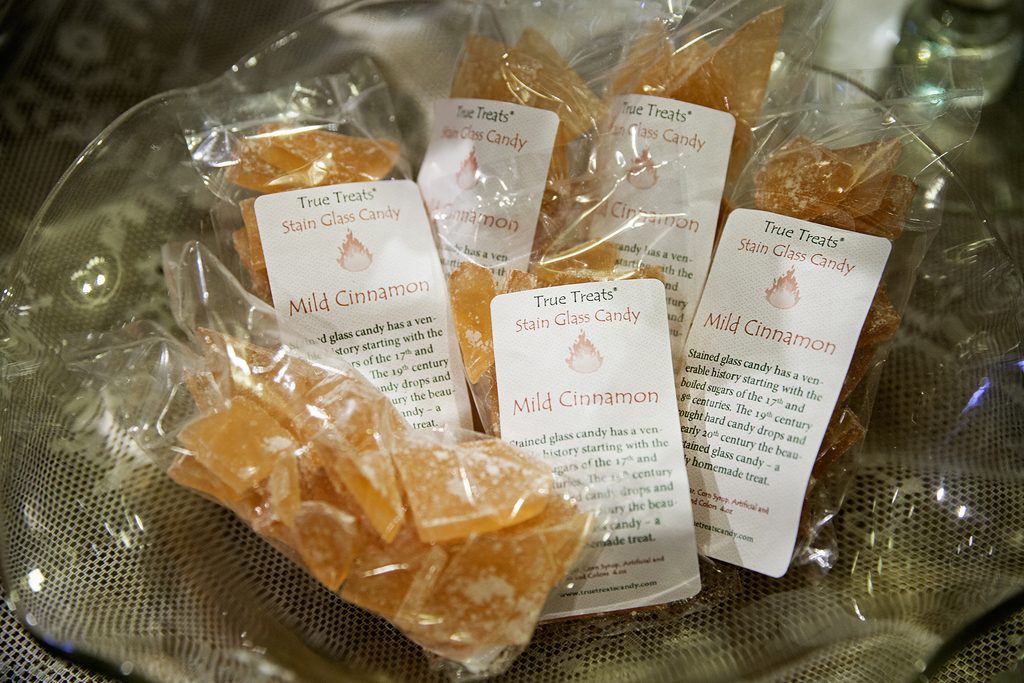
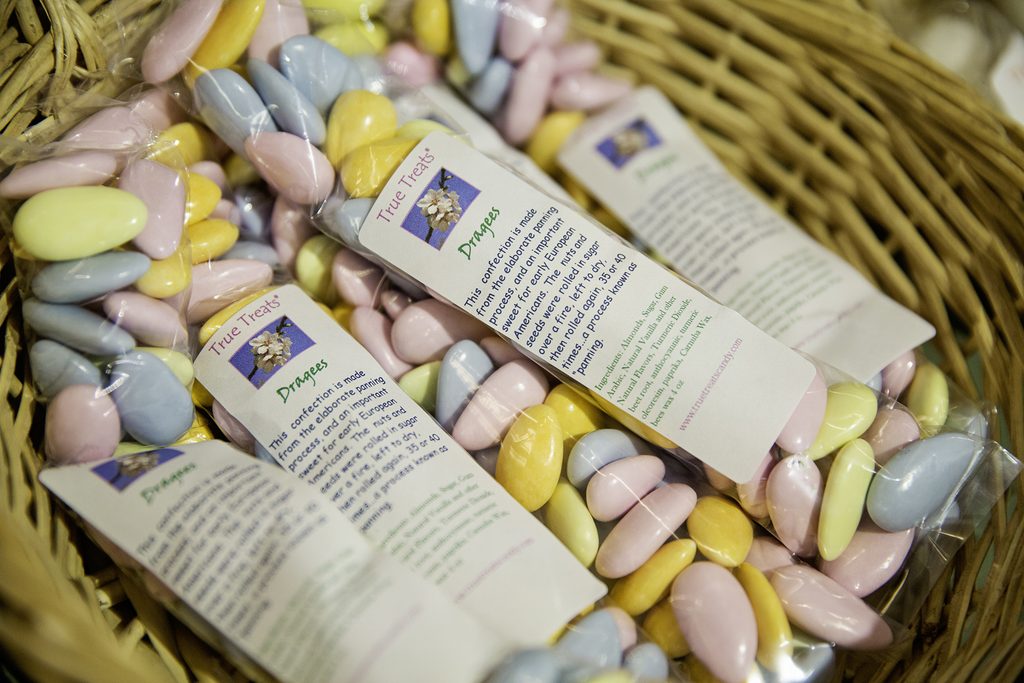
As the timeline moves into the 17th and 18th centuries, the shelves brighten with candied flower petals, citrus peels, sugar plums, rock candy, and dots of stained-glass sugar. These sweets were expensive, extravagant, and socially symbolic. Sugar was luxury, power, and privilege. Many of these early recipes were tangled up with medicine: looseleafs, lozenges that soothed throats or disguised unpleasant flavors, herbal sweets meant for digestion, syrups that straddled the line between indulgence and remedy. True Treats presents these not as novelties but as important cultural artifacts, each label gently explaining what purpose the confection once served.
One confection particularly resonates with the local history. In an interview with PreserveCast, Benjamin spoke of discovering that a Harpers Ferry confectioner from the Civil War era had been shot in his own candy store. “He was a Union supporter and an abolitionist-leaning guy that wound up, strangely enough, being shot by a Union soldier, and he died in his candy store,” she explained. “So that’s pretty amazing to me that we wound up there.” Later, descendants of this confectioner visited the shop, unaware of its connection to their family history, allowing Benjamin to interview them and add their stories to the town’s sweet archive.
The 19th century is where candy begins to feel familiar, where molasses becomes widespread, sugar refining improves, and mass production brings penny candies, lozenges, and taffies within reach for ordinary families. The store’s displays quietly underline how technology and trade reshaped sweetness. Railroads carried candy farther. Factories standardized texture. New machinery turned intimate kitchen crafts into industrial commodities. The story here is not an idealized past, but a clear-eyed history of changing tastes, labor, and economies.
Sarah Rutledge’s 1847 cookbook The Carolina Housewife contains what is considered the first known peanut brittle recipe in United States history. Her “Excellent Receipt for Groundnut Candy” called for molasses, brown sugar, butter, and groundnuts boiled together and poured into shallow tin pans. This was quintessentially Southern cooking, born from the ingredients and traditions of a region where peanuts had been brought by enslaved Africans and where molasses flowed through the kitchens of both wealthy and working families.
True Treats carries peanut brittle made from George Washington Carver’s original recipe. This brittle resembles sugar-coated peanuts sold by street vendors in New York and other large cities, with a sweet and savory taste and a melt-in-your-mouth texture. Carver, the pioneering agricultural scientist who developed more than 300 uses for peanuts to help Southern farmers diversify beyond cotton, left behind recipes that were both practical and innovative. His peanut brittle recipe calls for white sugar, light brown sugar, butter, and peanuts, cooked gently without stirring until it hardens when dropped in cold water. The inclusion of this recipe at True Treats serves as a tribute not only to a beloved treat but to agricultural innovation and African American scientific legacy.
“For West Virginians, True Treats represents something more than a tourist destination. It connects the state’s history to larger national narratives while remaining rooted in local pride. The store acknowledges that West Virginia, despite its relative youth as a state, sits at a crossroads of American history. “
By the time you reach the 20th-century shelves, childhood nostalgia kicks in. Pops Rocks, candy bars, bubblegum, taffy, novelty sweets, and familiar brands live here too. Many visitors come looking for these memories, and True Treats uses them as a bridge: a reminder that candy is both personal and collective history, a taste that reaches back into someone’s childhood even as the earlier shelves point toward centuries long before anyone now living was born.
If the products themselves form the spine of the experience, the storytelling is its heart. Benjamin’s 2016 book Sweet as Sin: The Unwrapped Story of How Candy Became America’s Favorite Pleasure serves as a kind of backstage guide to the shop. The book made the Smithsonian’s “Best Books About Food” list for 2016 and covers North America’s history of candies and confections from a national, political, and human rights perspective. But inside the store, the stories sit right on the shelves, arranged like paper snippets of time.
The curated collections function as portable tasting exhibits. The “Civil War Commissary in a Box,” mentioned by Long Weekends, pairs confections with context, notes about scarcity, supply tents, and the emotional weight of small comforts during war. The collection includes lemon drops, white sugar, stained glass candy, jelly beans, molasses pulls, even dried insects and cacao beans that soldiers might have encountered. The “Revolutionary War Supply Tent Candy Timeline” pushes the same idea further, inviting visitors to imagine what sweetness meant in an era defined by struggle, necessity, and rationing.
Some sets are almost theatrical. The “1700s Time Capsule” includes twelve authentic samples from the period: maple drops, candied flowers, sugar plums, and rock sugar, accompanied by a letter from “Terri the Time Traveler,” a whimsical but educational guide. Each bundle functions like a tasting museum exhibit, multisensory and transportive, a way of letting history dissolve on your tongue.
The deeper one wanders into this shop, the more clearly candy emerges as a lens rather than a luxury. Sugar’s global history cannot be separated from colonialism and the brutal labor systems that fueled its rise. Benjamin refuses to sanitize that past; the story of sweetness is inseparable from plantations, forced labor, and the exploitation that made sugar profitable. The delicate candies on the shelves carry ghosts, reminders of the people whose toil, suffering, and artistry made sweetness widespread.
At the same time, many of the treats reflect domestic labor, especially the work of women whose kitchens served as early laboratories of confectionery art. The candied citrus peels, sugared flowers, and preserved fruits represent hours of careful stove-side labor. They speak to domestic culture, hospitality, class, and the gendered nature of early culinary work. Benjamin has spoken extensively in interviews about how candy tells the stories not just of the wealthy few, but of everyone, including those whose histories are rarely heard.
Visiting the shop is a sensory education. The building’s old floorboards softly creak, the air smells like molasses and citrus peel, and the displays feel intentionally unhurried as if encouraging visitors to linger. One can move slowly through centuries, touching jars, reading labels, discovering odd textures and unfamiliar flavors. Some of the oldest sweets taste downright strange to modern palates: floral, resinous, medicinal, or sharply sweet. But this strangeness is part of the lesson. As Tasting Table notes, it reminds visitors that the history of candy is also the history of changing tastes.
To stand in True Treats is to feel how food shapes memory. A single peppermint stick can summon a childhood. A period-accurate sugar plum can transport someone into a Victorian parlor. A resin chew might conjure an ancient port city. Visitors don’t just learn history; they feel it in their mouths.
Yet bringing these candies back to life is not easy work. Many old recipes are vague, inconsistent, or call for ingredients rare or unsafe today. Benjamin often must interpret, adapt, or reverse-engineer. “Some directions are literally just ‘boil until thick,’” she told Tasting Table with a laugh. The challenge is to honor authenticity while ensuring the result is edible, safe, and reasonably familiar.
The location magnifies the magic. Harpers Ferry, with its Civil War echoes, mountain shadows, and old brick storefronts, seems to cradle the shop in historical resonance. Benjamin has emphasized that Harpers Ferry will remain the company’s base, saying, “We’re really a West Virginia company and we love West Virginia, and we love it right here.” Tourists drift in from the street hoping for something sweet, but most leave carrying a story instead.
The shop has received national recognition. Food Network Magazine named True Treats the number one candy store in West Virginia as part of their Top 50 Best Candy Stores in the United States. The store has also been featured on Jeopardy, the History Channel, PBS, NPR, and in publications including the New York Times, Wall Street Journal, and Atlas Obscura. Benjamin herself has become a sought-after speaker, giving talks at museums across the country, from the Deadwood Museum in South Dakota to the Black History Museum in Alexandria, Virginia, to the Museum of the Bible in Washington, D.C.
More than a retail space, True Treats is a reminder that food, even candy, is a cultural archive. The sugar plums whisper of colonial kitchens. The bark chews recall Indigenous knowledge. The peanut brittle honors African American agricultural innovation. The penny candies remember children saving coins at general stores. The Civil War confections speak to soldiers seeking comfort. The 20th-century treats connect to individual memories of grandmothers’ purses and corner shops.
Benjamin’s work extends beyond the physical store. She has written ten books, appeared regularly on radio and television, consulted with television productions like Boardwalk Empire on historically accurate candy, and maintained an active presence on social media and her blog Susan Suggests, where she shares recipes, historic facts, and old advertisements. In interviews, she speaks with infectious enthusiasm about her subject.
The shop’s commitment to research sets it apart from typical candy stores. The process typically begins with Susan’s scholarly research into historic periods before tracing a specific candy’s origins using original documentation. This methodical approach means that each product has been vetted for historical accuracy, with stories drawn from primary sources rather than folklore or approximation. The labels and tags on each product contain these stories, turning shopping into education.
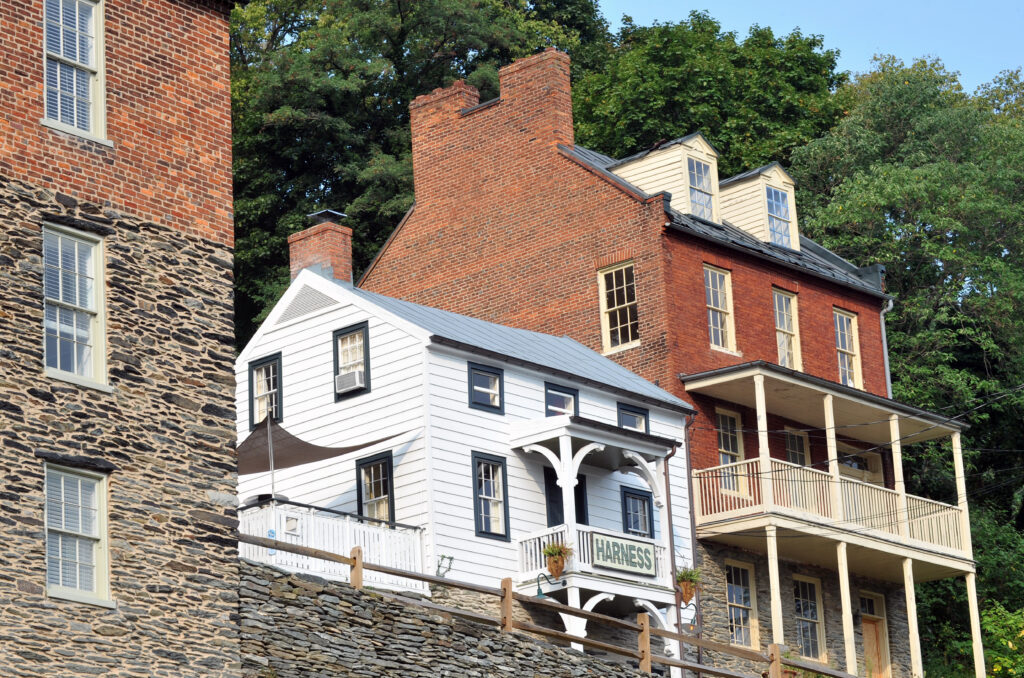

For West Virginians, True Treats represents something more than a tourist destination. It connects the state’s history to larger national narratives while remaining rooted in local pride. The store acknowledges that West Virginia, despite its relative youth as a state, sits at a crossroads of American history. The building itself dates to the era when Harpers Ferry was still part of Virginia, before the Civil War cleaved the state in two. The town’s role as a transportation hub, its position at the meeting of three states, and its place in both antebellum industrial history and Civil War conflict make it an ideal home for a store that treats candy as a window into broader historical currents.
The West Virginia connection runs deeper in the store’s inventory than might be immediately apparent. One of the legends Benjamin researched involves Tony Beaver, a folk hero created by turn-of-the-century West Virginia lumbermen. The stories, compiled by poet Margaret Prescott Montague in her 1928 book Up Eel River, include a tale about Tony Beaver’s role in creating peanut brittle. While less historically plausible than the story of peanut brittle arriving through African and Irish immigrant traditions, the Tony Beaver legend reflects West Virginia’s own folklore tradition, the imaginative storytelling of working people, and the state’s self-description as “Wild and Wonderful.”
Benjamin’s earlier career as a journalist, communications strategist, and college professor prepared her for the work of making history accessible. She taught at Emerson College and in the academics department of Berklee College of Music, mentored PhDs at Harvard and MIT, and brought scholarly rigor to her subject. But she also understood that history needs to be more than academic. It needs to be visceral, memorable, and, in this case, delicious.
Walking through True Treats, one notices the care taken with presentation. Glass jars line shelves. Vintage wooden boxes overflow with wrapped candies. Antique tea tins, vintage porcelain plates, and whimsical chocolate containers decorate the space. The shop feels curated rather than cluttered, intentional rather than haphazard. It is clear that someone with an eye for both aesthetics and scholarship has arranged this timeline.

The shop also serves as gathering space. Benjamin and her employees give talks to tour groups in a small theater area. School groups visit to sample Civil War rations or colonial treats as part of their history lessons. Families stop in after visiting the National Historical Park down the street. Candy becomes the connector, the tangible link between abstract historical concepts and lived experience.
When talking with Tasting Table, Benjamin noted, “The best aspect of the story of candy is that it really is about individuals and their deep self-experiences. Growing up with it, having grandparents share it with them, and being able to buy it themselves when they were younger. These stories are riveting.” This focus on individual experience, on the personal alongside the political, distinguishes True Treats from more conventional historical presentations. The shop acknowledges that history is both large-scale movements and small-scale memories, both the economics of sugar plantations and the joy of a child buying penny candy.
The store’s inventory includes items that would surprise visitors expecting only American candies. Ancient Greek honey sesame brittle, called pasteli, sits alongside Roman and Egyptian-inspired sweets. These inclusions reflect Benjamin’s belief that to understand American candy, one must trace its roots across continents and millennia. Sugar cultivation in the Caribbean, spice trade routes through Asia, colonial networks stretching from Europe to the Americas—all these larger patterns show up in the small confections on True Treats’ shelves.
The medicinal history of candy receives particular attention. Horehound drops, once prescribed for coughs and sore throats, appear with labels explaining their dual purpose as medicine and treat. Licorice root, used by pharaohs and prophets before arriving in North America with British colonists in the 1600s, served as medicine, spice, flavoring, and even toothbrush for centuries before becoming penny candy in the mid-1800s. Peppermint, a hybrid of spearmint and watermint, soothed digestion while satisfying sweet cravings. These overlaps between pharmacy and confectionery remind visitors that the boundaries between categories were once far more fluid.
“For Benjamin, this work represents the culmination of decades of research and a deep belief that food history belongs to everyone. “Candy is about everybody,” she has said repeatedly in interviews. Not just the wealthy, not just one region or culture, but all of us who have ever saved pennies for a treat, received candy as a gift, or found comfort in something sweet during difficult times.”
By the time one reaches the doorway again, the timeline has completed its loop. Ancient resins lead to modern chocolate bars. Medieval rose candies give way to bubblegum. Old molasses chews sit beside contemporary gummies. Some visitors leave with a curated box, others with a handful of penny candy. But most, perhaps without realizing it, carry away something more subtle: the recognition that sweetness is never simple. It is a record of our past and a map of human desire.
Walking out onto High Street, with the Potomac or Shenandoah glinting through the trees, the world feels slightly different, not because of the sugar but because of the history it revealed. True Treats has done what good museums do: it has made the past tangible, connected distant centuries to present moments, and suggested that even the smallest pleasures contain stories worth savoring.
The shop reminds us that West Virginia, despite sometimes being overlooked in national narratives, sits at the heart of American history. Harpers Ferry witnessed the birth of interchangeable parts manufacturing, the flashpoint of abolitionist action, the devastation of civil war, and the long work of preservation and tourism that followed. True Treats adds another layer to that story, showing how even something as seemingly frivolous as candy carries weight, meaning, and memory.
In a world rushing ever forward, this little shop invites us, sweetly, to look back. It suggests that understanding where we’ve been, even in something as simple as the evolution of a peppermint stick, helps us understand who we are. And it does so not through lectures or textbooks but through taste, through the direct, physical experience of putting history on your tongue and letting it dissolve.
For Benjamin, this work represents the culmination of decades of research and a deep belief that food history belongs to everyone. “Candy is about everybody,” she has said repeatedly in interviews. Not just the wealthy, not just one region or culture, but all of us who have ever saved pennies for a treat, received candy as a gift, or found comfort in something sweet during difficult times. True Treats, in its modest brick building on a steep Jefferson County street, preserves those stories. It holds them carefully, presents them generously, and invites us all to taste.

SAMUEL PETERS
Peters, Samuel. “True Treats: Walking Through History in a Harpers Ferry Candy Store.” Goldenseal West Virginia Traditional Life, Spring 2026. https://goldenseal.wvculture.org/true-treats-walking-through-history-in-a-harpers-ferry-candy-store/