By Dakota Karper
Once upon a time, there is a band. Let me tell you about it.
As I turn my car down Critton-Owl Hollow Road and begin the long and twisty drive to the Herrmanns’ cabin, I think of the countless times I’ve been down this road—it still sparks a sense of wonder. Perhaps Sam and Joe Herrmann felt the same way in 1973, when they first came to Critton Hollow and began their musical lives here. Today, I come to Critton Hollow to hear their story.
When the Herrmanns arrived in Critton Hollow, they were taken with the beauty of the place and the land’s natural attributes. Even more than the land, they were taken with the community of like-minded individuals who soon became dear friends. Musicians were abundant in these parts, and Sam and Joe were quickly welcomed into the circle. They spent countless hours jamming with Jack Shaffenaker of Capon Bridge on his guitar. Through Jack, they met Michael Kline, who lived down Dillons Run. Michael would often join Sam and Joe to perform at local places like the Coolfont restaurant. Michael also introduced the Herrmanns to Sloan Staggs and the Shanholtz family, who all played stringed instruments. They learned fiddle tunes from Israel Welch and were inspired to sing with Tom Rodd and the North River Skimmers.
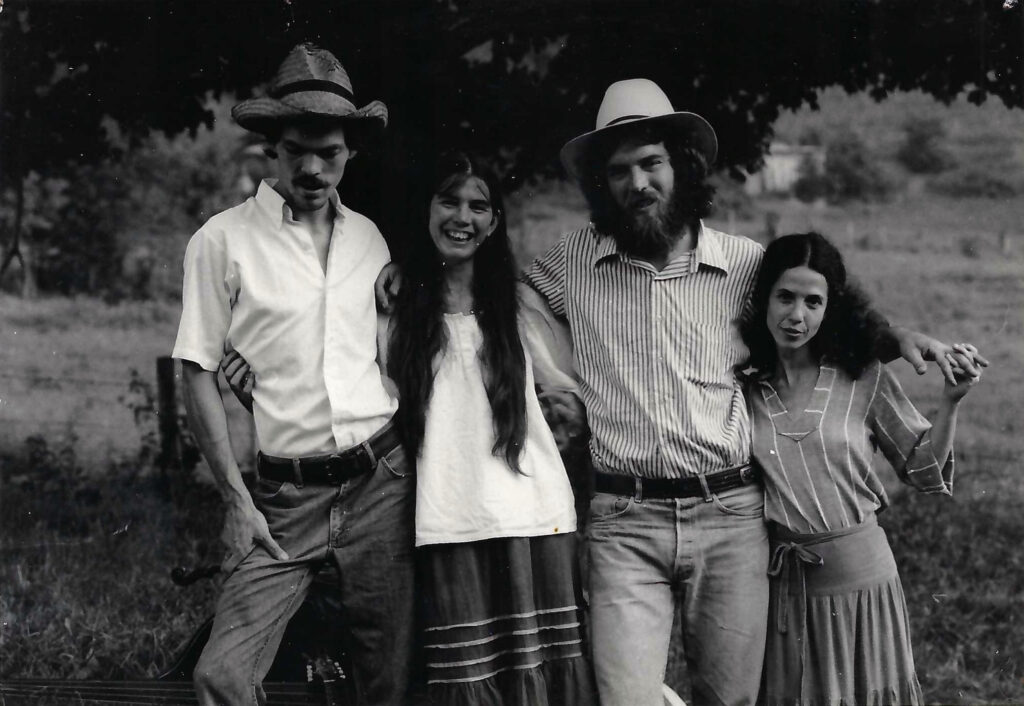
As we talk, Joe Herrmann reflects on the time spent with these folks, many of whom have now passed on: “The thing that they taught us—it wasn’t so much the tunes or their style… it was the generosity of it. Those were the higher lessons.”
More than 50 years later, local musician and violin builder Pete Hobbie echoes nearly the same sentiments when speaking about the Herrmanns: “One of the best things about having them in our musical community is their willingness to share and play at the level of the people in the room. No one ever leaves a session feeling like they aren’t good enough to play and have fun.”
Hobbie recounts a time in his teen years after returning home from a party in northern Virginia. He was lying on his bed, headphones on, listening to the radio when a band came on called Critton Hollow Stringband. Having spent much time listening to rock, jazz, and blues, the music Critton Hollow was playing was as different to him as a foreign language. Immediately enthralled, he listened and thought, “Someday, I want to be able to play this music like these people.” Fast forward 15 years or so, and Hobbie had moved out to West Virginia with his wife, Leenie, and infant son, Eli.
“The Critton Hollow Stringband has been guiding folks toward traditional Appalachian music for a very long time. They have been generous in sharing their music with all musicians, beginners and those more proficient alike.”
Attending a show at the Bluemont Concert Series in Winchester, VA, they saw another young couple with twin sons of about the same age as Eli. They struck up a conversation, and before long the young woman mentioned that they played in a band called Critton Hollow Stringband. Lo and behold, it was Sam and Joe Herrmann. The chance encounter immediately brought back to Hobbie that moment as a teenager. Hobbie had carried that vivid memory of this band and the music they played through the years. Starting out with a moment of awe, Hobbie and his family grew to be close friends with the Herrmanns and has indeed learned to play stringband music with the very people he heard playing it on the radio so many years before.
It was when they walked across the stage at the Galax Fiddler’s Convention in 1975 that the name Critton Hollow Stringband was adopted. Joe’s brother, John Herrmann, sent a letter inviting them to join him in Galax, VA, where he had entered the three of them in the band competition under that name. Sam and Joe decided the name felt right—and it has stuck ever since.
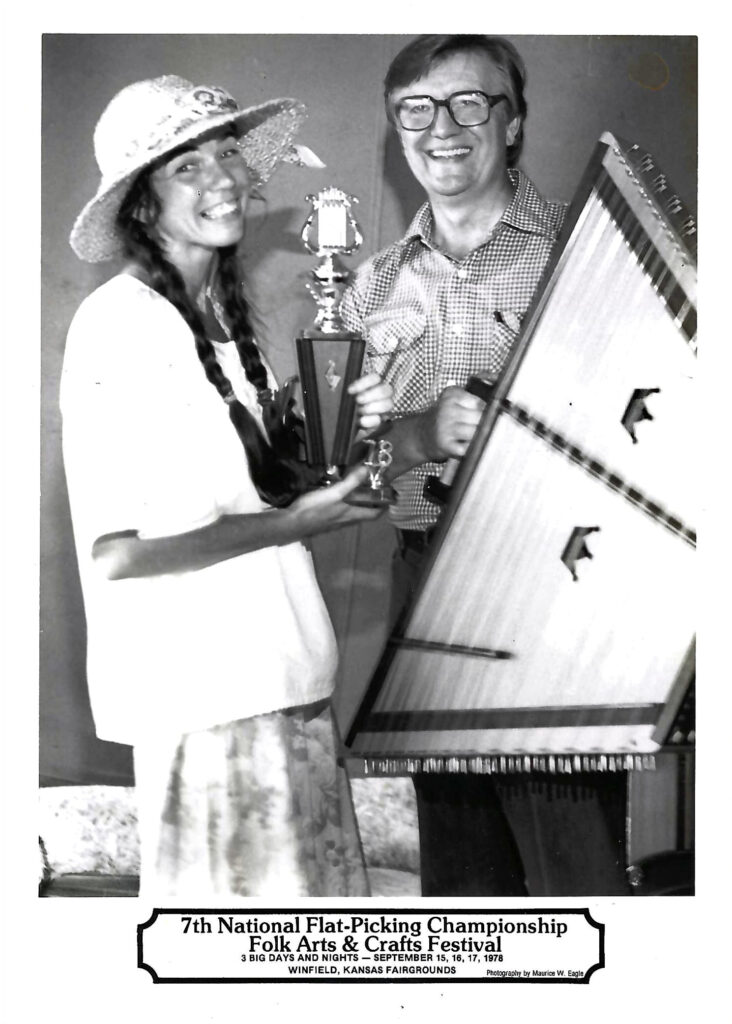
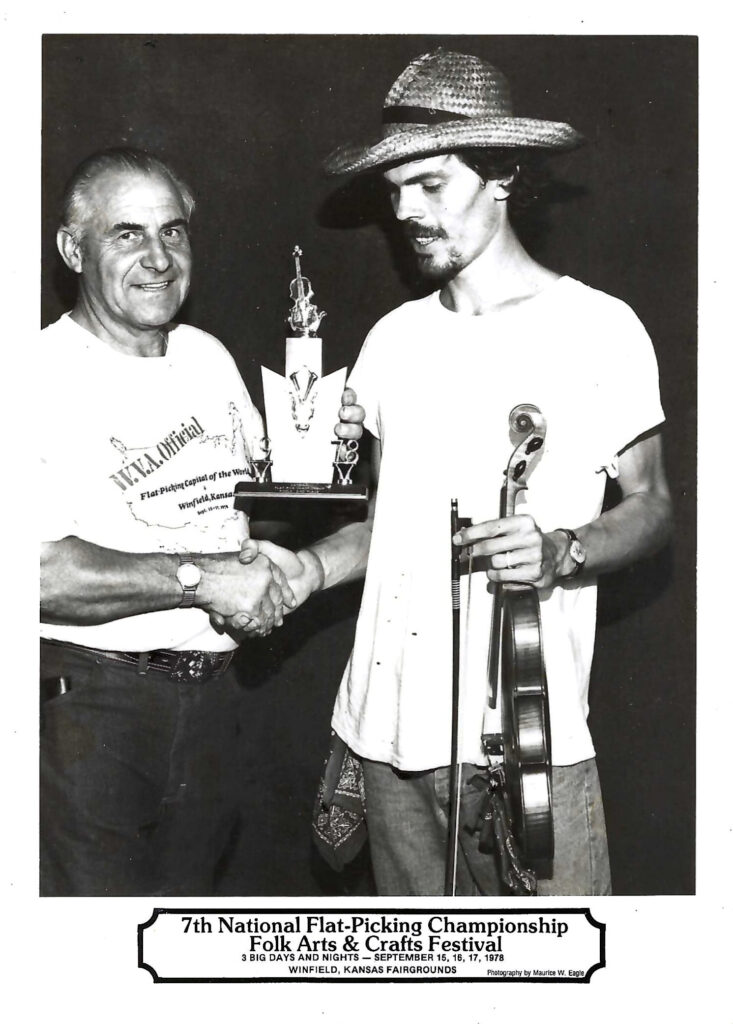
Always returning to their home in Critton Hollow, with community as their source of inspiration, Sam and Joe began to take the music they learned and share it further afield. In the early days, they decided they wanted to travel, so they picked up mandolin player Robbie Gordon from Greenbrier County, WV. Making their way down the East Coast, headed for Key West, Florida, they stopped in college towns, located a pay phone and phone book, then looked up vegetarian restaurants in the area. These were often the spaces most open to having musicians come in and play for their dinner and a tip jar.
Eventually, they found themselves in an avocado orchard next to a man who claimed to be Jesus and a group of his followers. Sam knew he wasn’t really Jesus, though—because if he was, he would have loved their music.
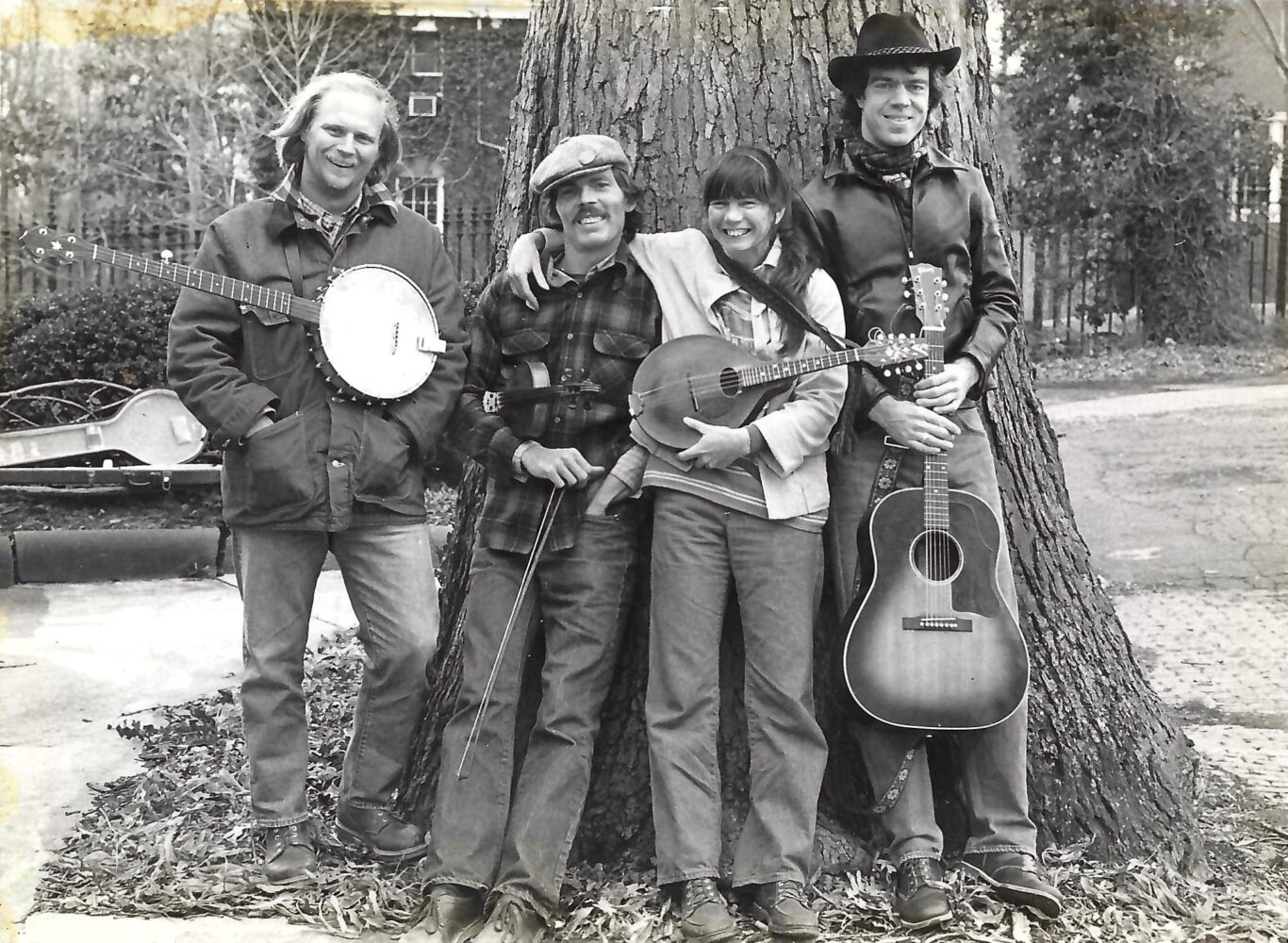
Critton Hollow Stringband evolved through the years, with different members passing in and out of their lives as circumstances required. Sam and Joe were always at the heart of the sound, sharing the music of Critton Hollow back and forth on hammer dulcimer, fiddle, banjo, mandolin, and guitar. In the earliest days, the sound of Critton Hollow was rounded out by the guitar playing of Michael Kline. Then, for nearly five years, it was Sam’s brother Arnold on guitar and his wife Patti on bass who filled out the low end. Others who became part of the song of Critton Hollow include Pat Shields, Paul Kovac, Mark Schatz, and Cathy Fink.
It was around 1980 that Joe Fallon and Pete Gordon both moved to the area and became part of the Critton Hollow family. This quartet, over the next six years, toured and recorded two albums. Joe Fallon has remained an essential member of the band ever since, joking that he is the newbie—there only 45 years of the 50 that the band has been in existence. Fallon recounts, “We became really good friends right away, and we’ve become best friends over 50 years. We’ve all gone through a bunch of stuff as a family.”
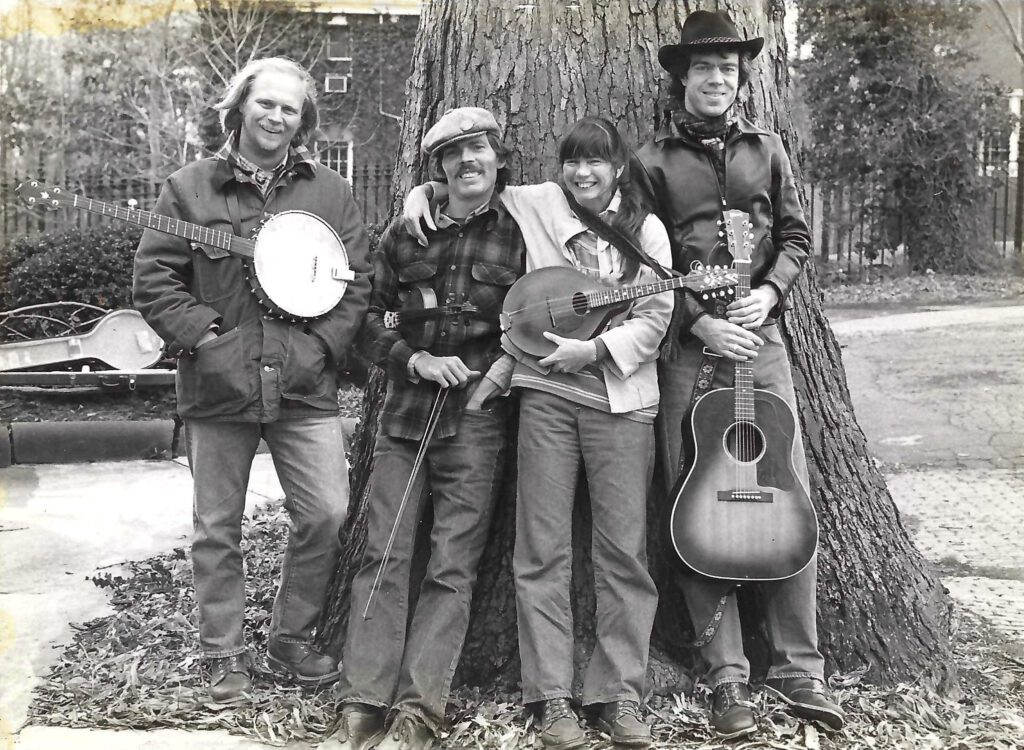
As a musician myself, I can’t think about Critton Hollow without seeing the personal impact in my life and the life of my community. I’m honored to consider myself a musical descendant of these people. As a child, my parents would listen to Critton Hollow Stringband on cassette tapes and CDs in the car or around the house. Once I was old enough to know how to hold a fiddle, I was brought to the Herrmann house to learn to play it. This has led to a lifelong friendship and mentorship, as I learned the music of Critton Hollow through apprenticeships awarded by both the West Virginia Folklife Program and the Augusta Heritage Center. Today, I run my own folk school called The Cat and the Fiddle, where I continue to pass on this music.
Local musician and nationally recognized bluegrass performer Red Henry speaks about Critton Hollow: “As the predominant practitioners and exponents of traditional music in this part of the country, Joe and Sam Herrmann have provided leadership, inspiration, and one-on-one instruction for aspiring old-time musicians in this region for many years. They are highly recommended as performers, musicians, friends, and as folks to just sit and play a tune with.”
Through digging and prodding, I was able to gather information about some of the national and international acclaim that Critton Hollow Stringband has received. Critton Hollow has been invited to perform at some of the most prestigious festivals and concert halls across the U.S., won countless awards and contests, and globetrotted on tours that carried them to Alaska, Cape Breton, Scotland, Ireland, Japan, and beyond. They have been inducted into Jim McCoy’s Country Music Hall of Fame and produced seven albums, as well as creating their own record label, “yodel-ay-hee”, which includes over 100 titles.
As we sit chatting in the music room of their cabin, these aren’t the things Sam and Joe Herrmann or Joe Fallon want to talk about, though. They want to talk about the community.
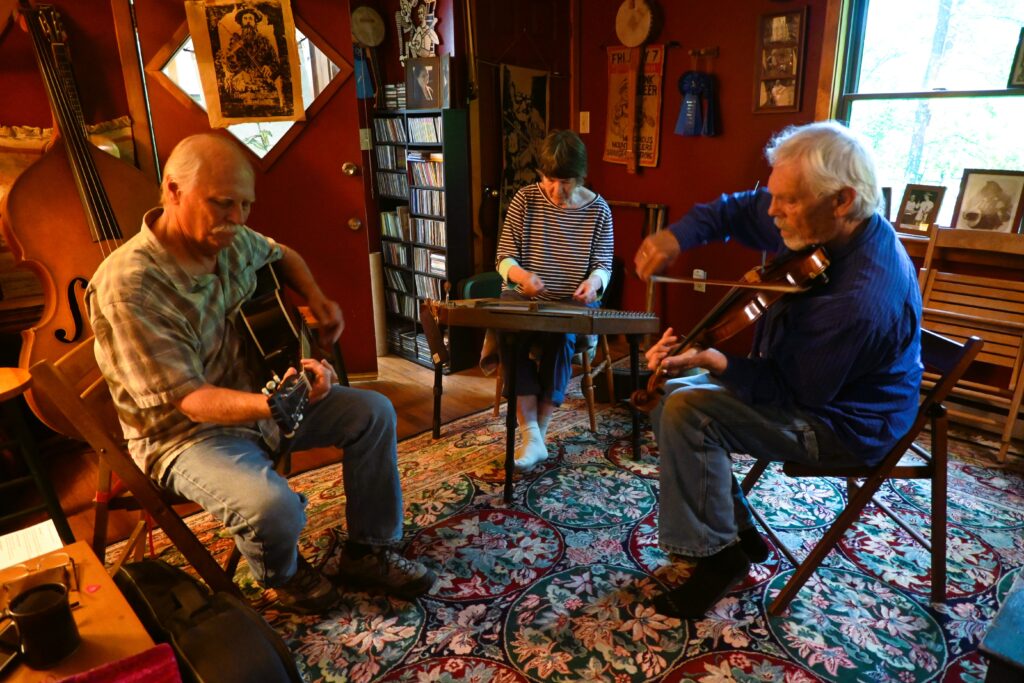
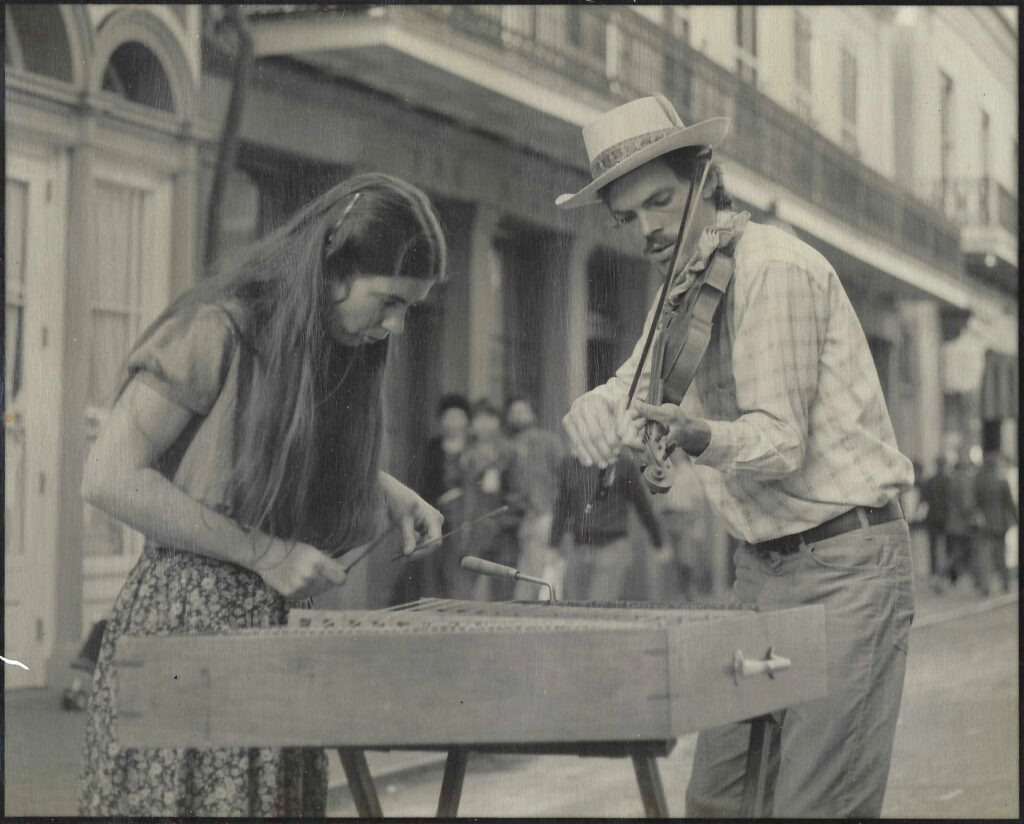
So, I took the conversation to the people of the community. Local musician Paul Roomsburg tells me about the first time he met Sam and Joe Herrmann in 1974, before they even had the name Critton Hollow Stringband. Still a high school student, Roomsburg saw clawhammer banjo being played for the first time by watching Joe Herrmann at a bluegrass festival held at Potomac State College. Following the contest, he found Sam and Joe sitting in the café of the school, jamming. Years later, when home from college, Roomsburg would make farm calls around the county and always bring a packed lunch so he could go to Critton Hollow on break and play tunes with Sam and Joe. Roomsburg, speaking of Joe Herrmann, says: “He’s the magnet of music in our community that makes everyone play. The old-time glue of the county. He drives the bus. Everyone goes to the next level when Joe comes.”
When Roomsburg decided to fix up an old cabin as another space for folks to come and play old-time music, Joe came right along with paint scraper in hand to help do the work—and then sit and play with everyone. “He’s so gracious. He knew our potential and never tried to push the jam or do things to show off. That’s Joe Herrmann,” says Roomsburg. “Sometimes it would be a kid that came in wanting to play, ‘Angeline the Baker.’ We might have just played it, but Joe would say, ‘Well, no we haven’t!’ and proceed to play it all over again.”
Longtime friend and musician in Hampshire County, Steve Ritz, writes: “The Critton Hollow Stringband has been guiding folks toward traditional Appalachian music for a very long time. They have been generous in sharing their music with all musicians, beginners and those more proficient alike. They are responsible for passing along and promoting traditional music to many musicians over the years as they have entertained their audiences. And they are great people to be around too.”
Find out more about Critton Hollow Stringband at www.crittonhollow.com
DAKOTA KARPER is a folk musician, teacher, and community builder. She is the owner of The Cat and The Fiddle, a folk music school in Capon Bridge, West Virginia, and the Executive Director of the Cacapon Music and Dance Foundation. Learn more at www.dakotakarper.com.
Karper, Dakota. “Critton Hollow Stringband: 50 Years of Music Is Just The Beginning .” Goldenseal West Virginia Traditional Life, Winter 2025. https://goldenseal.wvculture.org/critton-hollow-stringband-50-years-of-music-is-just-the-beginning/