By Maria Parker
Growing up on a working tobacco farm in Eastern North Carolina with eight siblings, all Ervin Jones knew about wood was the tobacco sticks he used as bats to play ball and the pine trees he planted as a young teen. He was yet to realize how wood would change and fulfill his life as a hobby and an art.
“My parents were tenant farmers on a small tobacco farm in the tiny town of Dover, NC, and my brothers and sisters and I worked right alongside them,” says Ervin. “We didn’t have much money, and there wasn’t time for playing or relaxing. Certainly no one had time to think about artistic endeavors or woodworking.”
“In the years before YouTube, the only way to learn was by reading a book or a woodworking magazine, watching the occasional TV show that taught basic skills, or to try and figure it out on your own or with advice from friends.”
After he left school, Ervin volunteered for service in the U.S. Army and for the first time in his life found himself more than 100 miles away from home heading to Ft. Jackson, South Carolina for basic training. Then he was off to Ft. Benning, Georgia and finally to Fort Lewis in Washington State as he prepared to ship out to Germany as the Berlin Crisis arrived.
After serving two years in the Army, he did not want to return to farming, so he traveled to wild, wonderful West Virginia, where his sister’s family lived to look for a job. He found a job in wood, making furniture frames for upholstered furniture at the Interstate Upholstery plant in West Huntington, and eventually joined the Post Office—which would become his career—as a window clerk at the Huntington Post Office.
“Making those furniture frames taught me a lot about construction and the ways that wood can be used and molded to create anything you need,” Ervin shares, “Those early skills have stayed with me all my life.”
Ervin went to church the first Sunday he was in Huntington and met his future wife, Susie. She was also from North Carolina, and within a matter of months they had married and have lived happily ever after. Two children followed—a son Keith and a daughter Maria—and they bought a house on Miller Road in Huntington.
That first and only house, which they lived in for 52 years, contained a barn in the back with stall space for three horses. The barn was first used for storage, but, with a need for bookcases and toy boxes for the children’s rooms, he bought some bargain tools and began a journey into self-taught woodworking. This simple structure would become his workshop as he got to know wood and began to create beautiful things with it.
In the years before YouTube, the only way to learn was by reading a book or a woodworking magazine, watching the occasional TV show that taught basic skills, or to try and figure it out on your own or with advice from friends. Ervin’s skills and tools increased and soon friends were asking him to build pieces for them. Woodworking as a hobby began to fill his spare time and he got better and better at making craft items and furniture.
“My early years of woodworking mainly consisted of building furniture pieces for family and friends, and I’ve created everything from pie safes and cradles to sewing chests, mantels, and entertainment centers,” says Ervin. “I even built all our kitchen cabinets in our home.”
Too quickly the children grew up and each graduated from Marshall University and moved out of the area to pursue their careers. But, for Ervin and Susie, another hobby sprung up with the shade and the creeks that bordered their property and their love of shade gardening began. Ervin and Susie affectionately dubbed their property “The Shady Acre,” and more than 100 species of wildflowers and perennials thrived in the shade gardens with hellebores a specialty. Their gardens were featured twice in the Junior League Garden tours.
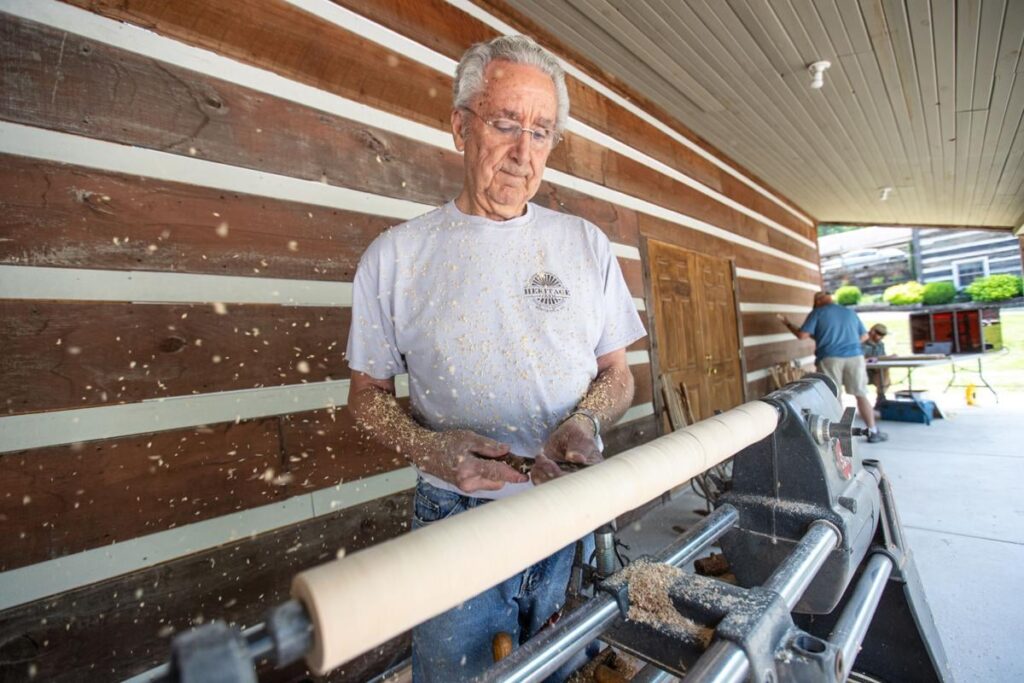
With the kids grown, Ervin found himself with a bit more free time. His wife suggested a class at Cedar Lakes on lathe turning, and this weekend class sparked an interest that has continued for over 20 years as a wood turner. Ervin obtained both a small and large lathe from money made by selling furniture. He joined Mountaineer Woodturners and began meeting monthly at Cedar Lakes Conference Center.
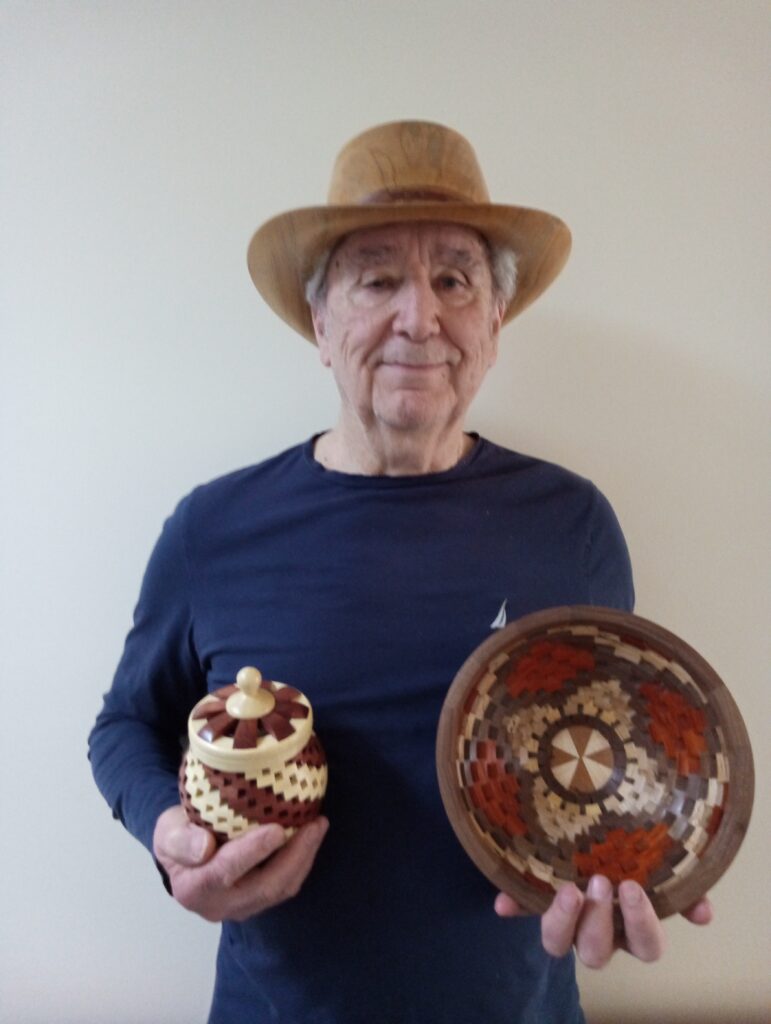
“After that first wood turning class, I was hooked and it really opened my eyes to the possibilities of what I could create with wood,” says Ervin. Joe Smith was President of Mountaineer Woodturners, and he invited Ervin to visit his shop in Elkview where he was inspired by his well-known cowboy hats and bowls. Joe instructed Ervin on how to make one and he ended up making six cowboy hats over time.
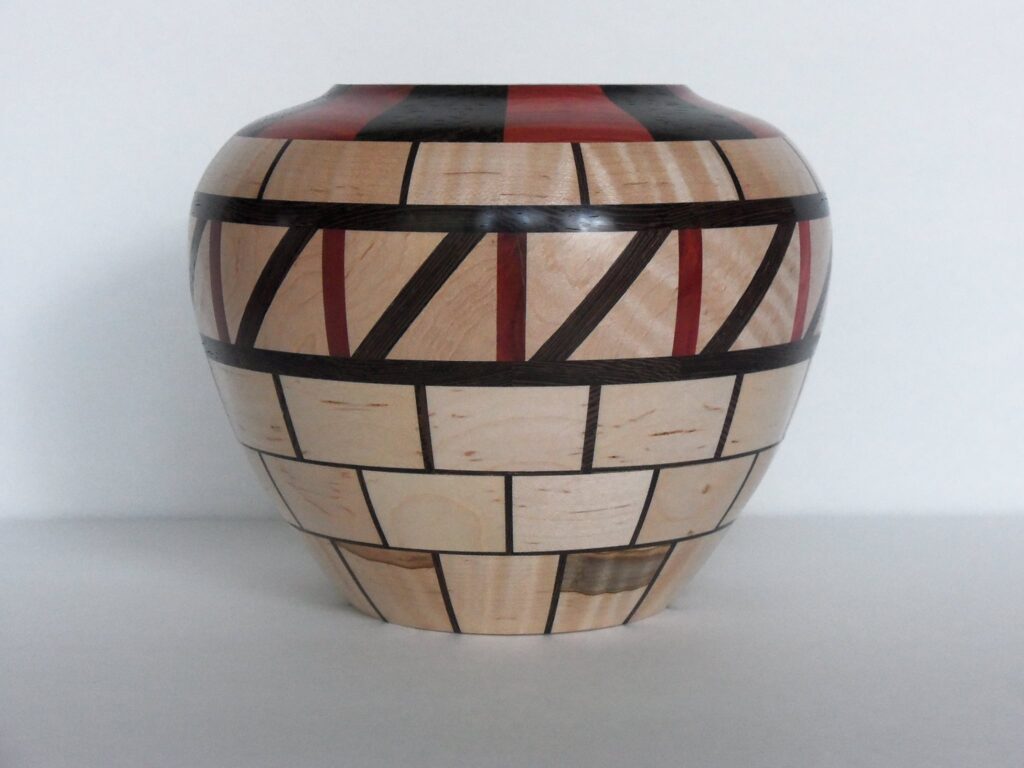
Jerry Smith, Joe’s brother, is also an acclaimed woodturner who is known to be artistic and uses thin and natural edge pieces of wood in his work. That led Ervin to a segmented style of woodturning that required the use of printed instructions by Masters like Malcolm Tibbetts and William Smith. As the internet continued to expand as a resource, Ervin also learned more by watching YouTube videos in his spare time.
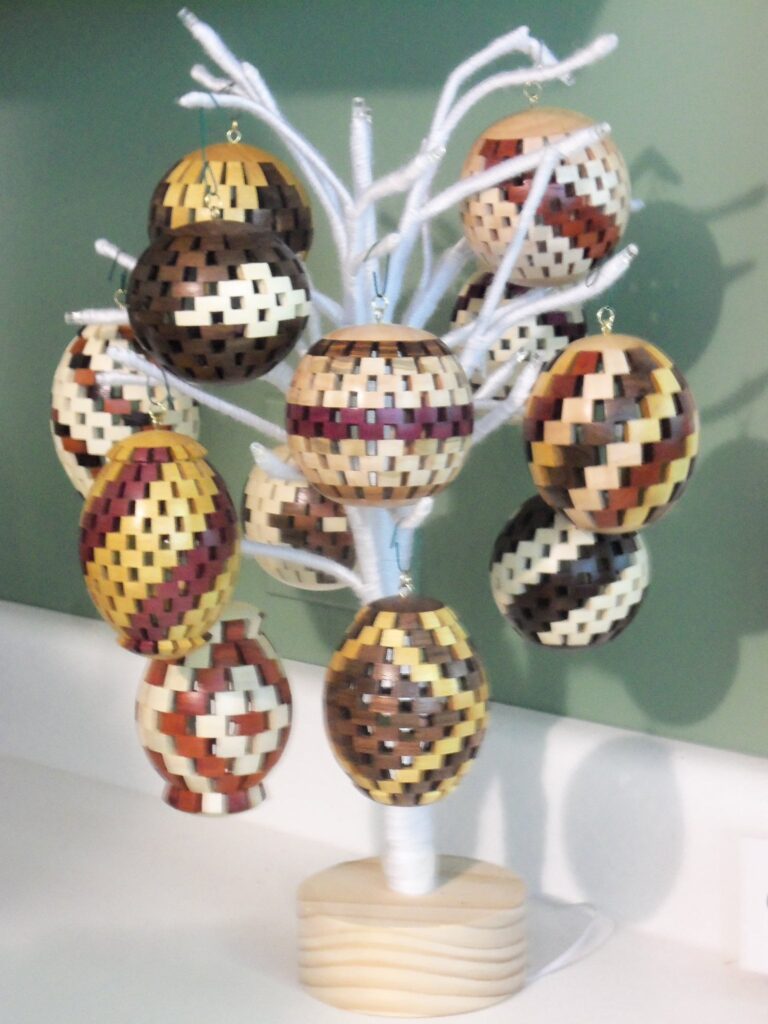
“From that point on I was constantly working at my lathe, experimenting and learning new skills.” Many of the members of Mountaineer Woodturners were Tamarack artists known as the Best of West Virginia. Ervin juried into Tamarack several years after his woodturning class at Cedar Lakes and was accepted selling bowls, snowmen, and Christmas ornaments.
“Putting together pieces of wood that many people would throw away and making a special piece of art is a pleasure and challenge to Ervin.”
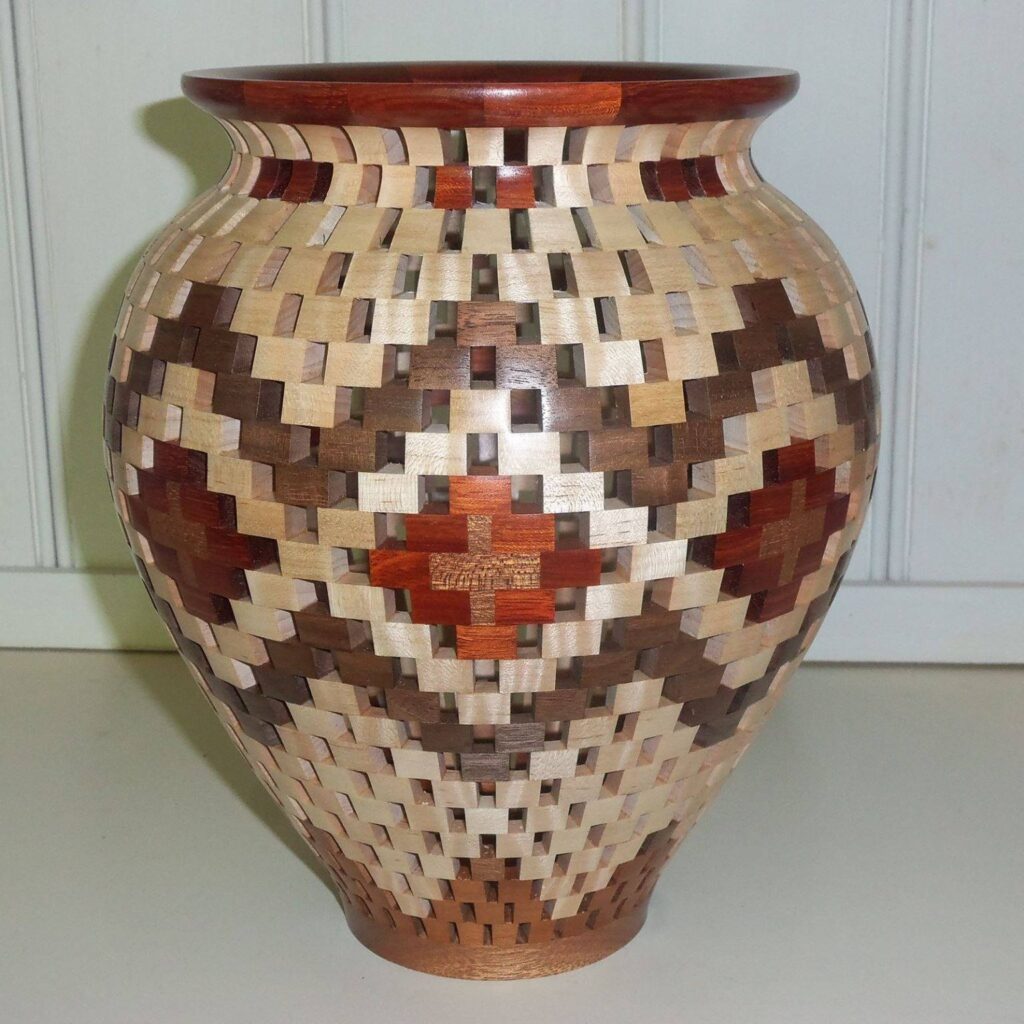
After 32 years of service for the US Postal service, Ervin retired in April 2000 and woodworking became a full-time activity. He typically works in his shop five days a week creating beautiful items. After living for 52 years in the same house, Ervin and Susie moved to the Woodlands Retirement Community where he continues to work on a small lathe in a separate shop. Countless family members and friends proudly display his work, which often provides wonderful conversation when people see and experience it for the first time.
Still active at 83, Ervin also volunteers weekly at Heritage Farm, where he has demonstrated his craft products as an artisan for more than 15 years at the main tourist attraction in the area. He is also active in his church and community and is a multi-year and current Croquet Champion and avid player at the Woodlands. He enjoys his morning billiards with his fellow residents and is known for his friendliness and laughter.
Putting together pieces of wood that many people would throw away and making a special piece of art is a pleasure and challenge to Ervin. “Working with wood is something that I will do for the rest of my life,” predicts Ervin. “There’s simply nothing that makes me happier than creating a beautiful work of art from a simple piece of wood.”

MARIA JONES PARKER
University, where she majored in Public Relations. She has lived in New York since 1988,
residing with her husband in the village of Amityville on the south shore of Long Island. They
have two adult children, Matthew and Kelly.
Parker, Maria. “Ervin Jones, Huntington Woodworker: “Turning Wood into Art”.” Goldenseal West Virginia Traditional Life, Fall 2025. https://goldenseal.wvculture.org/ervin-jones-huntington-woodworker-turning-wood-into-art/