Over the summer most children go to science camps or sports camps. I do these sometimes, but visiting the family farm has become a summer tradition that I look forward to each year. I have been spending summers there since I was five years old; right when I could provide more help and be less of what you would call just in the way. Every summer, I go there to help with farm chores and spend time with my grandparents and my uncle. The farm is located in Mason County near Letart, WV. Originally, the farm was named Twin Pine Jersey Farm, but it is now known as Weaver Cattle Farm.
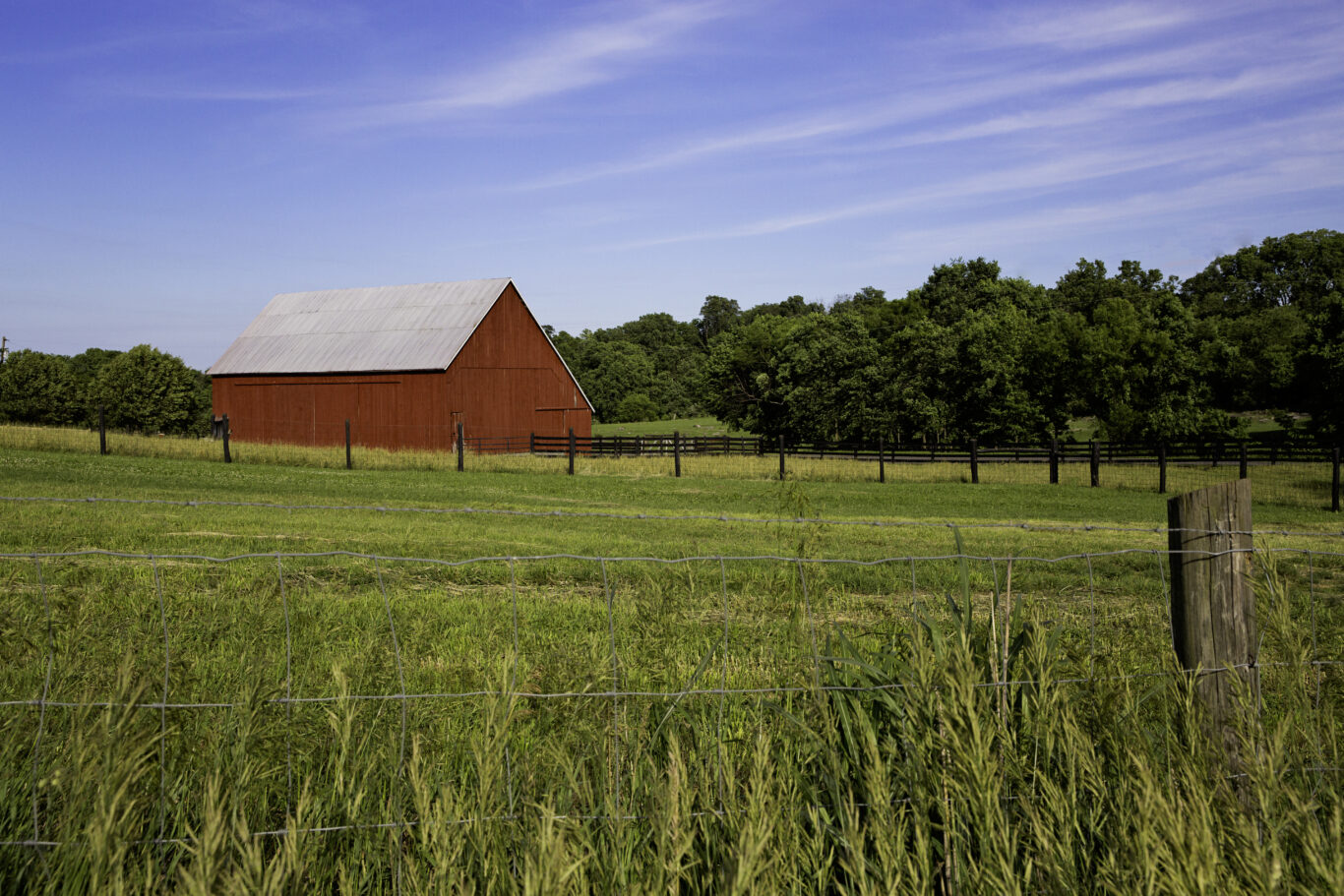
The family farm is 304 acres of rolling hills that includes multiple barns, sheds, shops, and farm houses. Even an old fort from the French and Indian War was located on the property long ago. My grandpa had found lots of arrow heads in the fields and creeks throughout the property that I recently inherited. This farm was part of a large land grant given to Thomas Ball in 1869. The land has been broken into pieces and purchased over several individuals. My great great grandfather John Homer Weaver purchased 304 acres of the land in Mason County in March of 1931. The land has changed over the years from different generations of Weavers using the farm for different uses, which included potato farming, and raising hogs, chicken, dairy cattle, and now beef cattle.
The farm that my grandparents owned was started by my great-great grandfather, John Homer Weaver. The land was sold to him from his brother Otmer Lawerance Weaver who had purchased it from the Ball family. From there, the farm was passed down to my great grandfather Homer Marcus Weaver, who started Twin Pine Jersey Farm, a fully functional dairy farm. In December 2002, the farm was sold to my grandfather Aaron Kay Weaver although he worked on the farm much longer. He carried on with the dairy business. During the dairy business years, the farm was shaped with modern equipment and new technology that helped shape the infrastructure of the farm that exists today. Hand milking was replaced by automated milkers; manual feeding schedules were replaced with automated feeding schedules based on animal health data, and older farm equipment which required more manual interaction were replaced by more automated equipment requiring less human interaction. In every corner of the family farm there is history or a story of how that barn, shed, or equipment came about. Just like the generations before me who worked hard to keep the business and farm running, I’ve had my own responsibilities there each summer.
One of the first chores, even though it was a small task, I could do as a young child was to feed the barn cats. The cats are basically the pest control of the barn sneaking around at night to hunt mice. This is important because cows are there to live and rodents could give them diseases. The cats keep the rodent population down and the barn more sanitary.
Another daily routine is we would look for holes along the fence lines so cattle could not wander out of the fields. If there was a broken part in the fence, we took all the cattle to another field and we fixed the hole and replaced the fence section. When this happened I was the “designated gopher” to run up and down a hill to get tools and supplies my grandpa asked for from the tool wagon we pulled with the tractor. Hopefully, I would get the right one because I didn’t want to have to run back. It was hard for me because he would always yell out a tool and I would have to try and guess what it looked like. Sweat was dripping into my eyes running back and forth, and my uncle and grandpa were enjoying this way too much.
Feeding the baby calves was another daily chore. I would get the milk powder from a 50-pound bag and mix it vigorously with warm water in a bucket. This was strenuous work and sometimes my grandpa had to help me. Then I would pour the milk mixture into bottles and secure the top with a nipple. The calves were always excited when they saw me with the milk bottles coming their way. I would have to hold the bottles as hard as I could and the calves would drink it like they had never eaten in their lives. If there was anything left, I would pour it out for the cats who were always waiting nearby for me to finish.
I would ride the tractor with my grandpa around the farm moving bales of hay around the farm to feed the cows. The cows would follow the tractor when they saw us with the hay, and we would drop it in the middle of the pasture field for the cows to eat. One time my grandpa supervised me as he let me drive the tractor with him beside me. The tractor drove smoothly, and I got too confident and wrecked the tractor into a ditch because I wasn’t looking at what was in front of me. My grandpa said it wasn’t a big deal because he was easy going with me. He drove it out of the ditch and said maybe we will try again next year.
Other unforgettable experiences included round baling hay, apple picking, riding the 4-wheeler around the farm, and vaccinating cattle. During round baling of hay, I was only allowed to watch from a distance because of the dangers of the heavy equipment. I saw the rows of dry grass being scooped into a bailer and made into round bails. Later a skid loader would follow and take the bail to get wrapped in plastic for storage over the winter for feeding the cows. This was a fast and loud process with particles of hay flying around the sky with the loud sound of heavy equipment moving back and forth through the pasture fields. Picking apples in the orchards was more my speed and agility. We had two Hereford bulls named Peach and Herb that liked to watch me pick apples. They were huge bulls, at least two thousand pounds each. Peach and Herb would watch me intensely while they whipped their tails at flies buzzing on their backs. I knew exactly what they wanted. They were hoping I would throw a few apples at them. They would eat the apples in whole bites even if there were rotten spots or even bees on them. My grandpa would always tell me to never enter the field where the bulls were kept. They could never be trusted no matter how sweet the gentle giants looked. Riding around the farm on the 4-wheeler wasn’t just for getting places, but we would drive around the fields to look for groundhog holes. My grandpa said the holes could upset farm equipment and someone could get hurt. Groundhogs were considered pests and were hunted.
My favorite experience on the farm was when we vaccinated cows. I held the gate so none of the cows could escape. For this we had to herd approximately 100 cows to the barn where we ran them through chutes one by one. Once they were in the chutes, we would vaccinate each one and then send them out to the pasture field for the next one. We started with the baby calves first, and then worked our way through the cows and the two bulls. I felt like this experience was the best because it felt like I was really involved and needed. I also enjoyed naming some of the newer cows that came through the chutes with goofy names. I named a cow in particular “Cupcake” which was funny because cupcakes are sweet and this was the meanest cow I have ever seen. This cow was bucking and snorting and spitting at me while we were trying to vaccinate.
In the evenings, when the daily chores were complete we would go back to the house and watch Jeopardy. We would compete, with each other, on who could get the most right; it was not me. I think this is what started my love for quiz bowl and history. My grandmother would always make sure I was clean for dinner and make me the most comforting food after a long day of work. Sometimes before bed, my grandpa would take me outside and look at the stars. There is no light pollution at the farm, so the sky was black and I could see billions of stars. He would point to different constellations and I would act like I understood. Finally, we would go to bed early for the next day of chores where I would sleep deep from working hard.
I hope to keep returning each summer, adding new memories to the rest of the old ones and keeping our family’s traditions alive. Even now, whenever I go back, I feel the same sense of belonging I felt as a young child. The farm isn’t just land; it is a complete history of everyone in my family; it is a part of who I am. Spending summers on the farm taught me more than how to feed cattle or fix fences. It showed me the value of hard work, and the importance of family.

About the Author
Liam Harris
Harris, Liam. “Farm Kid in Training.” Goldenseal West Virginia Traditional Life, Fall 2026. https://goldenseal.wvculture.org/farm-kid-in-training/