By Melissa Ireland
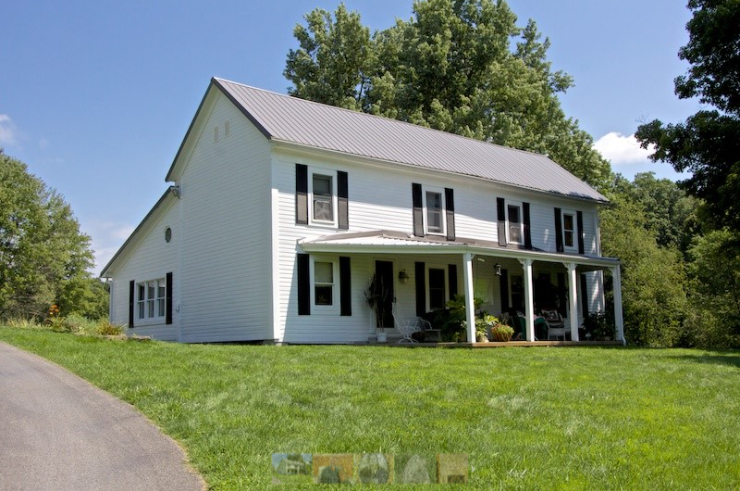
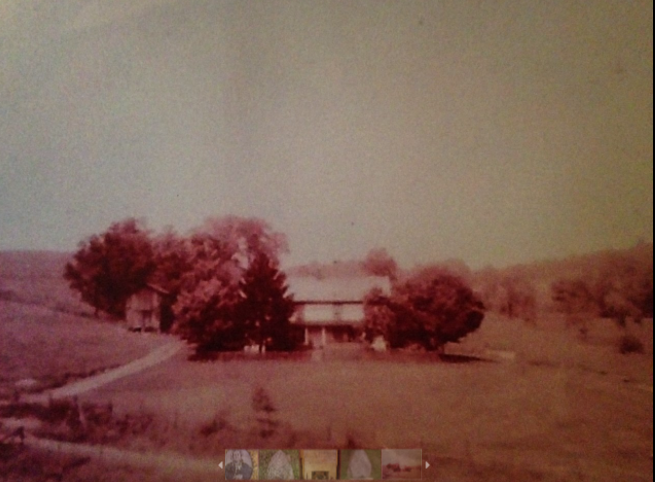
If an old house could talk, then the one standing on a knoll in southeastern Upshur County belonging to Doug and Ann Bush would have so many stories to tell about the lives of the Henry Jackson family that lived there for two hundred years.
Henry Jackson, the youngest son of John Jackson and Elizabeth Cummins Jackson, was born on July 10, 1774 on Turkey Run near Buckhannon two years before Independence. His life would begin and end a few miles apart on the Buckhannon River. Henry’s life from the beginning would be surrounded with danger, excitement and chance. He spent his life on a farm that he loved and contributed to his community as a member of a family that shaped West Virginia’s future.
John Jackson and his sons George and Edward served as soldiers in the Revolutionary War. Colonel Edward Jackson was the first surveyor in Randolph County, built Jackson’s Mill on the West Fork River in Lewis County, and was the grandfather of General Thomas “Stonewall” Jackson.
George Jackson became a captain in the military guard, served with George Rogers Clark, was a prominent member and three-term congressman of the Virginia Assembly, organized the first militia unit in 1779 in Upshur County and became a lawyer. John Jackson, Jr. dug a mill race creating the island in Buckhannon where he built a fine stone home.
In 1800, Henry married Mary Elizabeth Hyre, daughter of Jacob Hyre and Elizabeth Powers Hyre. Henry and Mary built their cabin near the Buckhannon River in Upshur County where they farmed. Before her death in 1835, Mary gave birth to thirteen children: Ester, Elizabeth, William, Hyre, Edward, Mariah, Henry, Amanda, Rachel, John, Jacob, Ulysses, and Mary.
After Mary’s death, Henry married Elizabeth “Betsy” Shreve in 1836, the daughter of Joseph Shreve and Elizabeth Brake Shreve. Henry sired ten more children by Betsy: Decatur, Samuel, James, Marion, Melissa, Columbia, George, Artimisha, Eclipso, and Gideon.
Henry followed in his brother Edward’s footsteps by becoming a surveyor. Years later, his field notes would be used for arguments before the West Virginia Supreme Court in Rich vs. Braxton which held that fraudulent tax sales had taken place for lands under various Commonwealth of Virginia patents and surveys.
One of Henry’s surveying projects was the Banks Survey of 35,000 acres close to the end of Indian hostilities in West Virginia. It was named for Henry Banks, of the firm Hunter, Banks and Company, located in Richmond, Virginia who claimed thousands of acres through military land warrants in return for merchandise supplied to Virginia during the Revolutionary War. Although he started it, Henry never completed the survey because of Indian raiding parties in the area. One of his crew members was the great Indian fighter Jesse Hughes, who had been hired as a hunter to provide meat.
An occurrence that has become West Virginia folklore legend took place during one of Henry’s surveying forays into the wilderness. In the autumn of 1795, Henry was surveying near the Holly River and Elk River watersheds of present-day Webster County, when one of his crew, a man named William Strange was instructed to take his pack horse over the mountain to the point of the Elk near the Carpenter Settlement. Strange failed to turn up for the agreed rendezvous the next morning and despite concentrated efforts by the surveying party, only his horse was located.
In 1835, forty years after disappearing Strange’s skeleton was discovered by hunters on the south side of the Elk River at the foot of a large tree. His rifle, shot pouch and powder horn were by his side. In the bark of the tree, Strange had carved the words “Strange is my name, and I’m on a strange ground, and strange it is that I can’t be found.”
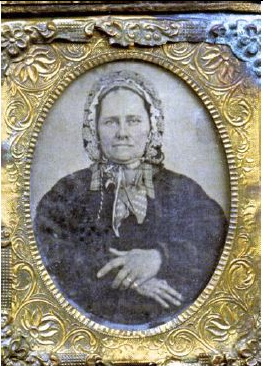
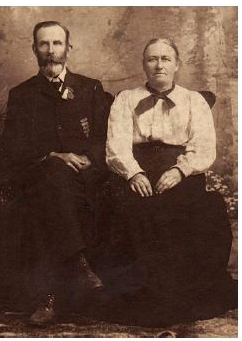
So much heartache must have been felt in the Jackson cabin over the years along with joyous occasions. Sadly, like so many frontier families, Henry not only buried his first wife but had to endure the untimely deaths of six of his children before his own death on February 24, 1852.
Ester never married and died a short time after her mother’s death. Edward, who was described as “slow witted” was killed by Indians while crossing the western plains on the Oregon Trail with his sister Rebecca and husband. Jacob, Eclipso, Mariah, and Columbia died as infants.
Quite a few of Henry’s children moved west in search of a better life. John left home early and owned a farmstead near West Union, Oregon. Ulysses who became a large landowner and served as a county commissioner in Washington County, Oregon. William lived in West Union, Oregon where he farmed near his brother John.
Several of the Jackson children did not live to see old age, dying soon after their father. Decatur drowned as a young man. James died during the last years of the Civil War at Harper’s Ferry. Consumption took Melissa soon after marrying. George died as a youngster from typhoid fever.
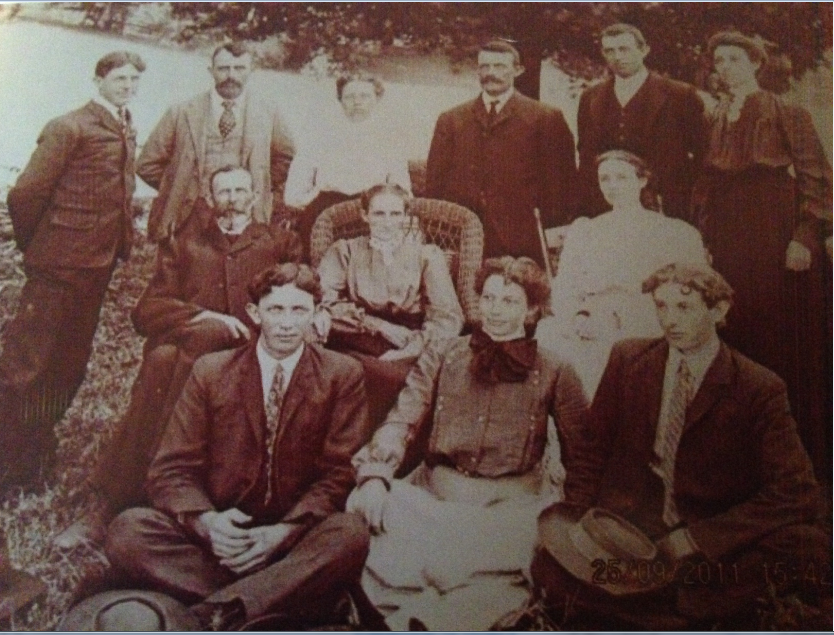
Rachel made it to Woodland, Oregon after the Indian attack that took her brother, where she and her husband Lewis resided before she divorced him in later years. Hyre became a lawyer and judge, settling near his siblings in Oregon. Mary relocated to Dubuque County, Iowa where she and her husband farmed. Her sister Artimisha settled in Kingman County, Kansas.
Henry Jackson’s will probated in Upshur County revealed that he was a slave owner. As a practicing Universalist, Henry avowed his faith in his last words “I commit my body to the ground, and my soul to God who gave it, having no doubt that he will take care of all his creatures.” Universalism was a common theological belief held in Henry’s time that Jesus had died for all the sins of man, and that all men would eventually see heaven. Elizabeth was given the whole of his lands and property, save for some bequests to his daughters, for as long as she remained his widow. He instructed her to “school the children if possible.”
Interestingly enough, although Henry Jackson was a slave owner, his sons Samuel, Marion, and James enlisted in the Union side by joining Co. H of the 3rd West Virginia Cavalry Regiment, where they served under Colonel David Hunter Strother, the famous journalist and artist.
Henry Jackson was laid to rest in the family cemetery overlooking his homeplace. The final resting place of his wife and him are marked by coffin shaped tombstones, which were pulled in place by teams of oxen.
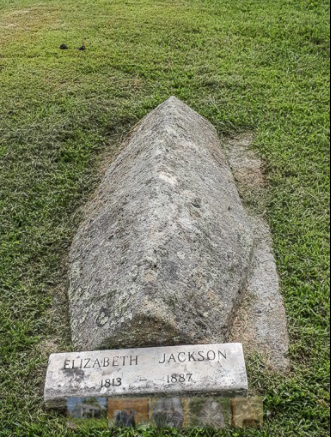
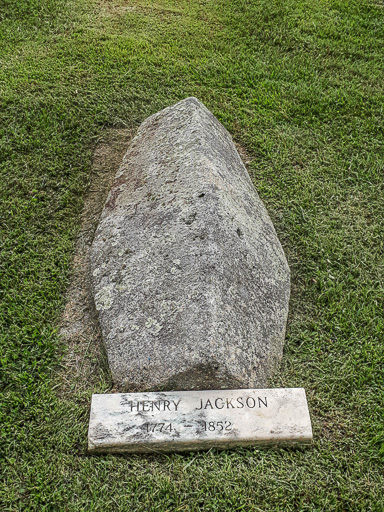
In 1868, the lands of Henry Jackson were partitioned among his heirs. His son Samuel Dexter Jackson received the portion of the farm where the cabin stood and the family cemetery. Samuel, born in 1838, married Martha Elizabeth Marple, daughter of Moses Marple and Elizabeth Bennett Marple of Peck’s Run in Upshur County in 1861 at the beginning of the Civil War.
Pictures of Samuel in his military uniform shows a handsome man with a shock of dark hair and full beard staring solemnly with a direct gaze. His wife Martha appears in photographs as a petite black-haired beauty. Samuel and Martha lived in the original Henry Jackson cabin, built “Yankee” style on a 16-foot-by-16-foot stone foundation, which featured hand-hewn chestnut beams and pegged framing. The small cabin contained a loft and was anchored by a large hand-cut stone fireplace. At the time Henry Jackson built the structure, nails had to be made individually by a blacksmith which were costly and hard to come by. A “Yankee” frame house had no nails and was put together with pegs.
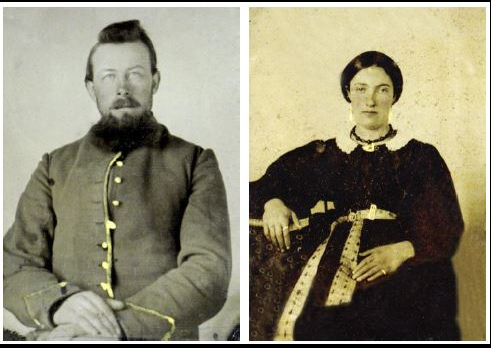
Around 1890, Samuel expanded the cabin by adding an addition to the side and a second story for his growing family. John, the first son of Samuel and Martha died at age two, but they were blessed with a second son in 1866 and named him Marion. Nine more children would follow: Ulysses, Anna, Granville, Clipso, Henrietta, Mary, Roscoe, Bernard, and Franklin.
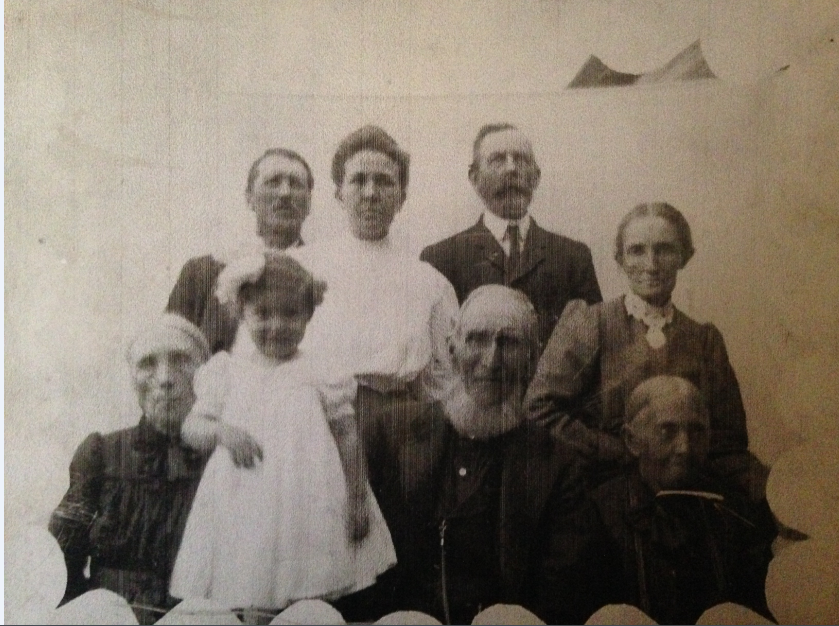
Samuel died in 1911 at age seventy-two; Martha followed in 1914. Both were laid to rest in the family cemetery. Samuel’s obituary extolled the fact that he had been one of the oldest settlers in Upshur County and that his last words before death had been “I now see the King that owns all the land.” Samuel & Martha’s son Roscoe was the next generation of the Jackson family to live in the family homestead.
Roscoe “Rossie” Jackson was born in 1882 the ninth child of Samuel and Martha Jackson. In 1916, he married Lena Madge Radabaugh, a local girl who was a daughter of Bezalee Radabaugh and Florence Ann Brown Radabaugh. Roscoe and Madge were in their thirties when they married and set up housekeeping on the Jackson homestead. On his WWI draft card registration, Roscoe is described as being of medium build with blue eyes and brown hair.
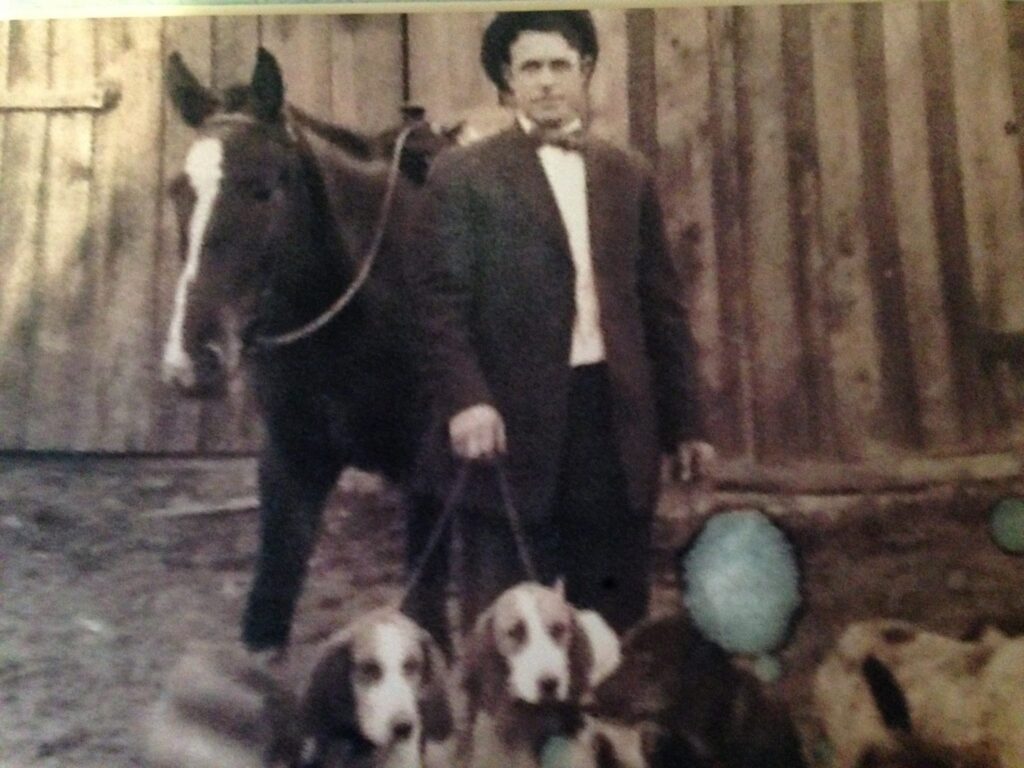
Timbering and farming sustained Roscoe and Madge all the years they spent together. Soon after their marriage, they welcomed daughter Martha in 1918. Their son Theodore “Ted” Jackson arrived in 1923. Roscoe’s brothers Claude and Bernard lived on the farm with them for several years.
In 1922, the Jackson Family Association was formed to serve as a reunion for descendants of John Jackson and Elizabeth Cummins to preserve heritage and family ties. Roscoe’s family was often in attendance at Jackson’s Mill until the gathering ceased meeting in 1941 at the beginning of WWII. The Jackson Brigade Association now continues to act as the official genealogy society for the descendants of John Jackson and is the source for much of the Jackson family information contained herein.
In 1937, a happy event occurred in Roscoe’s life when Martha married Burl Gillum a few weeks before Christmas. Son Theodore attended nearby Wesleyan College for a year before enlisting in 1943 in the Army.
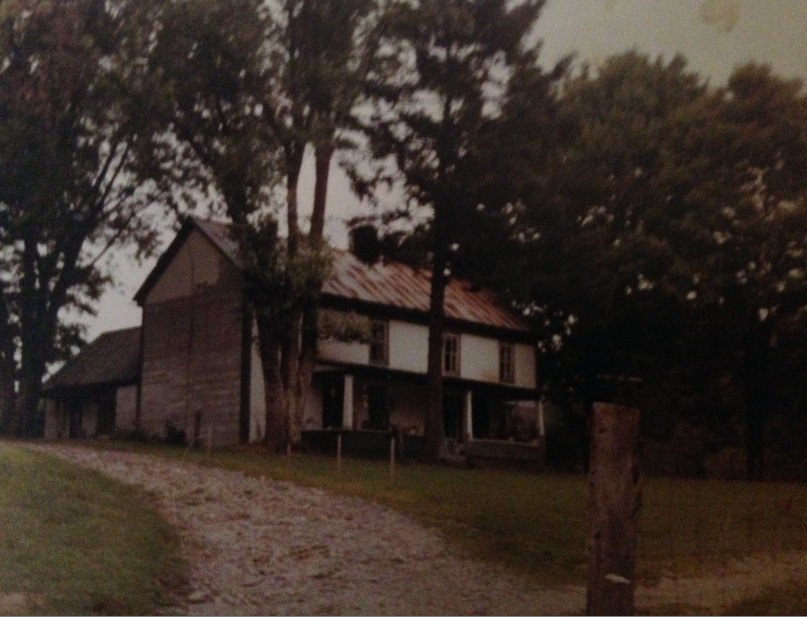
Roscoe contracted influenza in the fall of 1959 at age seventy-seven and died of a heart attack from complications. Instead of being buried in the Jackson family cemetery, he was interred at Heavner Cemetery at Buckhannon. Madge lived until 1967, moving off the homestead to Roanoke, Virginia to be near her children.
In 1986, over two hundred years after Henry Jackson’s birth, and after acquiring other Jackson heirs’ interests, Martha and Theodore sold the farm to a private individual, thus ending two centuries of Jackson family ownership of the cabin and land that it stands on.
Doug Bush and Ann Bush purchased the Jackson homestead in 1993. At the time, the house had been neglected for several years, but the original cabin and stone fireplace were intact. Many years later, the house has been restored to the beautiful edifice it is now, with the Jackson cabin being the focal point of the house. The farm and rolling hayfields sustain the Bush family much as it did the Jackson family over the course of two centuries.
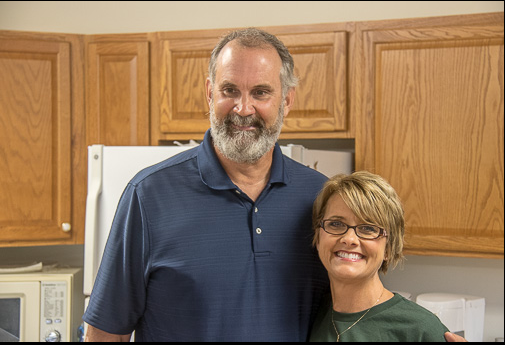
Doug is a retired history teacher and coach and serves as a County Commissioner of Upshur County, along with being a member of the West Virginia Farm Bureau. Ann has spent her career in the insurance business. Both are immensely happy in being stewards of the Jackson farm and look forward to passing the farm on to their daughters and families.
Henry Jackson’s life accomplishments might seem small in comparison with the many contributions made by his prominent family, but it is evident that the most important achievement that he was most proud of was raising his family. Henry must have been satisfied that he had been born in the wilderness, lived in the Virginia colony that became a state, resided in Randolph County which later gave birth to Upshur County, and never had to leave his chair in front of his fireplace that was so well built that it is enjoyed still today. He truly exemplified the pioneer spirit.


MELISSA IRELAND
Ireland, Melissa. ““IF THIS OLD HOUSE COULD TALK”: THE HENRY JACKSON HOMESTEAD IN UPSHUR COUNTY.” Goldenseal West Virginia Traditional Life, Summer 2026. https://goldenseal.wvculture.org/if-this-old-house-could-talk-the-henry-jackson-homestead-in-upshur-county-2/