By Janet Wilson
The year was 1928 and there was not a job to be had in Monongalia County. Brave members of the community headed to Oklahoma—there was work there in the oil and gas fields. Byron and Gladus Hunter packed up their two-year-old daughter, Jane, and headed West in their Model-T. I can’t imagine the poor highway systems, dust, dirt, flat tires, and other calamities they must have encountered.
Byron immediately secured a job in the oil and gas fields, Mother Gladus and baby Jane set up housekeeping amidst the dust and the roaring wind. After spending two years in Oklahoma, homesickness beckoned; the green hills and mountains of West Virginia looked like “Heaven” indeed. Byron acquired a janitor job at the Daybrook School back home in Monongalia County. In 1933, a second daughter, Janet, entered the picture (that’s me).
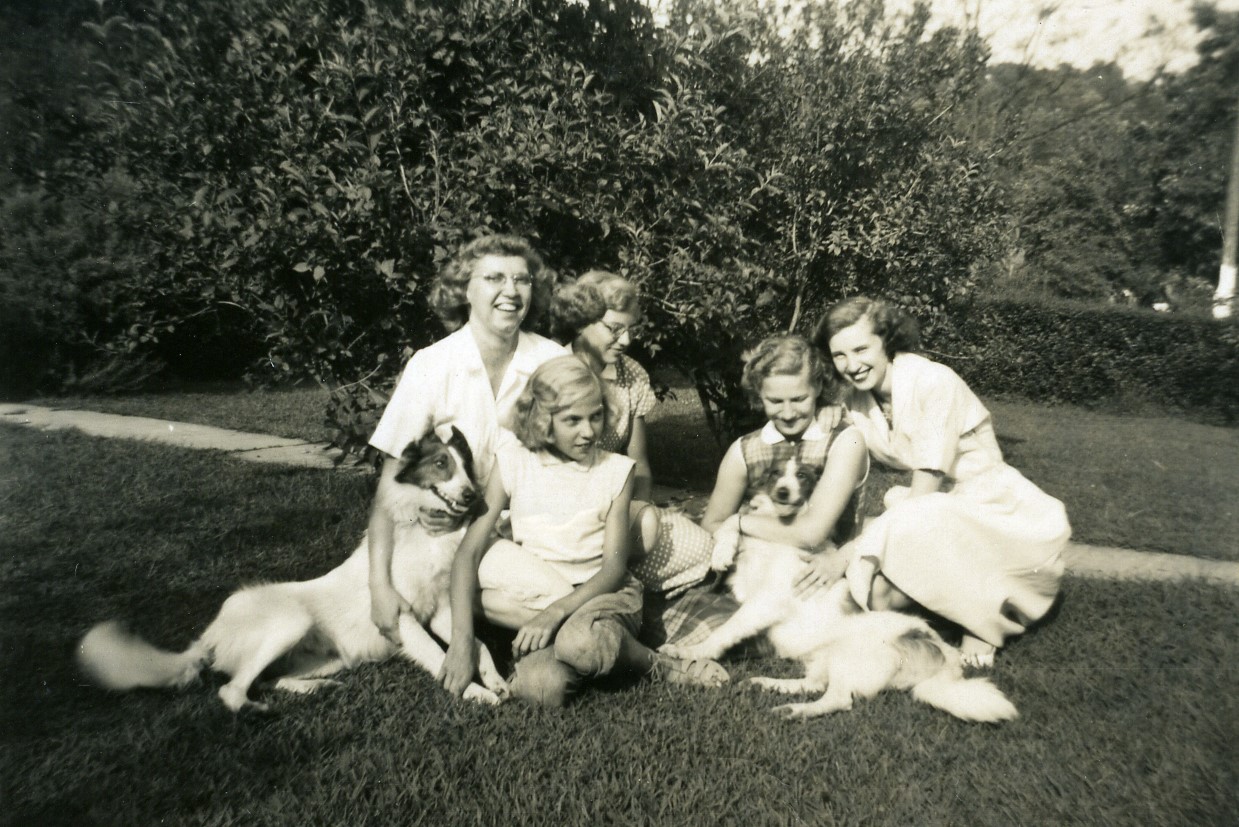
In 1936, Byron acquired a job with a gas and oil company and thankfully packed up his wife, eight-year-old Jane, and three-year-old Janet and headed to Cox’s Mill in Gilmer County. Being three years old at the time, I recall nothing of this sojourn. This was the next in line of many moves as Daddy moved the family to wherever the work was to be found. We movd to Tanner, of Gilmer County in 1937, that same year little sister Joyce was born. I recall viewing my first movie there. At that time in our history, movies were shown at the local school.
“Jane and I would attend Ross School located on Indian Run. Our house was located beside a surfaced road, but the schoolhouse was on Indian Fork Road…”
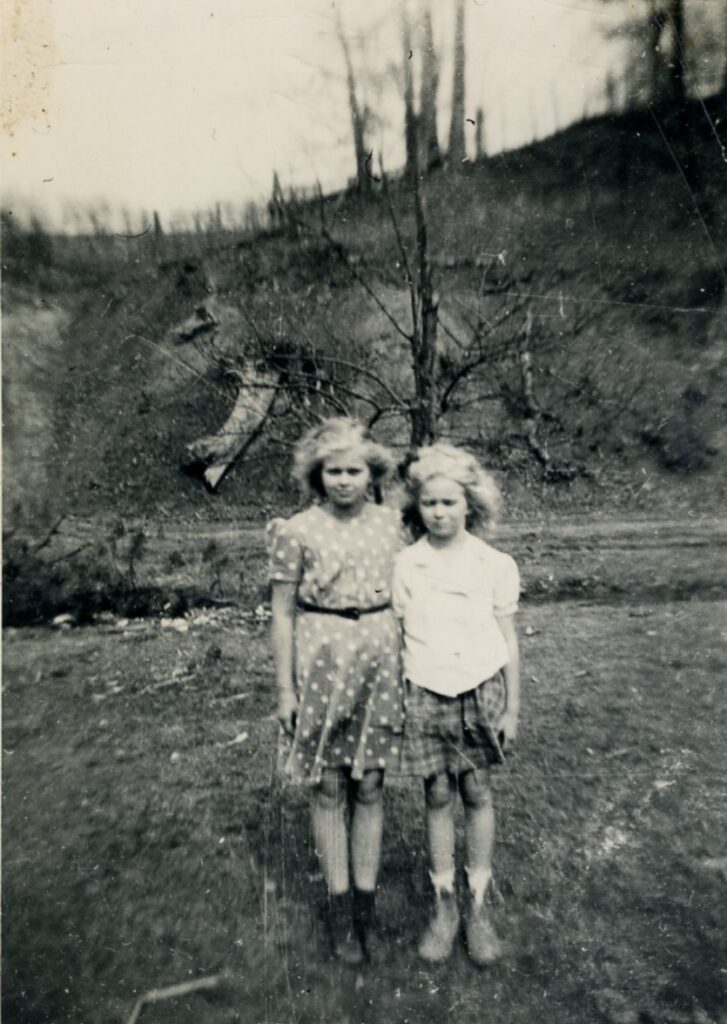
One night while living in Tanner, Mother became very ill, and the local doctor diagnosed it as just an intestinal upset. Daddy realized Mother was only getting worse and weaker. He packed us up and headed for Dr. Swisher of Fairview, Marion County. Dr. Swisher quickly diagnosed a ruptured appendix with peritonitis. Mother was rushed to surgery at the Cooke Hospital in Fairmont. There were no antibiotics, so a drain was inserted in her side. She occupied that hospital room for six weeks. Wonderful relatives, Aunt Mary Hunter Conaway of Fairview, took Jane and myself into her arms during this period and Grandma Flora Moore cared for three-month-old Joyce.
Every Friday after work, Daddy would rush to Fairmont to check on Mother and then on his daughters. Mother was finally released from the hospital after six weeks of care, and we headed home. Dr. Swisher marveled at Mother’s recovery, stating “Gladus, God must have a reason for you living. It was nothing that we doctors provided that brought about your survival.” Soon, we were back at Tanner and so thankful to be together again. We had settled into our family routine when pack-up time was announced; we would be moving to Rosedale, in Braxton County and after a short time there we moved on to Doddridge County.
In Doddridge County, we rented a house from Harvey Davison in Zinnia, a small community close to Miletus and Big Isaac. The decision was made that Daddy would board away, leaving early Monday morning and returning on Friday evening. Jane and I would attend Ross School. Our house was located beside a surfaced road, but the schoolhouse was on Indian Run; part of the year dry and dusty, but muddy, slushy, and snowy in winter and spring.
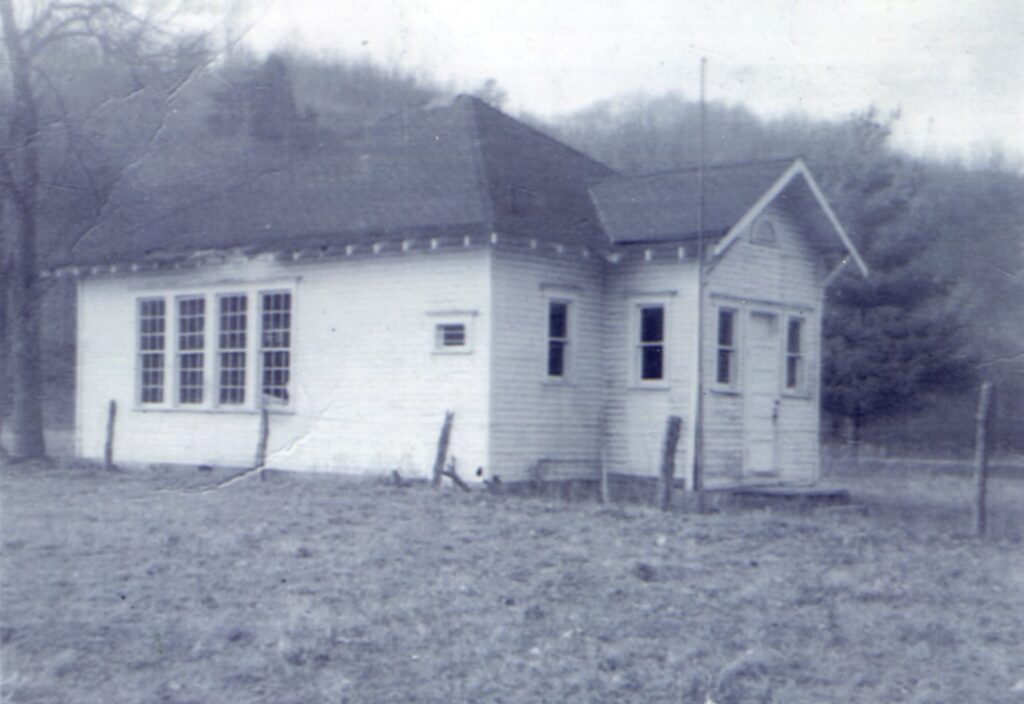
In 1881, Frances and William Ross sold 80 square rods (.5 acre) to the Doddridge Board of Education. Upon this hallowed ground was erected the one-room grade school known as Ross Grade School for grades 1-8. A well had been dug and a cement block housed a fine pump that brought forth the best cold water that ever graced your lips. From there, a gravel path led to the two steps that opened into the cloakroom where coats and boots graced the walls. A door to the left opened into a very small room—the kitchen, from which flowed the most enticing odors. Then a door opened into one large room housing 8 grades, blackboards, a teacher’s desk, and a small room to the left that held the treasure of books. Oh, yes there were two smaller white buildings: one close by the school building and the other one located at the far end of the lot. These were our toilet facilities.
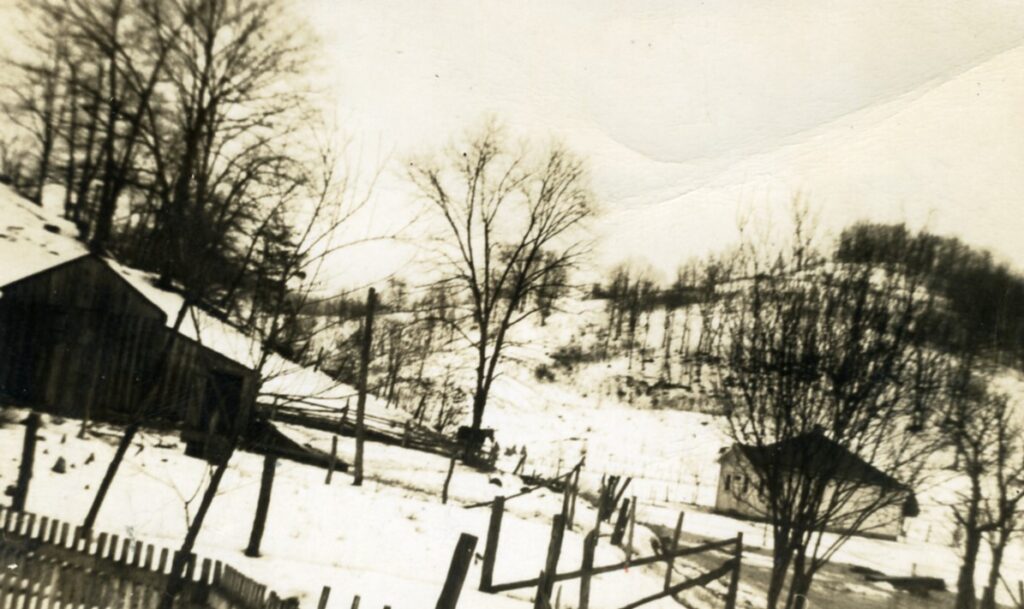
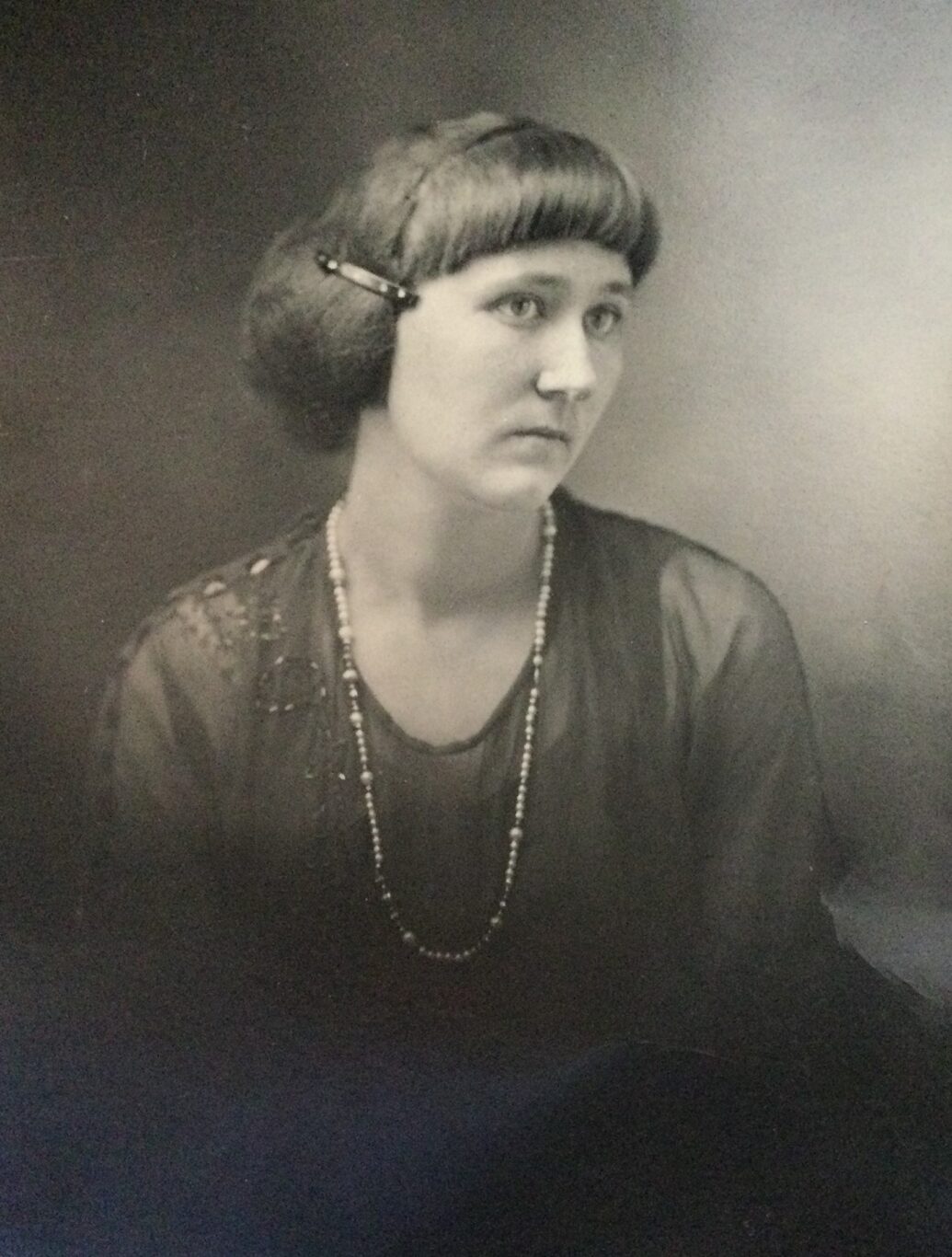
Close to a mile from home, the road descended into a valley where a farmhouse, cellar, barn, and other outbuildings bordered the left side of the road, facing the school building. In the front window of the farmhouse, there often sat a teenage girl with beautiful, long black hair. We passed by her every day, and my young imagination whirled through different stories of who she could be. She was always dressed very neatly, and looked out at us every morning on our way to school. She was part of the scenery, part of our daily walk, and then one day I noticed she was no longer there. I soon discovered she had suffered from tuberculosis. At that time, there was no cure, you were kept isolated because TB was very contagious. Being so young I didn’t comprehend. She is still so vivid in my memory; to me she will always be “the girl in the window.”
At this time in the late 30s and early 40s, the school and the church were the social centers of the community. Every school month, there was a P.T.A. meeting. Grandpas, grandmas, moms, dads, aunts, and cousins attended to applaud the youngsters. Songs, poems, and plays showcased the various talents and the applause was loud and encouraging. There was always a scrumptious cake on display; between its layers was a clue tightly concealed in waxed paper. Clues were given then a nickel would permit a guess. A correct guess bought you that cake. There was also the Cake Walk—choose your partner and pay your dime. A place on the floor would mark the winner. A lady concealed from view with her back to the circle would stop the music and the lucky couple stepping on that magic line received another of those prized cakes.
Once a year there was a “Box Social”, when the gals would beautifully decorate a box filled with a delicious meal. The oath of secrecy prevented all participants from revealing the box’s creator. The boxes were auctioned and sold to the highest bidder; whoever made the winning bid was awarded the box and the honor of sitting side-by-side with that gal. All those monies were applied toward the needs of the school.
Four teachers, one gentleman and three ladies, guided our learning. They were all fine educators, a little weary, but never-the-less, not slack in their love for us. One fall in walks this beautiful, dark-haired princess, another student some thought, but she was our teacher and a recent college graduate. Would the older students make “mincemeat” of her? No, we loved and worshiped this wonderful, caring sprite. She looked after our health as well as our learning.
Fall again found us eager to return to school and our lovely teacher, however, she had been transferred to another school—you can’t hide a treasure. Instead, in sweeps a lady who amply fills the teacher’s chair. We would make short work of her reign, we thought, but the rebellion lasted probably two minutes. She would be our leader. The chatter and giggles vanished. It was time to learn; where had all those WV counties been hiding? Would you believe there were all those states, their capitals, plus all their products? We were frightened and excited by this knowledge.
Soon we had learned all those states, their capitals, and major products. We now knew there were three states bordering the Pacific Ocean, their capitals, and something descriptive about each state. At that time, California looked golden because of abundant alfalfa. Miss Teacher quizzed, “Three states bordering the Pacific Ocean?” One boy’s hand shot up and he proudly responded, “Washington, Oregon, and Alfalfa.” Two-out-of-three ain’t bad.
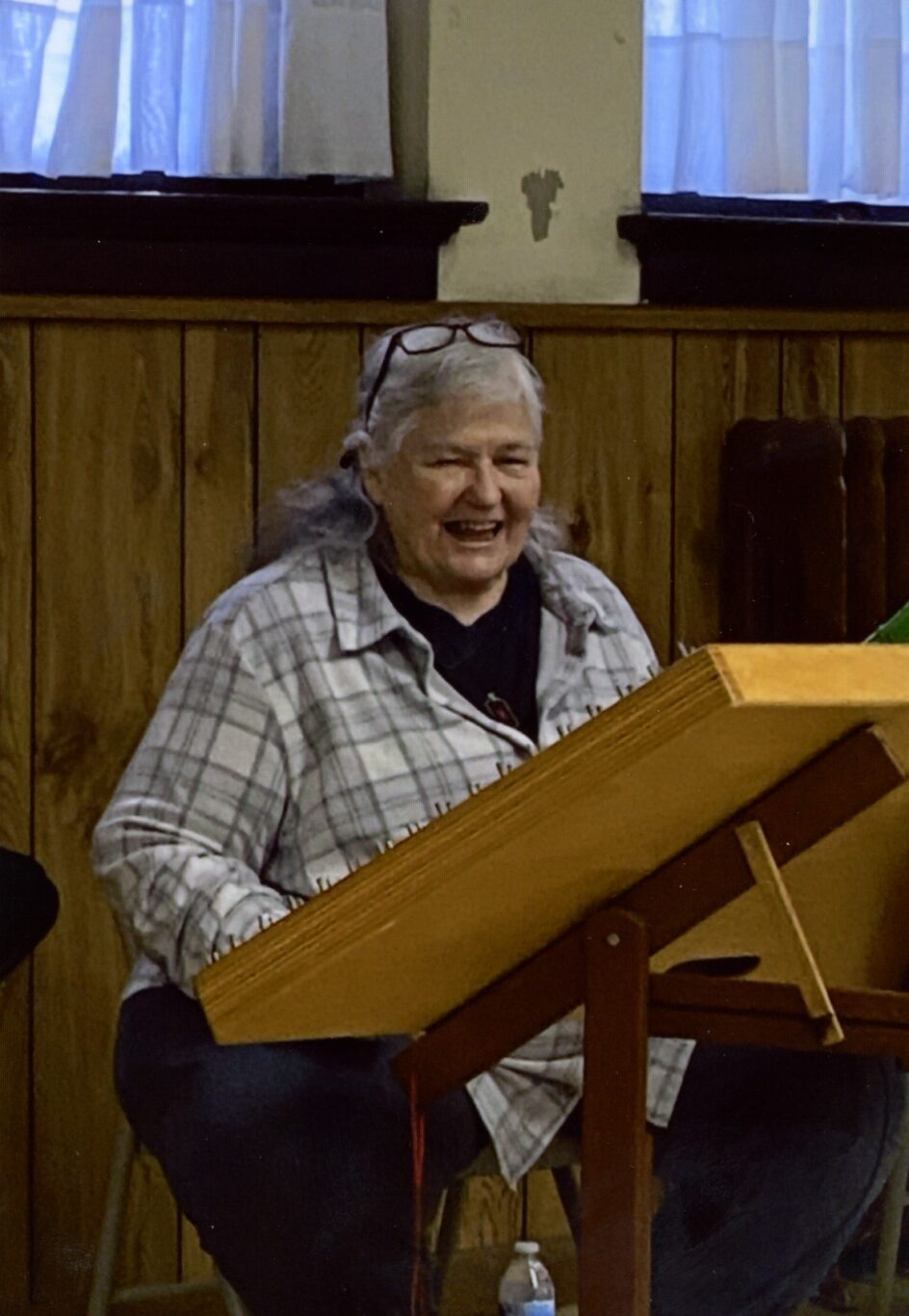
I have often thought of Ross School on and off over my lifetime. I made two of my best lifetime friends at that school amongst those Doddridge County Hills: Lena and Naomi. Now as a 90-year-old hillbilly reminiscing at nighttime, Naomi and Lena are long gone, but in my mind it is a beautiful spring day, Naomi, Lena, and I clasp hands and skip across the log bridge that leads us to Ross School. Suddenly, “Hey wait for me!” is yelled behind us and would you believe—it’s the “girl in the window”, only now she is tanned, healthy, skipping, and smiling. We four join hands and dash off to play at Ross School.

JANET WILSON
Wilson, Janet. “Memories of Ross Grade School & the Girl in the Window.” Goldenseal West Virginia Traditional Life, Winter 2025. https://goldenseal.wvculture.org/memories-of-ross-grade-school-the-girl-in-the-window/