By Steven Cody Straley
For the past decade, a twelve-ounce bottle of West Virginia Pilsner Beer has shared space on the bookcase with the rest of my collection of eclectic bric-a-brac. Its provenance is speculative at best. The bottle came among an array of unrelated materials offloaded to me by my grandparents during one of their downsizings. Perhaps they acquired and saved the bottle knowing it was a historical oddity. Or perhaps they purchased the beer brand new and simply never got around to drinking it. The presence of a beer bottle in my office is rather self-contradictory given that I don’t drink. A practicing Baptist, I am an unabashed teetotaler. I keep this relic in my possession, however, for the remarkable fact that it has survived over half a century fully intact, contents and all.
As far as beer bottles go, this example lacks visual distinction. It represents a typical, if not generic, example of the export beer bottle design. These bottles, characterized by their tall, skinny form; gentle, sloping shoulders; and long necks, became popular in the 1870s with the growth of the American bottled lager beer industry. My bottle is crafted with semi-opaque, amber glass, which hinders close observation of the beer inside. The top is crowned with a tight, metal bottle cap, printed with the faded words “State of West Virginia, West Virginia Beer,” as well as an outline of the state, in case one forgets what West Virginia looks like.

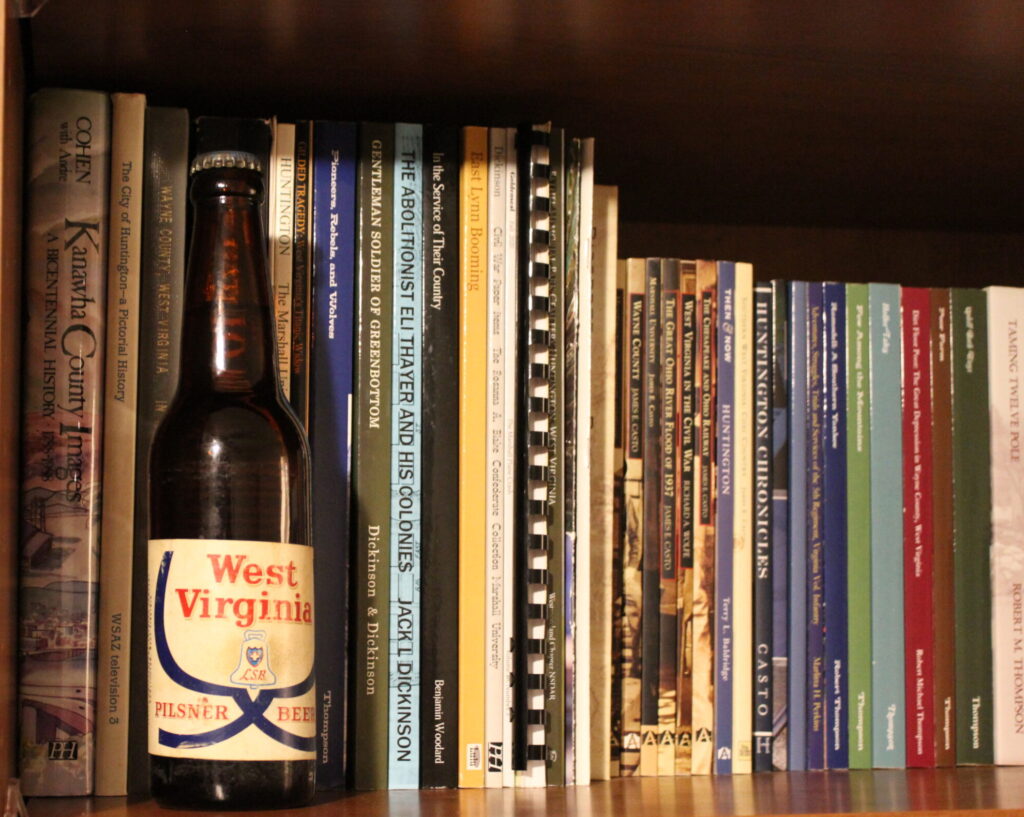
Given its age, the bottle holds up remarkably well. The cap remains sturdy; after over fifty years, it still manages to seal away the golden-brown spirit confined within. The glass is undamaged and largely free of scratches. It is smooth and cool to the touch. There is a sort of pleasurable sensation experienced when feeling it. The bottle is not heavy, but it has a weighty feeling that compels the holder to give greater consideration to the object in hand. The long neck is easy to grip and hold securely, a trait I imagine would be especially important during inebriation. Tipping the bottle forward induces a satisfying plop as the liquid swishes back and forth. A few bubbles rise to the surface. For a moment, it seems as if the beer is still fresh, still active, still potent. A more adventurous examiner might be tempted to pop off the cap and take a swig.
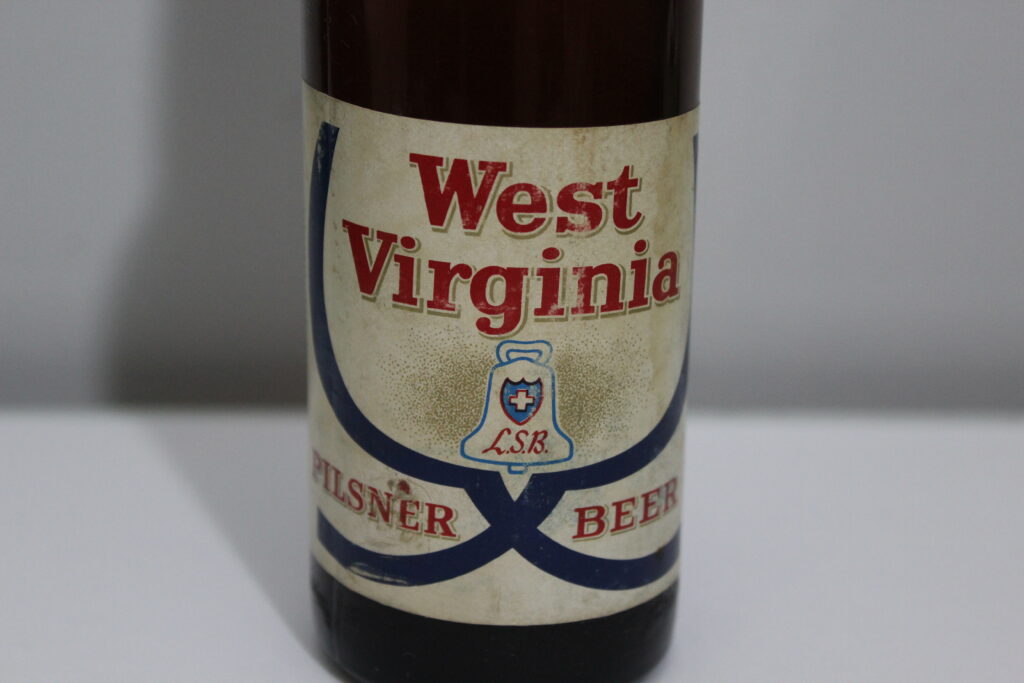
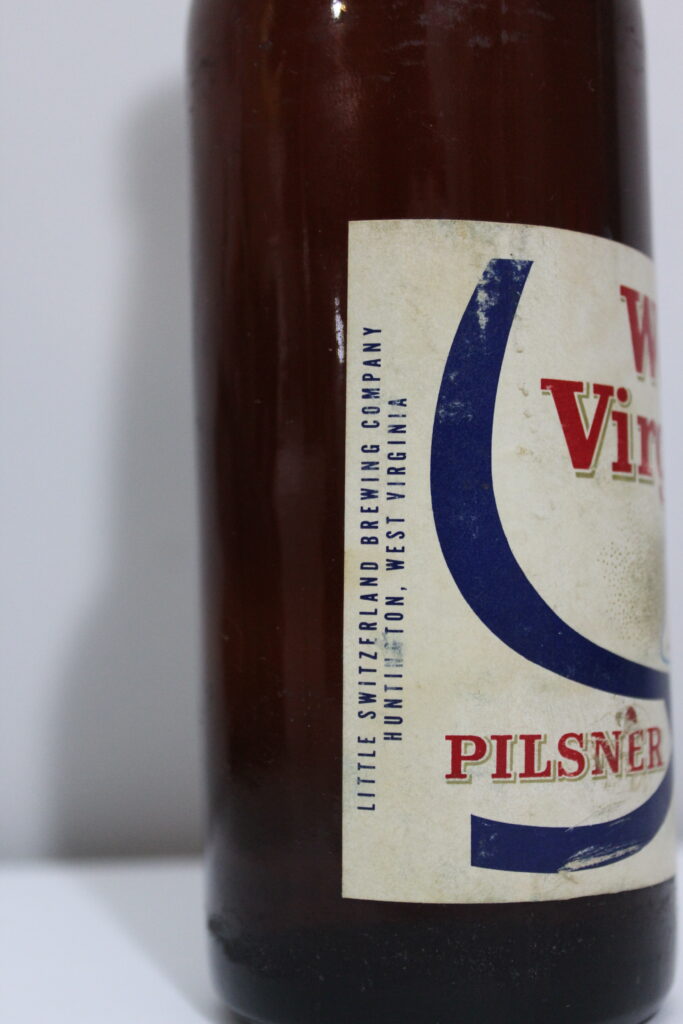
The paper label glued to the front of the bottle makes its most distinctive feature. “West Virginia Pilsner Beer” is emblazoned in bolded red letters against a white background, with intersecting blue ribbons wrapped around and in between the text. The name implies a sense of regional pride. Many old timers from the Huntington area could look at the label and easily identify it as the most popular brand manufactured by the Fesenmeier Brewery in the city’s West End. Closer observation, however, reveals a surreptitious difference for this particular specimen. Instead of Fesenmeier, “Little Switzerland Brewing Company” is printed on the very edge of the label.
The bottle was manufactured sometime between 1968 and 1971. This fact is certain, as those were the only years the Little Switzerland Brewing Company existed. The business took form when a group of investors bought out the ailing Fesenmeier Brewing Company in hopes of turning its fortunes around. Little Switzerland was unable to stem the tide of the regional brewing industry’s decline, however, and its closure in 1971 marked the end of an era for Huntington and West Virginia. This unopened bottle encapsulates the lost potential of a failed enterprise and the decline of a once-thriving manufacturing community in Huntington’s West End.
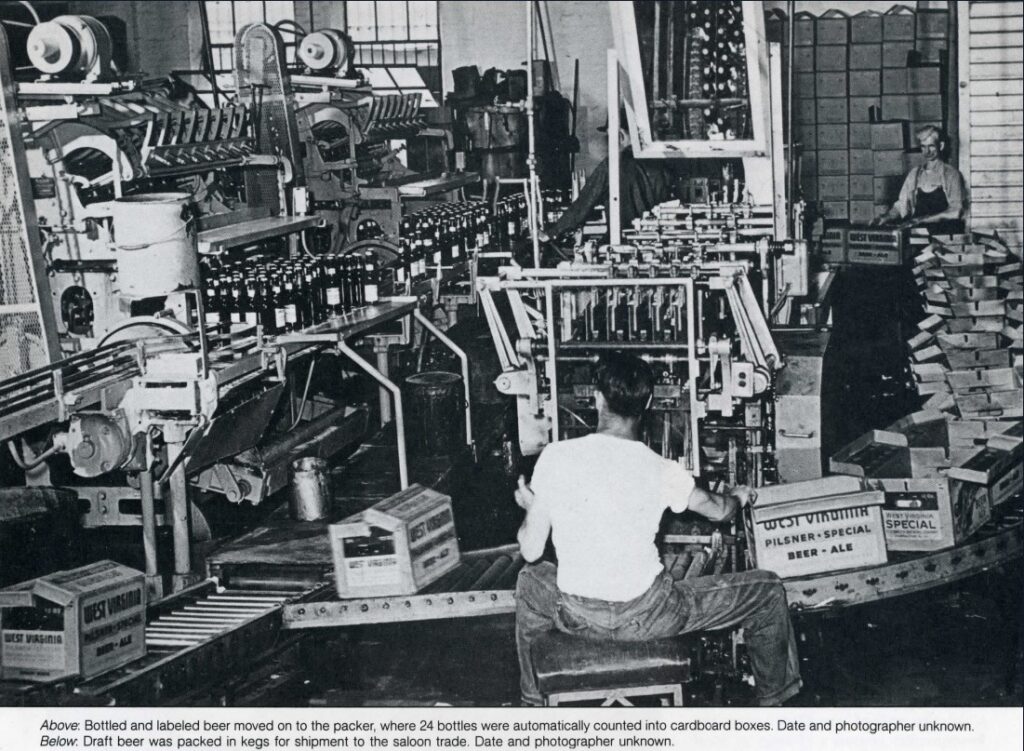
The background of this beer bottle can be traced back to the turn of the twentieth century, when a group of developers established a new settlement to the west of Huntington. This town, incorporated as Central City in 1893, was intended by its financiers to become a major manufacturing hub. The industrial center would serve as an economic supplement to Huntington, which had few factories outside of the railroad business at the time. Within a short span of time, the area drew in glass plants, lumber plants, and other businesses. Factories occupied entire city blocks. The town thrived and produced an assortment of goods such as window panes, furniture, glass tumblers, axe handles, picture frames, crates, kegs, and bungs. Huntington annexed Central City, now referred to as the West End, in 1909. The community remained an industrial magnet for several decades afterwards.
A brewery was one of the first businesses to establish itself in Central City with the opening of the Huntington Brewing Company (perhaps annexation was already anticipated) in the early 1890s. The venture switched hands in 1896 and became the American Brewing Company. Three years later, the Fesenmeier family arrived in Central City and took over the business, later renaming it the Fesenmeier Brewing Company. They were among a crop of enterprising German American families who produced beer in the United States during the second half of the nineteenth century. The story of the Fesenmeier family was featured in the 1981 winter issue of GOLDENSEAL.
Under Fesenmeier ownership, the company distributed brands such as “Fesenmeier Brew,” “West Virginia Special Export,” and “West Virginia Sparkling Ale.” In 1941, they introduced the lighter “West Virginia Pilsner Beer,” which achieved great popularity. Cabell County attorney and businessman George Wallace wrote in 1947 that it was “a favorite of the lovers of the beverage of moderation.” The Fesenmeier Brewery occupied a dominating brick structure on the corner of Madison Avenue and Fourteenth Street West. Many of their materials were sourced from other local factories, such as wooden beer crates, kegs, bungs, and glass bottles. As time progressed, these industries gradually closed or moved out of the West End area. Other area beer makers too began to shutter; by 1946, Fesenmeier was the only brewery left in West Virginia.
The post-World War II years witnessed a steep decline in the local and regional breweries that serviced many American communities. National companies such as Anheuser-Busch, Pabst, Miller, and Schlitz conquered much of the market. They poured enormous resources into developing cross-country distribution networks, pressuring wholesalers into dropping smaller brands, and launching national advertising blitzes. This strategy worked particularly well with a population that was more mobile than ever before. Americans who moved from one city to another relied on the consistent quality and flavor of national beer brands, rather than having to patronize unfamiliar local names. Uniform name recognition of these brands coincided with a growing perception that local breweries were somehow inferior in quality. National beer brands developed into status symbols. It became fashionable to drink a Miller or an Anheuser-Busch beverage, rather than something brewed locally. Consumers sought to emulate others and acquire a sense of prestige by joining the trend. National beer companies captured the attention of the American public, and local breweries struggled to compete.
By the 1960s, the Fesenmeier family’s operation was hampered by the popularity of national beer brands, the significant expenses of marketing, and an old state law that required all beer to contain no more than 3.2% alcohol. This forced the company to produce two different strains of each beverage; one that met the state limitations, and one of a higher alcoholic percentage to sell out of state. Operating costs became too great. In 1968, the Fesenmeiers caved in and sold their longtime business to a group of local investors. The new owners set about rebranding Fesenmeier as the Little Switzerland Brewing Company.
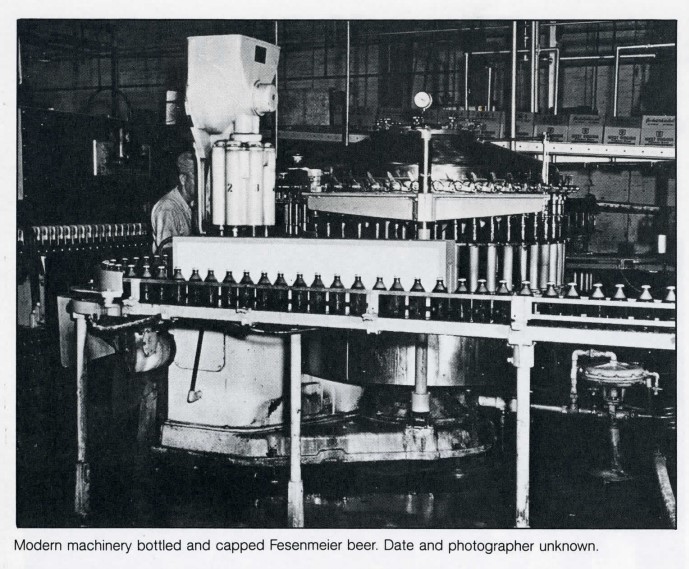
It was in these last few years of corporate soul searching and struggling for profitability under the new management that one bottle shipped out of the factory and began an enigmatic journey that ultimately terminated on the upper shelf of a college student’s bookcase. Little Switzerland’s financial backers spared little expense to turn around the ailing company. They recruited beer industry experts, installed new machinery, and invested heavily in advertising. The company had two strategic goals: to promote Little Switzerland as a cultural attraction and to establish a beer brand that could be sold nationally. The brewery played very heavily on the German-Swiss heritage of West Virginia and the beer industry to attract visitors. It renovated the façade of their office building to resemble a traditional Swiss chalet, opened a free, Swiss tavern-themed hospitality room for community functions, and offered guided tours of the brewery. Little Switzerland retained Fesenmeier’s original West Virginia Pilsner Beer (a promotional brochure dubbed it “the only beer good enough to be named after a State”), but it also introduced a new drink called “Charge,” which it hoped would penetrate the national market.
The lofty and optimistic ambitions of Little Switzerland’s backers failed to match the company’s tepid financial reality. Charge, the much-touted “Bold American Premium Beer,” did not make a blip on the national beer industry’s radar. Meanwhile, the extensive rebranding efforts perhaps alienated many longtime Fesenmeier loyalists. After only three years of operation under the Little Switzerland banner, the brewery in Huntington’s West End closed for good in 1971. At the time, it was the last brewery in West Virginia. A year later, the brewery’s massive brick facility at the corner of 14th Street West and Madison Avenue was demolished. A languid strip mall occupies the site today.
Many remnants of the brewery’s presence still filter their way through local antique stores and the homes of niche collectors. The Central City Museum on 14th Street West has an entire exhibit dedicated to Fesenmeier and Little Switzerland memorabilia. Several years ago, an antique shop in the same neighborhood unveiled a massive stockpile of empty, never-used West Virginia Pilsner Beer cans, left behind after Little Switzerland shuttered for good. I purchased a boxful to give away as Christmas presents and thank-you gifts.
“Given its age, the bottle holds up remarkably well. The cap remains sturdy; after over fifty years, it still manages to seal away the golden-brown spirit confined within.”
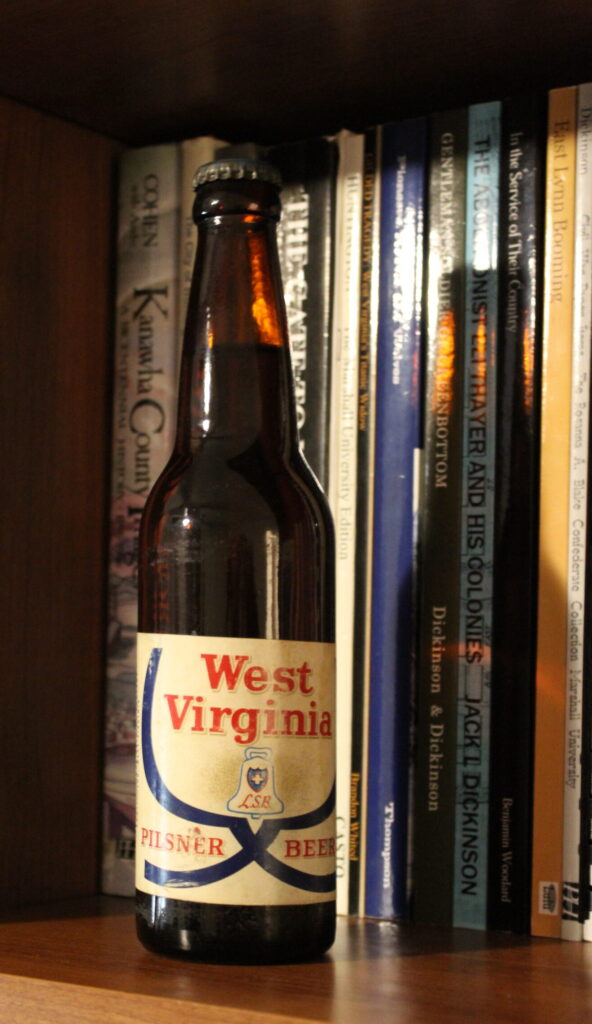
The bottle in my possession is unique among other relics from the brewery because it was never opened. An empty beer bottle is dead, exhausted, skeletal. The unopened bottle retains an aura of life and activity. It attracts more attention because it continues to carry out its designed function of holding liquid. The bottle, in other words, is still working the way it was intended. The fact that it remains sealed and filled with a beverage that has not been produced in over fifty years makes it a precious rarity. Perhaps the long lost Fesenmeier recipe can one day be synthesized from this fluid time capsule. Might this bottle be the frozen wooly mammoth tissue of the region’s beer industry? Probably not, but the amusing, hypothetical prospect still gives it greater value.
An unopened antique bottle of West Virginia Pilsner Beer sends many messages. It is the lonely reminder of a lost era in the beer industry. It encapsulates the optimism and efforts of a company that tried to save West Virginia’s last brewery; the unopened nature of the bottle denotes the failed potential of that brief enterprise. Both the bottle and the Little Switzerland Brewery that produced it held potential for enjoyment and success, but neither of them delivered the sought-after effect. This lone survivor never contributed to the act of having a good time, while its fellow bottles were consumed and enjoyed ages ago. While it may not have been utilized the way it was intended, this bottle’s presence today offers insight into the era from which it emerged untouched.

STEVEN CODY STRALEY
Straley, Steven Cody. “Musings on a West Virginia Beer Bottle.” Goldenseal West Virginia Traditional Life, Fall 2025. https://goldenseal.wvculture.org/musings-on-a-west-virginia-beer-bottle/