By Charles Raines
This article is about a West Virginia family that has been in these Appalachian Mountains of West Virginia since Colonial times.. They were pioneers in the American West when this region was considered “The West.” They were pioneers in the truest sense of the word. They came to start a new life in a wild untamed wilderness. Our ancestors were not wealthy, nor were they captains of industry, railroad builders, or famous figures. They were simple people who sought freedom and a piece of land to raise their families.
The first Raines to come to the American Colonies was Sir James Raines, who landed at Jamestown in 1620. Our branch of his descendants went on to become soldiers in the Battle of Point Pleasant, the French and Indian War, the American Revolution, Indian fighters, colonial fort builders, and soldiers in the Civil War on both sides. Few became famous and for several generations were primarily subsistence farmers.
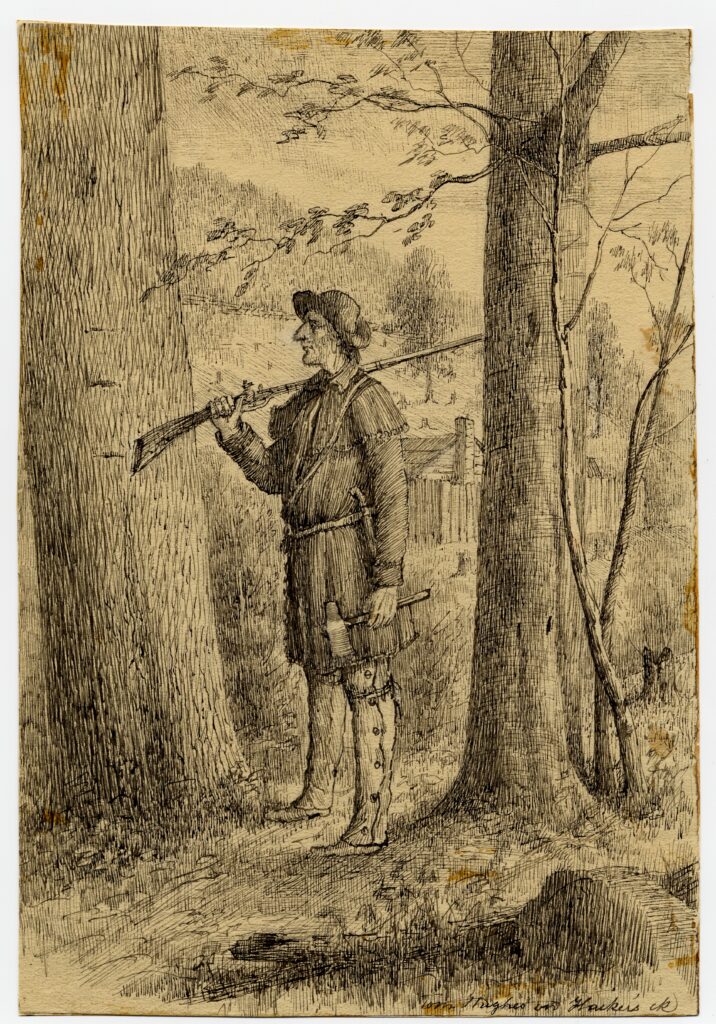
Some in later generations moved west to places like Kansas and Minnesota. By now, we have scattered all over the country. Raines descendants have pursued varied occupations and professions, but we hold onto family tradition and love our God, our families, our neighbors, our home state and country.
Many similarities exist between the time when western Virginia was “The West” and the “John Wayne” West that emerged 50 years later. When western Virginia was the “West,” few people had even heard of California, Texas, or Colorado. The “West” stopped here. The major material differences between our “West” and the later West were that there were fewer horses in colonial Appalachia. Our ancestors used single-shot flintlock rifles, muskets, and pistols. The later Westerners had more horses, Winchester repeating rifles, and Colt repeating revolvers. They had better mobility and armaments. If you were being chased by a group of Native Americans trying to kill you, which would you rather have—a Winchester repeater or a single-shot flintlock rifle?
The hazards here were very similar to those in the later West. Plus, we had to fight the British and the French, as well as the Native Americans. Our pioneer ancestors were just as rugged and determined as those anywhere else. The Native Americans here didn’t like the white settlers coming in and taking their land any more than those in the later “West.” Those who fought were just as determined to win. The blood was just as red. Scalping and other depredations took place on both sides in both “Wests.” The people who fought to protect their homes were just as serious, regardless of where they were from.
The Roane County Raines family has been in these Virginia/West Virginia Appalachian Mountains since before the American Revolution. They came from France, England, Scotland, Ireland, and Germany. Our family consists of West Virginia pioneer families with names like Raines, Coon, Hughes, Gandee, Heinzman, and Heller. The family is still here and going strong.
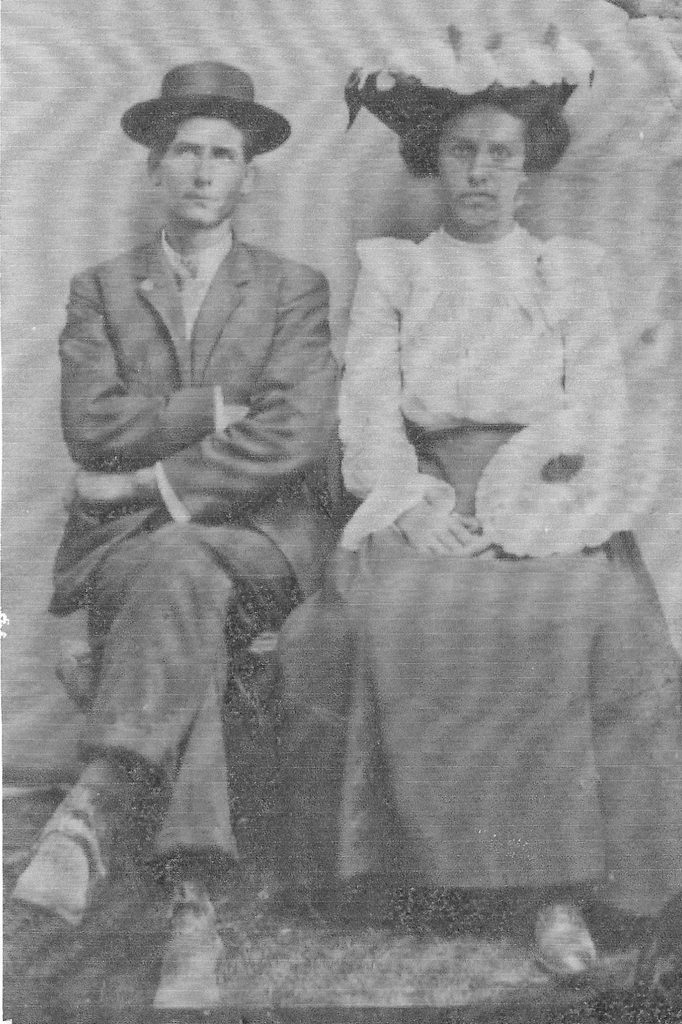
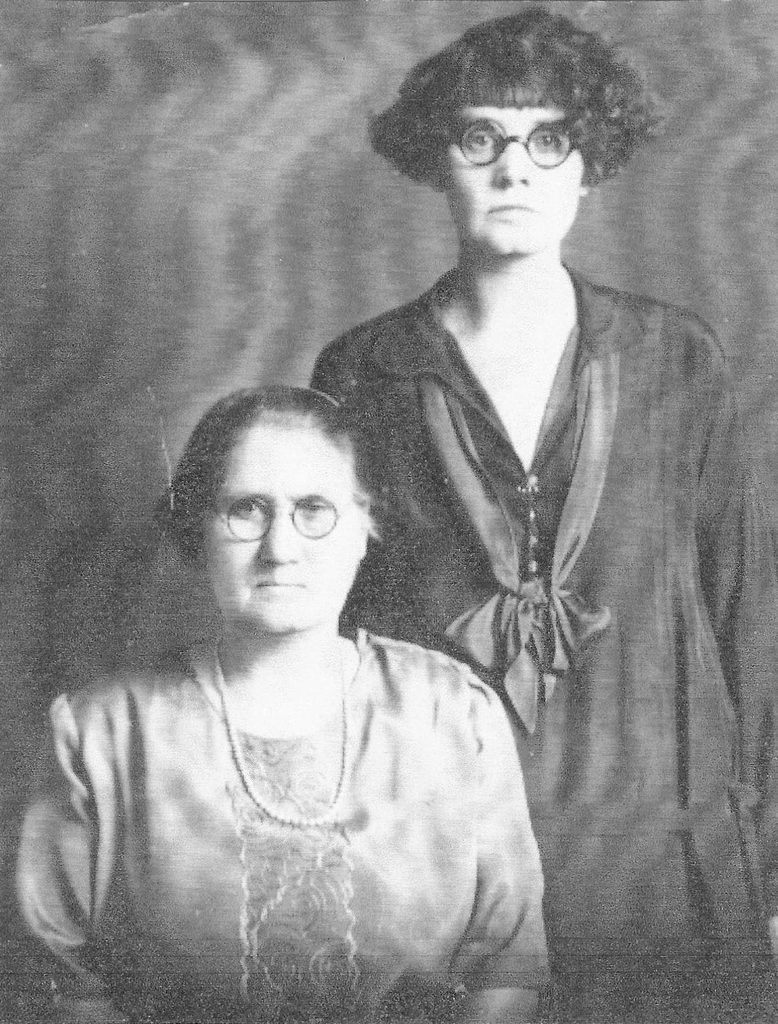
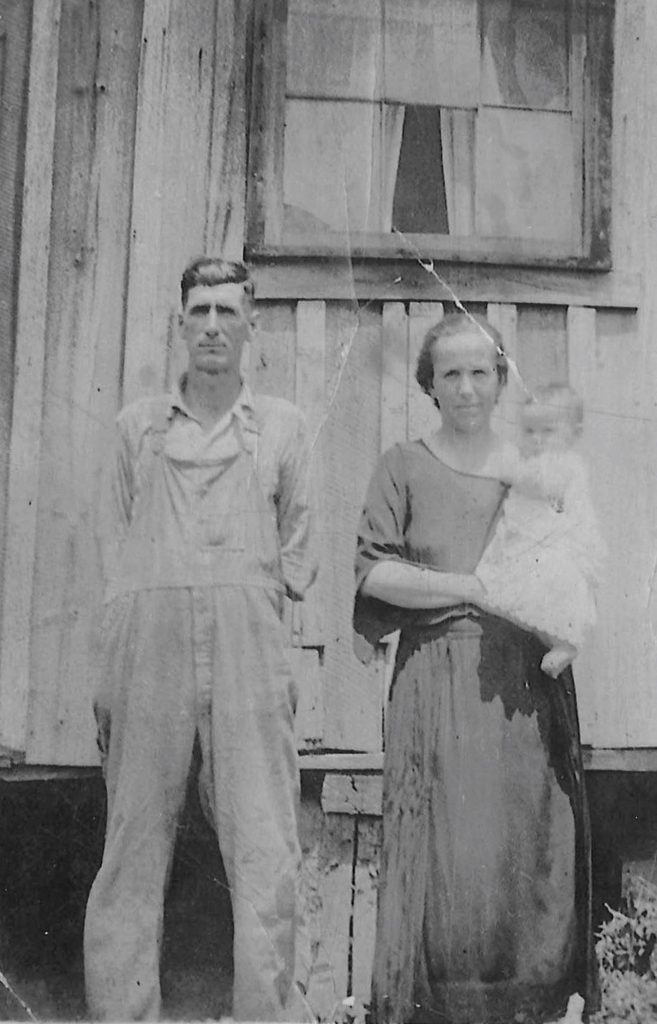
There is a lot of fascinating history in the various branches of the family. I would like to share some of this history. I’ll start with my father and move back in time.

Howard L. Raines (1909 – 1987) was the oldest son of subsistence farmers Lenox and Cora Raines. Howard grew up on the family farm on Vicars Ridge in Harmony, Harper District, Roane County. He was the oldest of 12 children, 10 of whom reached adulthood. They had no electricity, running water, public sewer, McDonald’s, or Walmart. Their road was red clay, which would suck the shoes off your feet when it was wet! They farmed this same red clay dirt on a hillside farm. When Howard reached 19, an uncle told him about real paying jobs in Charleston. So, he went to Charleston and began working for the state road. It didn’t take him long to get a better job at the new Libbey Owens Ford (LOF) sheet glass plant as a laborer. He worked at this same plant for 43 years becoming a millwright, essentially a lead mechanic. During WWII, LOF made periscopes for tanks and airplane windows. Howard married Ada Peters in 1929. When he was courting her, there were no roads up Winifrede; much of the road was the creek. Both Howard and Ada were devout Christians. Ada was the daughter of W.L. and Louisa Peters, their sixth and last child. W.L. was a coal mining Baptist preacher who helped start Old Glory Freewill Baptist Church up Winifrede in eastern Kanawha County. He kept some accounting books when he was a Lodge Treasurer, possibly for the Red Man lodge, during the time of the Mine Wars. Is it possible that these lodges were fronts for the UMW? The lodges were secret societies when unions were very unpopular.
Just before Howard left Roane County for Charleston, he promised his dad that come spring, he would return home to help put in the crops. The next spring, he rode the bus to Gandeeville and walked the 8 miles to Vicars Ridge, in Harmony, to keep his promise. Howard’s dad, Lenox—known as Len—was out working the garden. Len asked how he was doing in Charleston. Howard told him that he had a job at the new Libbey Owens Ford glass plant. I’m not sure if he was making 35 cents an hour or $35 a week, for 10 hours a day, 6 days a week. Grandpa told him that, “since you are making the big money, you might as well stay.” Howard and Ada raised two sons and lost one at an early age. My brother, Rusell Harold, became a chemist for Carbide, and I worked as an engineer for the Army and HUD.
Lenox Raines (1881 – 1958) was a subsistence farmer. He and his wife, Cora (1884 – 1967), had a 40-acre, red clay dirt farm at the low gap on Vicars Ridge, near Harmony. Len came from a line of subsistence farmers who were among the first settlers in Roane County. Some settled in the Flat Fork area of the Harper District, where there were plenty of wolves, bears, and rattlesnakes. Lenox and Cora were married in Gandeeville at her father’s home.
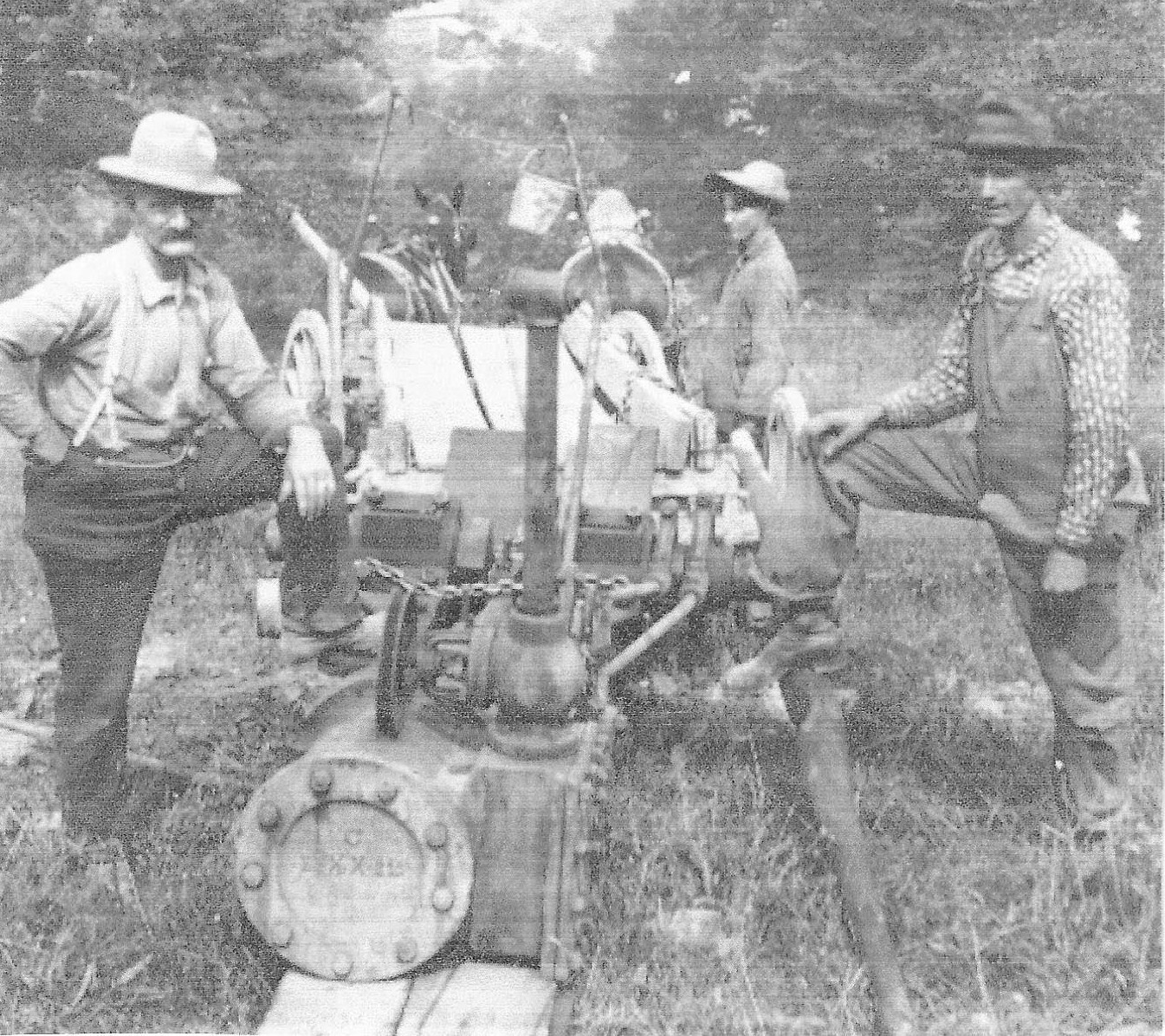
Len was known as a stern taskmaster. As my dad said, “If we didn’t grow it, we didn’t eat it.” Times were hard, and you had to be tough and work hard to survive. To supplement the farm, Len delivered the mail from Harmony to Fletcher, starting in 1919. He delivered the mail on horseback 313 days a year, 24 miles a day round trip, for $1.29/day—rain, sleet, snow, or high water. If he was ill, one of the boys would carry the mail, likely my dad as the oldest son. Len’s bid was undercut in 1936 for $1.19/day. If someone in the neighborhood needed help, Len was there. If there was a baby to be born, Cora was there. Len and Cora had 12 children, 10 of whom lived to adulthood. They didn’t have much money, but Aunt Eloise said that Grandma always put some back for the preacher. She was active in the Fairview Church. Cora was born a Rhodes, another family of subsistence farmers. Her father, Sylvester Rhodes, was a blacksmith who shod horses. The Rhodes family came to America in 1765. As a child, Cora played on the covered bridge, that is now at Cedar Lakes. Her family had soldiers in the Civil War.
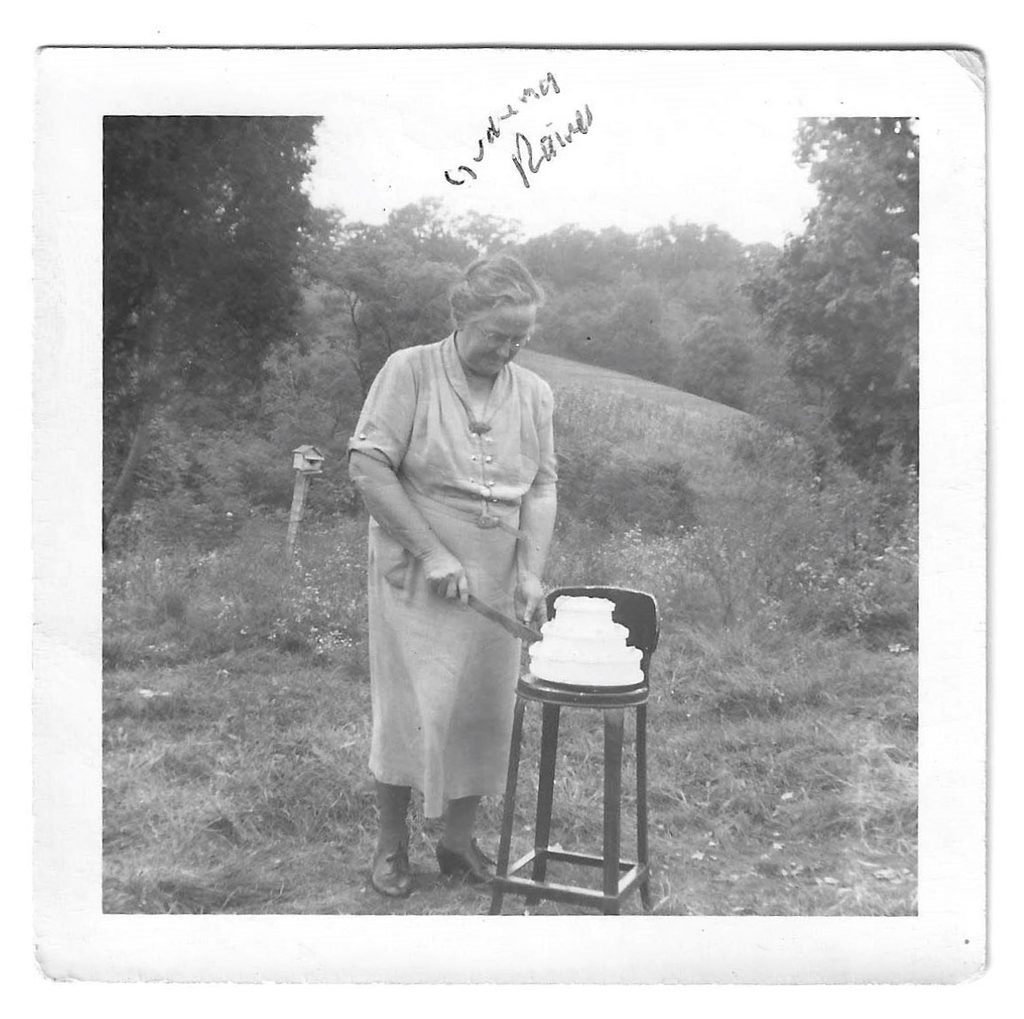
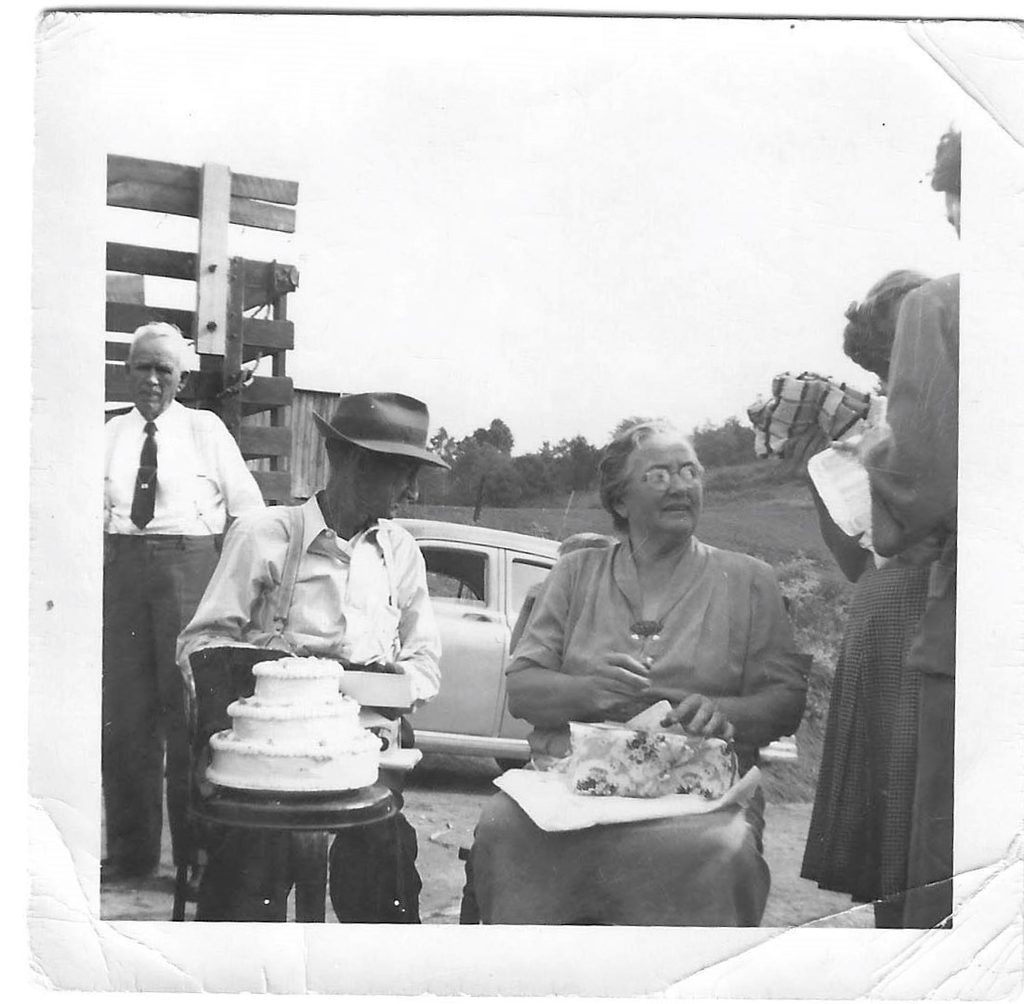
ca 1950
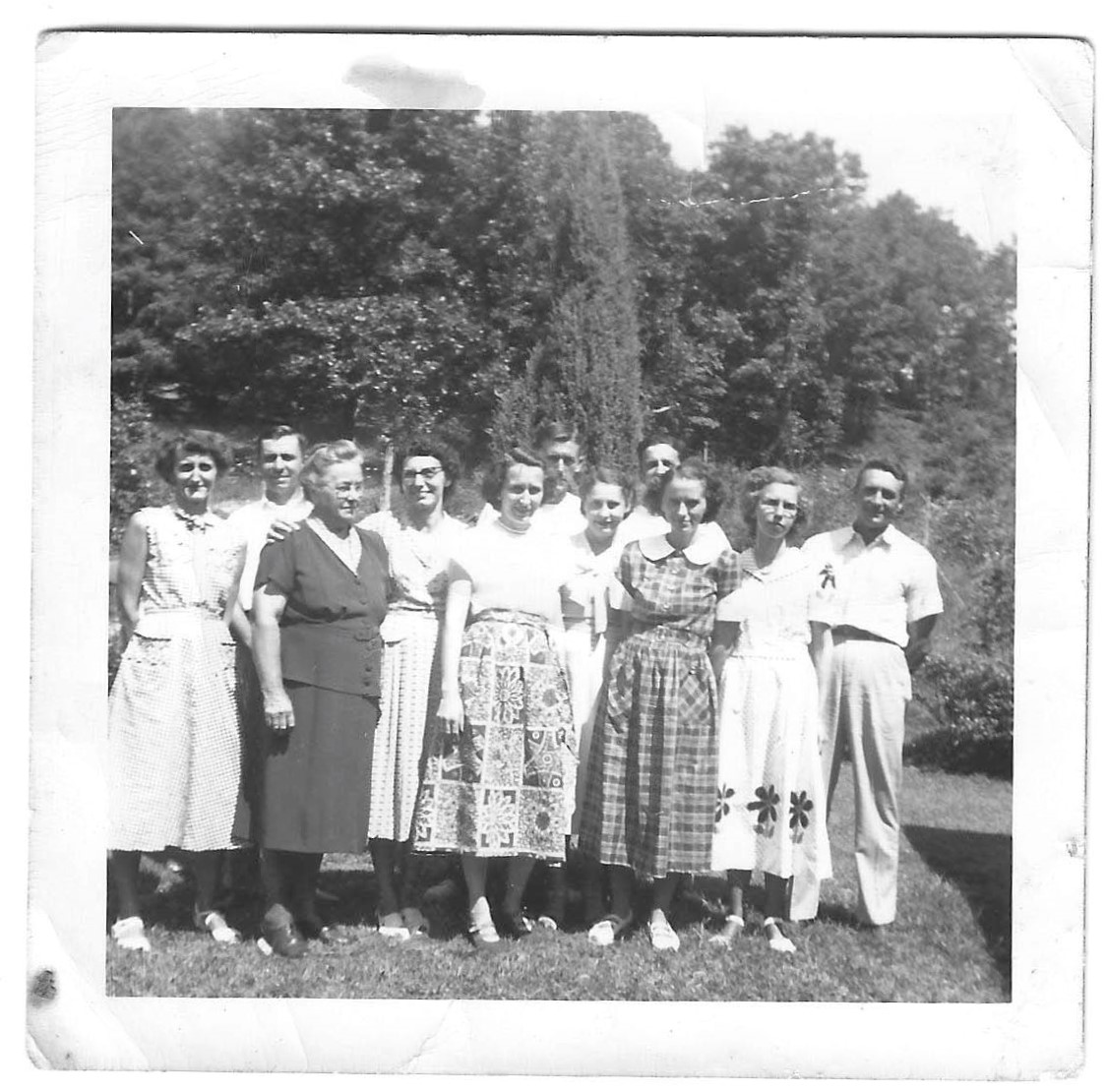
Children of Lenox and Cora Raines Ca. 1950.
James William Raines (1856 – 1936), Lenox’s father, was born in Jackson County. His wife was Mary Coon (1858 – 1934). They moved to Minnesota in 1883 and returned to Roane County a few years later. William went back to Minnesota, leaving the family in Roane County. Mary was from the Coon family, that included Revolutionary War veterans and frontier fort builders.
Abraham (Abram) Raines (ca. 1822 – 1890), James William’s father, and his wife, Lucinda Gandee, were married in 1841 and had 10 children. They lived on a farm given to them by her father, Uriah Gandee, Jr. One of their children, Robert, went to Minnesota, near the Leech Lake Indian Reservation. This may explain why his uncle, James William Raines, went to Minnesota.
Robert R. Raines (1790 – 1864), Abraham’s father, lived on Flat Fork at the mouth of Cabbage Fork. He married Elizabeth “Betty” Hinzman, daughter of Henry and Charity (Coon) Hinzman. The Harper District was formed in their home, and the first post office in the Harper District was located there. Their sons George and Elmore were Federal soldiers, and their son Thomas was a Confederate soldier. George was killed in the war.
John Robert Raines (ca. 1757 – ca. 1848), Robert’s father, fought with the militia at the Battle of Point Pleasant and served in the Colonial Army throughout the Revolutionary War. He served with the 8th Virginia Regiment of the Line, under Col. Abraham Bowman. In June 1778, he transferred to the 4th Virginia Regiment commanded by Col. James Wood and/or Col. John Neville. He also served as a bodyguard for George Washington. His name appears on the United States Revolutionary War Rolls, 1775-1783.

Three of our ancestors fought at the Battle of Point Pleasant. One, Elias (Ellis) Hughes, was the last survivor of that battle. Jesse Hughes was a scout. Several in the family were Revolutionary War soldiers. Henry Heinzman was a Hessian soldier who came over from Germany to fight for the British. He deserted the Hessians and became a colonial soldier in a Pennsylvania Regiment of the Line. Henry’s wife was Charity Coon.
The Roane County Raines family certainly played a role in the formation of America with its warriors, Indian fighters, and farmers—true pioneers. These were people who loved their God, their family, their land, and their neighbors. While the current generation has become more diverse, the characteristics handed down through the generations are still easily seen.


CHARLES DAVID “DOC” RAINES
Raines, Charles. “The Roane County Raines Family.” Goldenseal West Virginia Traditional Life, Summer 2026. https://goldenseal.wvculture.org/the-roane-county-raines-family/