

By Earl Lyons Jr.
There’s a McDowell County resident connected to the Hatfield-McCoy feud. I first met him on a spring Saturday in 2010 while volunteering with a Trout Unlimited crew on their annual cleanup of Elkhorn Creek. I later wrote an article about my experiences fishing on the stream, which 100 years earlier had meandered as a polluted waterway through the then mostly lawless, wild-west-like town of Keystone.
A portion of that cleanup days’ events mentioned in the story are as follows: “The main speaker at our luncheon was a county employee, Wendell Hatfield. Yep, there’s a new sheriff in town, sort of. As I listened to him, an imposing figure with silver hair, mustache and beard, my mind drifted back to the early 1900s community of Keystone, and I envisioned Wendell resembling the Chief of Police that author Howard Lee had met when he took in the sights around town; gathering information for his book about the mine wars, Bloodletting in Appalachia.
A hundred years later, this man really does have the power to “clean up” not only Keystone, but the whole county. He works with the McDowell County Solid Waste Authority, and can issue fines for citizens who violate the county garbage disposal laws.”
“On behalf of the Solid Waste Authority and the county commission, I want to thank all of you today for helping with the cleanup,” Wendell stated. “Old habits are hard to break, and for years some people have gotten rid of their garbage at illegal roadside dumps or by throwing it into our streams and rivers. Now, county residents living in unincorporated towns or rural areas, by law, have to either hire a garbage disposal service to pick up their trash, or haul it to the county landfill, and show receipts that they did so. Slowly we’re turning things around, and our goal is to have a cleaner, healthier and safer environment for our citizens and outsiders who visit the county,” Wendell concluded.
During the next several years, including creek cleanups and other visits to my home county, I have become better acquainted with Wendell and to sense how prideful he is of his family heritage.
Wendell is a walking encyclopedia when it comes to knowledge of the well documented Hatfield-McCoy feud. He is a fourth cousin to William Anderson Hatfield, better known as “Devil Anse” who lived between 1839 and 1921, and was called the patriarch of the family during those violent battles of the feud.
Although those family squabbles over land and livestock led to several deaths on both sides and became the primary focus of the saga, Wendell is quick to point out the positive contributions his side of the family has made during the decades since the feud.

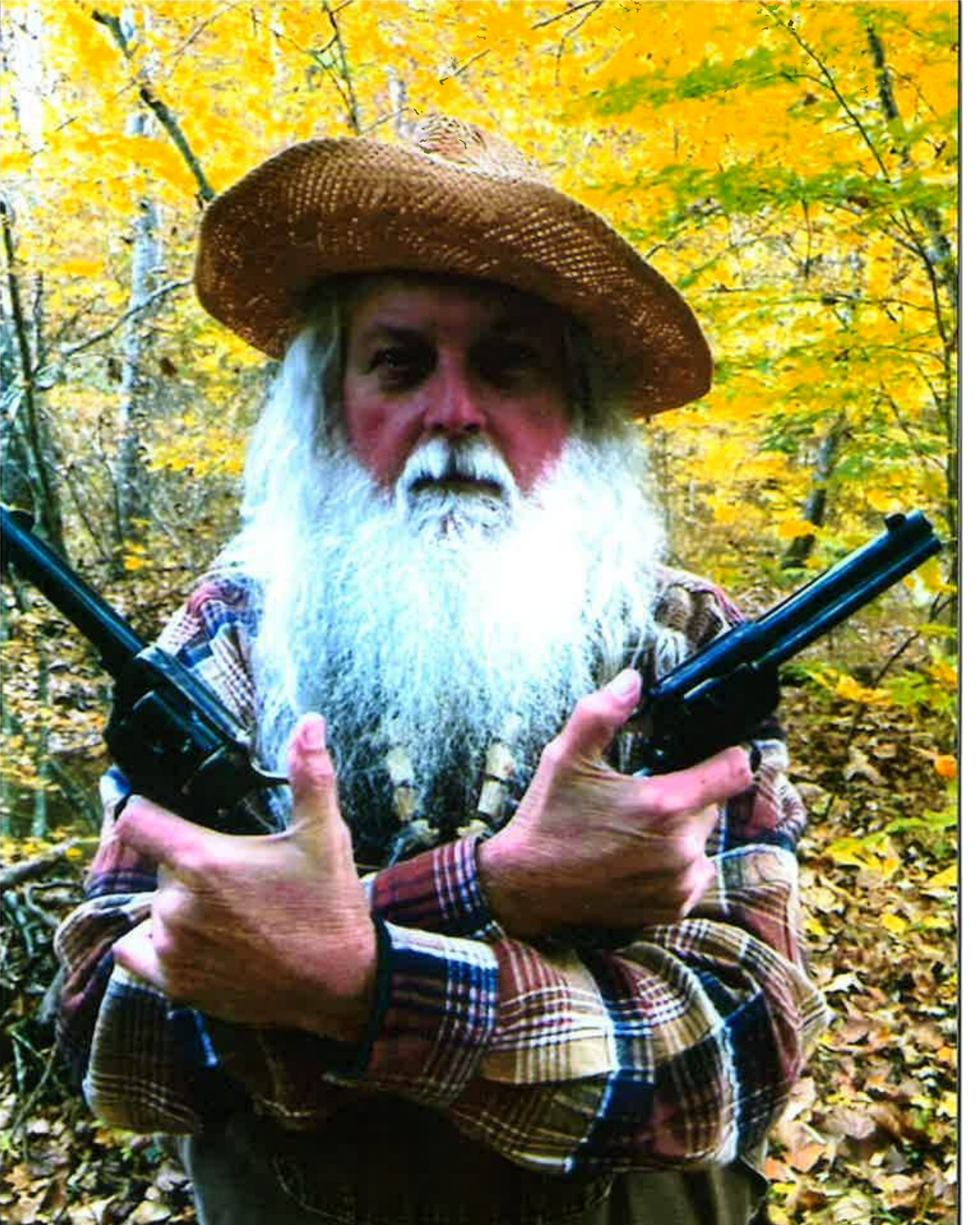
“In the years after the feud, William Anderson became quite wealthy as an entrepreneur largely through buying and selling land and timber. William Anderson’s nephew, Henry D., became governor of West Virginia and, later on, a United States Senator,” Wendell told me. “Many others from our family tree became teachers, physicians, law officers, and preachers. And not all of our noteworthy kinfolks were men,” Wendell explained.
“My cousin Aileen, who was the daughter of Coleman A. and Mossie Caldwell, was the first woman to graduate from West Virginia’s law school, and later was the first lady lawyer in Logan County.” (See “The Devil Turned to Stone” by Robert Spence; Spring 2002)
As the official Litter Control Officer of McDowell County, Wendell’s job takes him through all the highways and towns; including the nooks and crannies of the back roads, while searching for violations. In the performance of his duties, it’s not as though Wendell can sneak up on anybody. He’s one of those guys that fits the description, “you can spot him a mile away.” After 28 years of rambling around in his work truck, dressed in his soft, gray flat cap and blue or tan overalls, you’d have to be a newcomer to the county not to recognize him.
When it comes to disobeying litter laws, probably the most common misdeed, and one which we all have witnessed, is drivers and passengers throwing trash out of moving vehicles. Besides catching folks in the act, or sifting through discarded garbage bags searching for identification information, Wendell has other “eyes” helping in his effort to keep people within the law. “I do have several hidden cameras around the county, and homeowners are good to call me when they see neighbors stock-piling garbage on their property or throwing it into the creeks and rivers,” Wendell explained.
The anti-littering sign at the Welch city limits on Premier mountain states; “UNLAWFUL TO LITTER-MAX $25,000 FINE-POINTS ON LICENSE-JAIL TERM”. “Despite the warnings,” Wendell says, “there’s always that small percentage of the population who knowingly flaunt the rules; those are the individuals I’m always on the lookout for.” He then proceeded to elaborate on that point with a somewhat humorous narrative.
“I like to give people the benefit of the doubt and look at their good side, but there’s a few who refuse to show me that positive outlook. Take that roadside sign that everyone’s seen that says in big red lettering “NO DUMPING ALLOWED”. For some folks, pulling off the road and seeing that marker seems to make them feel like the kid who’s tempted to put their hand in the cookie jar after having been told by mommy, “no more treats today”. Likewise, after reading the warning sign, that small minority might conclude; this must be a good place to dump; all we gotta do is toss our garbage bags over the hill and they’ll never be seen again.”
On another visit, Wendell asked me a work-related question; “Do you know the best year I’ve ever had in getting discarded stuff cleaned up in the county?” “No, but I’d like to find out,” was my reply. “It was the year the price of metals went sky-high. All of a sudden pickup trucks were flooding the county, with guys looking for aluminum, steel and iron. Locals and outsiders were combing the hills, roadsides and riverbanks, looking for any scrap metal they could find.
Numerous times I saw guys with winch and cable mounts on their trucks, along creeks and rivers, pulling out partially submerged, rusty equipment; everything from auto parts to home appliances like stoves and refrigerators. We’re always looking for volunteers to help with cleanups, and that year we had plenty of them, and they weren’t even of the solicited variety, which we usually have to depend on.”
“Nowadays”, Wendell went on, “speaking of volunteers, there is a lot more action from local clubs and other organizations, seeking to keep the environment clean. Our local and state government, also, has initiated programs in the towns and schools to make the younger generations aware of the need and effort required to keep the habitat and environment clean for both wildlife and people to thrive. So when you see a group of elderly folks or teenagers walking beside the road, filling our green, heavy-duty garbage bags with plastic bags, food wrappers, cans and bottles; they’re probably from a nearby church or school; all willing to spend a day cleaning up the landscape. Another program we’ve started recently allows us to have a number of free-day trash pickups, whereby residents can haul their throw-away stuff, even larger items like used tires, to designated dumpster locations, for disposal.”
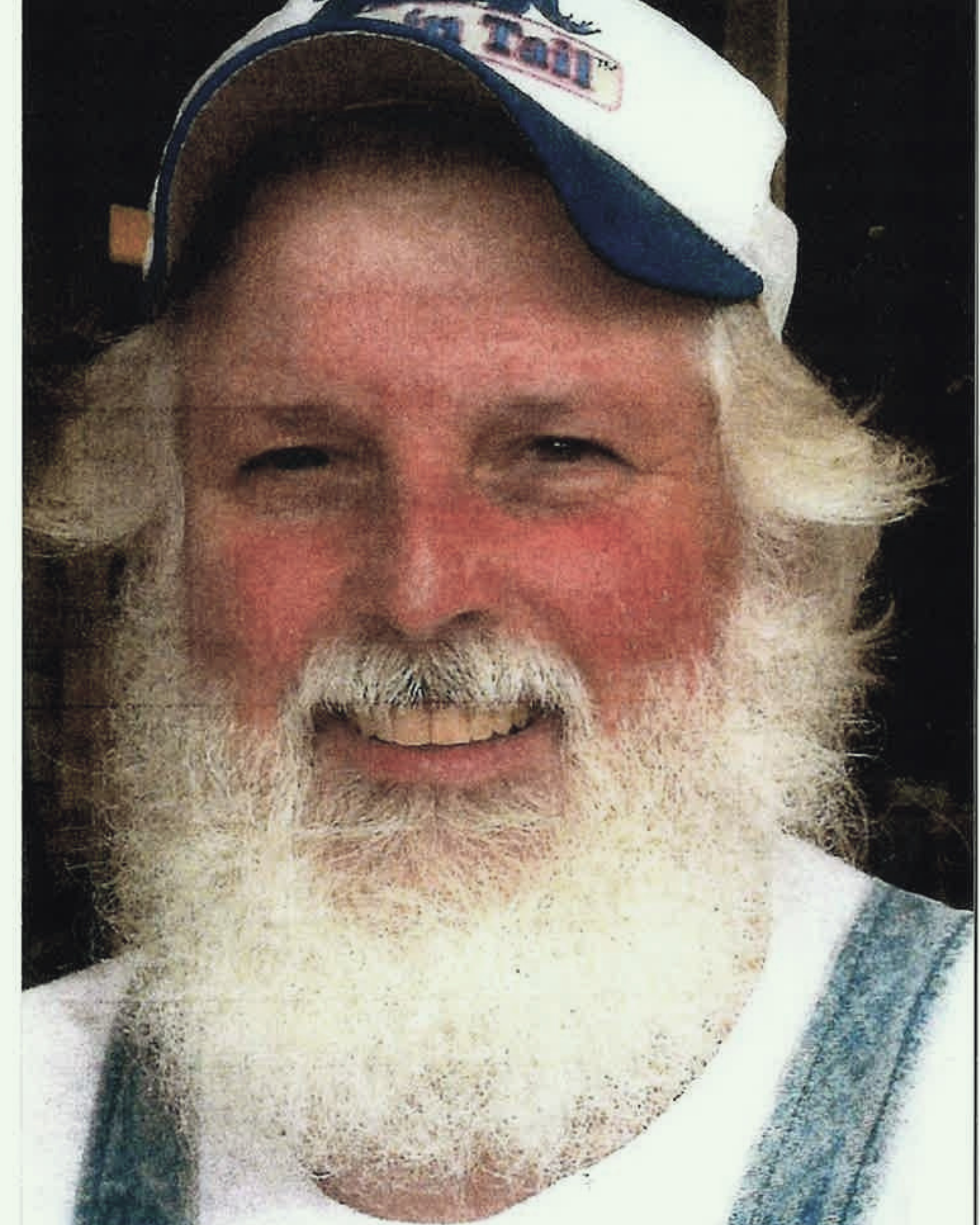
To me, Wendell projects the image of what many locals and non-West Virginians might think an Appalachian mountain man should be. Although he possesses a cheerful, friendly demeanor, his physical appearance could allow a stranger to perceive him as a rough, ready-to-fight, stay-out-of-my way type character. These different traits have allowed Wendell to expand his sphere of influence beyond McDowell County.
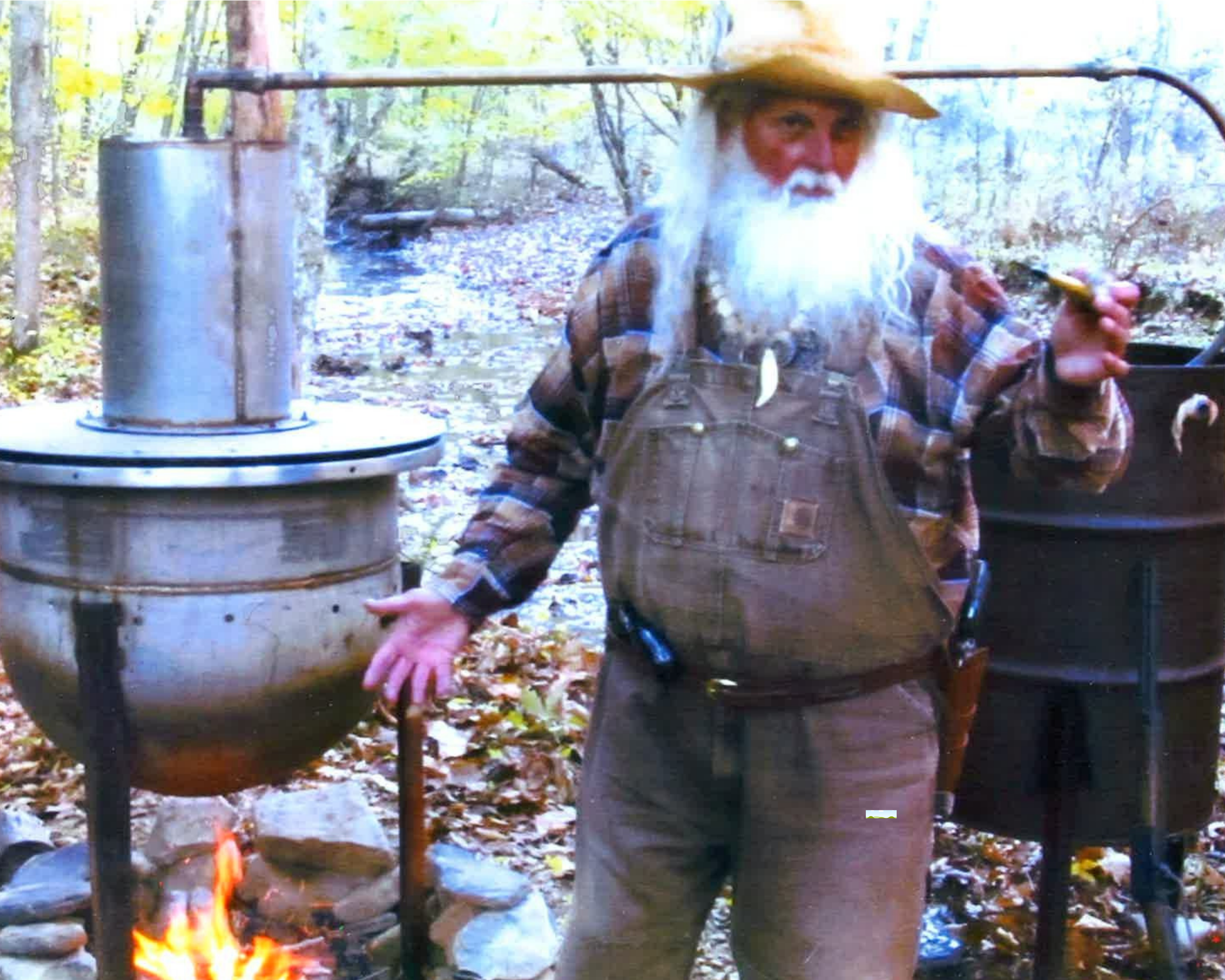
He’s been asked by some state agencies to fill in when someone is needed for a live demonstration at seminars. Recently at a Division of Natural Resources cultural exchange program that included representatives from Virginia, Kentucky, and Tennessee, Wendell showcased his talents. In an outdoor setting complete with wood fire, kettles, plumbing and receptacle barrel for a moonshine operation, Wendell, dressed in his hillbilly attire, explained to his audience the intricacies of making that brew, also known as “mountain dew” or “white lightnin’.”

A little while ago I asked Wendell if he was ready to call it a career with the county. He responded,
“Work is ingrained into the fabric of who I am; without it I would feel lost; as of now I don’t have any plans to retire.”
By definition the word legendary implies a person has to be famous, admired, and renowned for their achievements or qualities, often to the point where stories and tales are told about them. I think Wendell fits that description. His many years of public service, contributing to the betterment of the county, exemplifies his continuation of a family tradition started generations ago.
Whether he’s mimicking a backwoods moonshiner or the old, two-gun totin’ sheriff of early 1900s Keystone at a state sponsored function; or carrying out his official duties in his signature dress code of the day; I feel that Wendell, with his widespread popularity, has reached the status of legend in his own time. It seems to me there’s no better person than him to keep alive and to pass on that famous chapter in West Virginia lore.

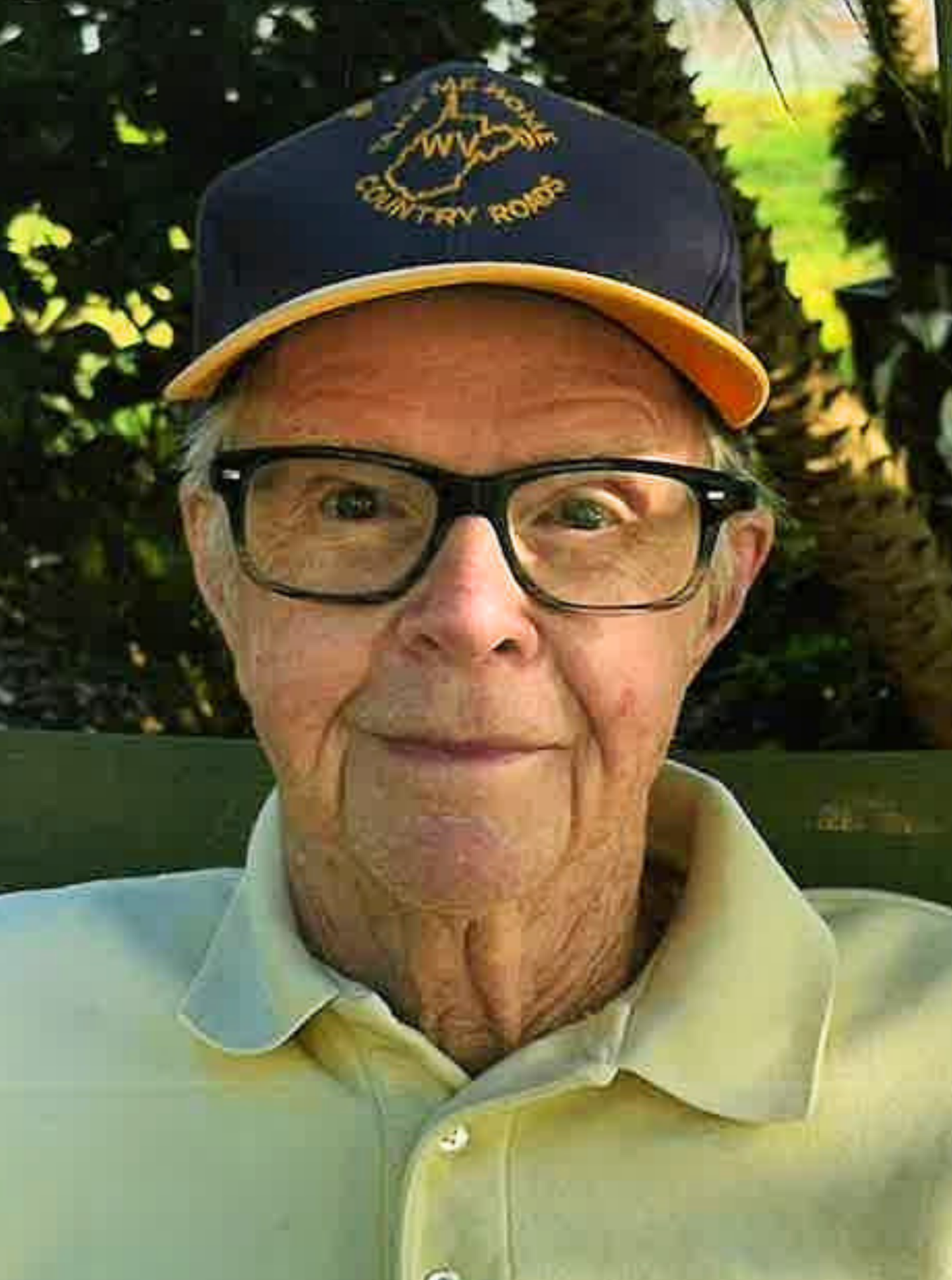
EARL LYONS JR.
Born and raised in McDowell County, West Virginia, Lyons graduated from Welch High School in 1959 and Concord College in 1966. He worked for the U.S. Department of Agriculture for 33 years as a food inspector in processed fruits and vegetables. Lyons also served in the National Guard and the U.S. Army Reserves from 1964 to 1970. His father was a miner in McDowell County for 25 years. Lyons still visits relatives and friends in West Virginia every year. Currently he lives with his wife in Orlando, Florida.
Jr, Earl Lyons. "Wendell Hatfield: McDowell County Legend ." Goldenseal West Virginia Traditional Life, Summer 2026. https://goldenseal.wvculture.org/wendell-hatfield-mcdowell-county-legend/