By David McCormick
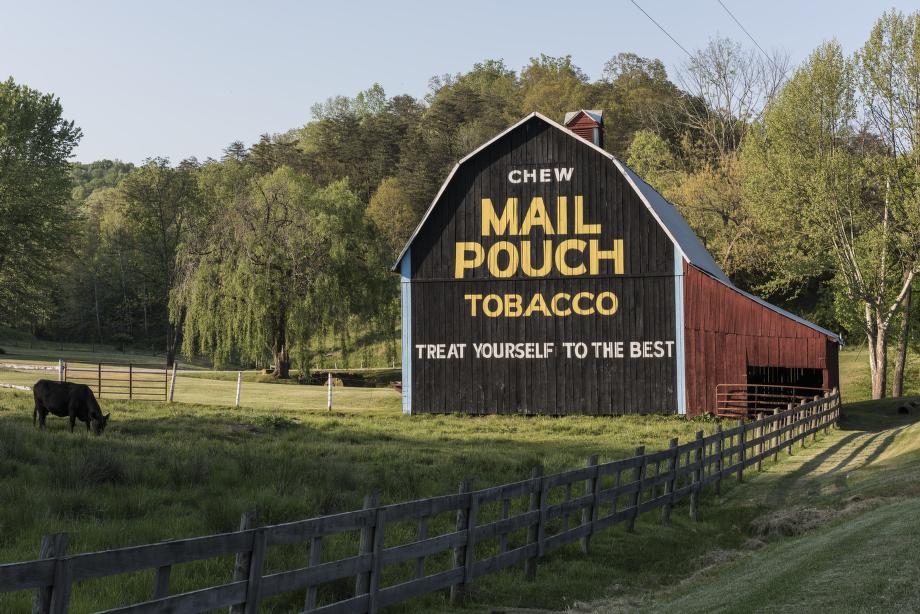
When traveling along the road in much of America one can’t help but notice the barns with the “Mail Pouch Tobacco” message painted on their sides. These Mail Pouch barns were advertisements for the West Virginia based Mail Pouch Chewing Tobacco Company, aka the Bloch Brothers Tobacco Company. At its height the company put its advertising on thousands of barns. They were part of the scenic landscape in several states—from Connecticut in the East to California in the West, and North to Michigan and south to South Carolina.
According to “Barnstorming for Mail Pouch Barns,” an essay written in 1999 by Elmer Napier a self-proclaimed “Barnstormer;” he attests that in his travels he has seen Mail Pouch barns in all conditions, shapes, and sizes. He reflected on one he discovered in Mason County. Although its top had been blown off the logo on the end of the structure was in good condition. Another barn he mentions is located near Khedive in Green County, Pennsylvania.
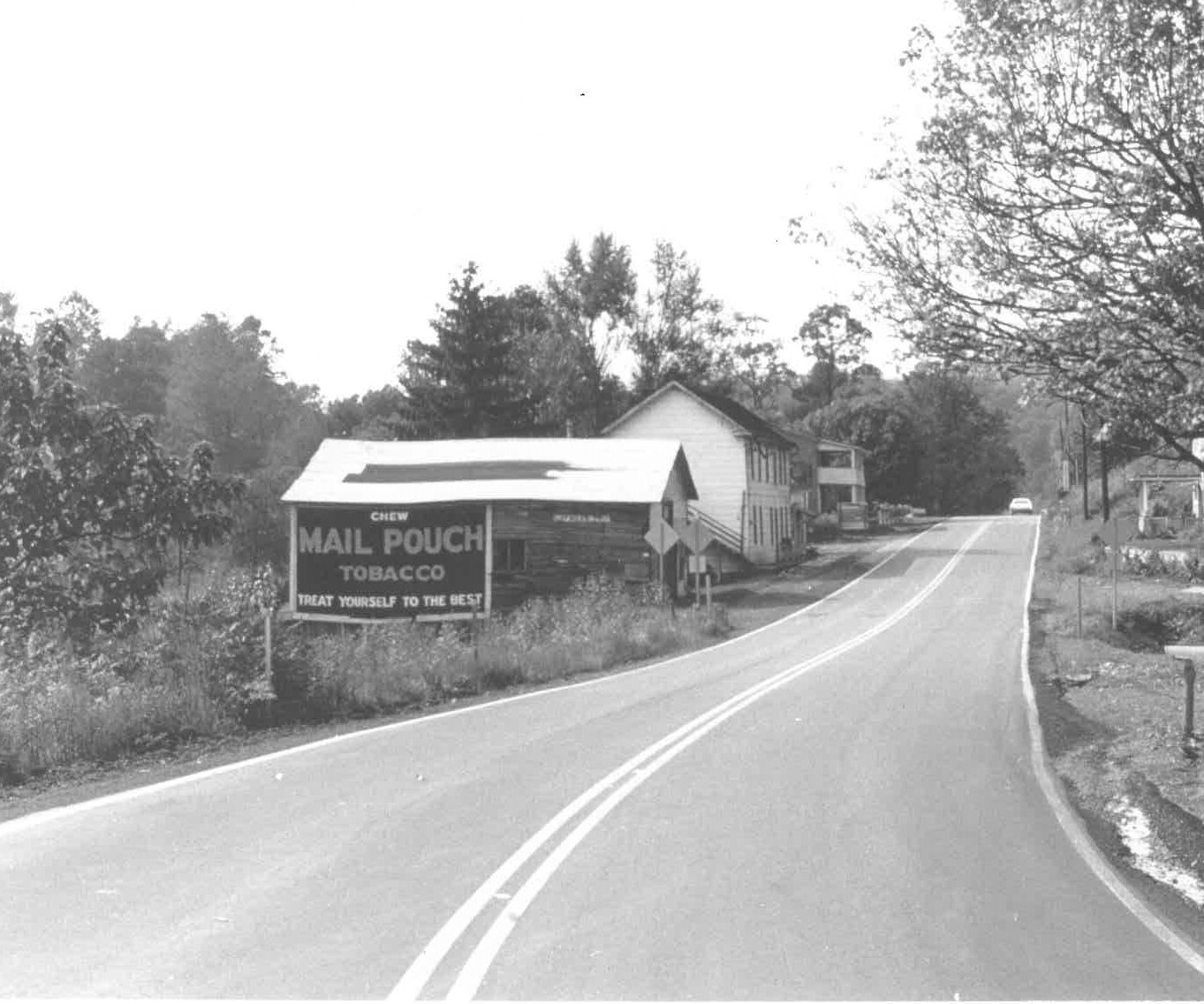

The barn walls have caved in all but the one with the Mail Pouch painting. These barns are really treasured—as a barn in Washington County, Ohio can attest. It was taken apart board by board; then each board was numbered. It was transported to its new location only two miles from the Napier’s home in Vienna, West Virginia.
The Bloch Brothers Tobacco Company in Wheeling, Ohio County is credited with initiating America’s first of its kind outdoor marketing operation. The savvy Bloch brothers, Aaron and Samuel, painted their logo on barns visible from highways and byways. The Bloch Brothers advertising campaign continued into the 1960s.
Mail Pouch Chewing Tobacco, was the innovation of the Bloch Brothers Tobacco Company. This tobacco enterprise grew from a small grocery and dry goods store in Wheeling, established by the Bloch brothers, Aaron and Samuel. The second floor of the brothers’ enterprise housed a small cigar factory. The brothers, not wanting to miss an opportunity, made note that men were using the stogie wrapper clippings as chewing tobacco. The brothers decided to add flavoring to the discardings that remained on the bench after the cigars were made. Business was brisk; so the Blochs also purchased wrapper “clippings” from other cigar companies. Seeking only quality tobacco the brothers touted “only sound, clean cigar clippings accepted.” They packaged their new product, chewing tobacco in paper bags. Five years later the flood of 1884 razed the store. The two brothers decided not to chance mother nature again, quit the mercantile business and concentrated solely on their tobacco business.
Originally this new product packaged in individual bags was sold wholesale to stores. Soon, Aaron and Samuel decided to skip the middlemen and market their tobacco directly to the retail customer. October 15, 1879 marked the date of the first sale of Mail Pouch tobacco. Following the aforementioned 1884 flood, production of Mail Pouch chewing tobacco was moved to various temporary locations. In December of 1890, as business was growing by leaps and bounds, the Bloch brothers moved to the larger more permanent site near the Ohio River. The brothers incorporated their business as The Bloch Brothers Tobacco Company to the tune of $2 million dollars.

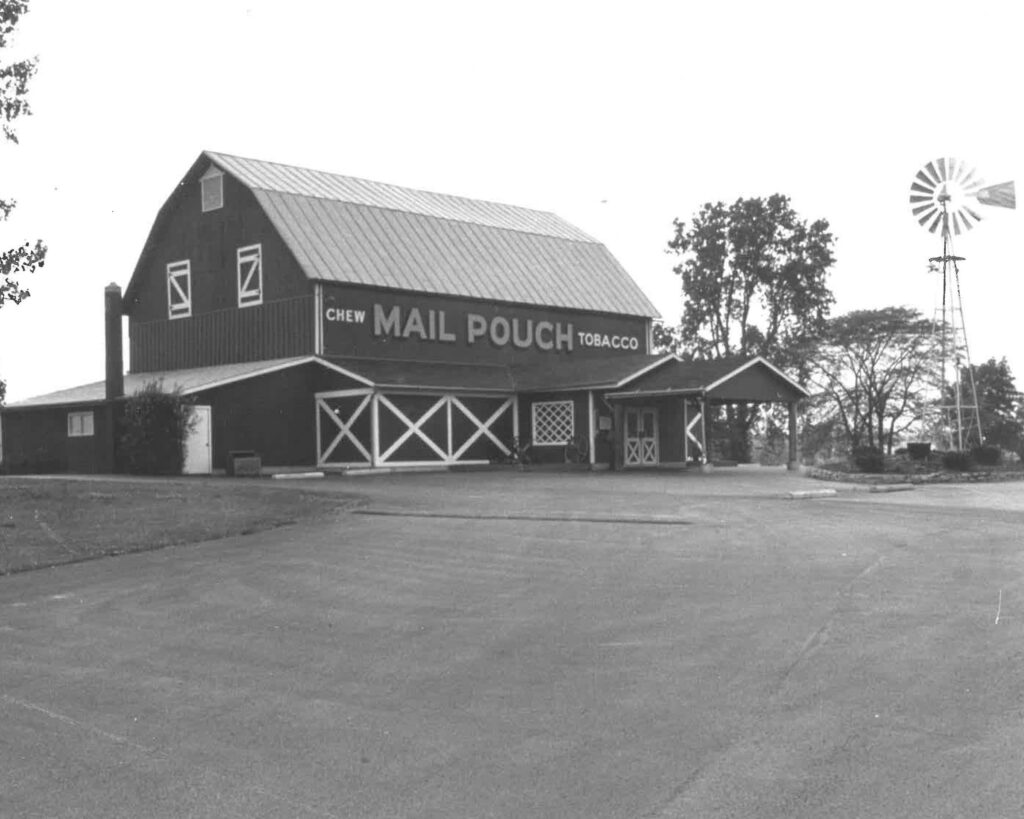
In the early days, as there were no standard billboards, companies such as Bloch Brothers Tobacco Company opted to use sides of barns to advertise their products. Barn owners were paid out between $1 and $2 a year for allowing the Mail Pouch message to be painted on their barns. That would translate to around $20–40 in today’s dollars. But what was most likely more important to farmers was the new coat of paint every few years. The Mail Pouch message was painted on one or two sides of the barn and in a few cases a roof might carry the Mail Pouch logo.
The Bloch Brothers Tobacco Company realized right off the value of advertising. Mail Pouch Tobacco advertisements on barns were first seen in the rural landscapes over a century ago. These classic examples of outdoor advertising in their vivid colors stand as a witness to the longevity of the Mail Pouch Tobacco brand. Aside from being found in Bloch Brother’s home state of West Virginia they can be found in Illinois, Iowa, Kentucky, Maryland, Michigan, Ohio, Pennsylvania, New Jersey, New York, South Carolina, Tennessee, Wisconsin, Connecticut, and some even California.
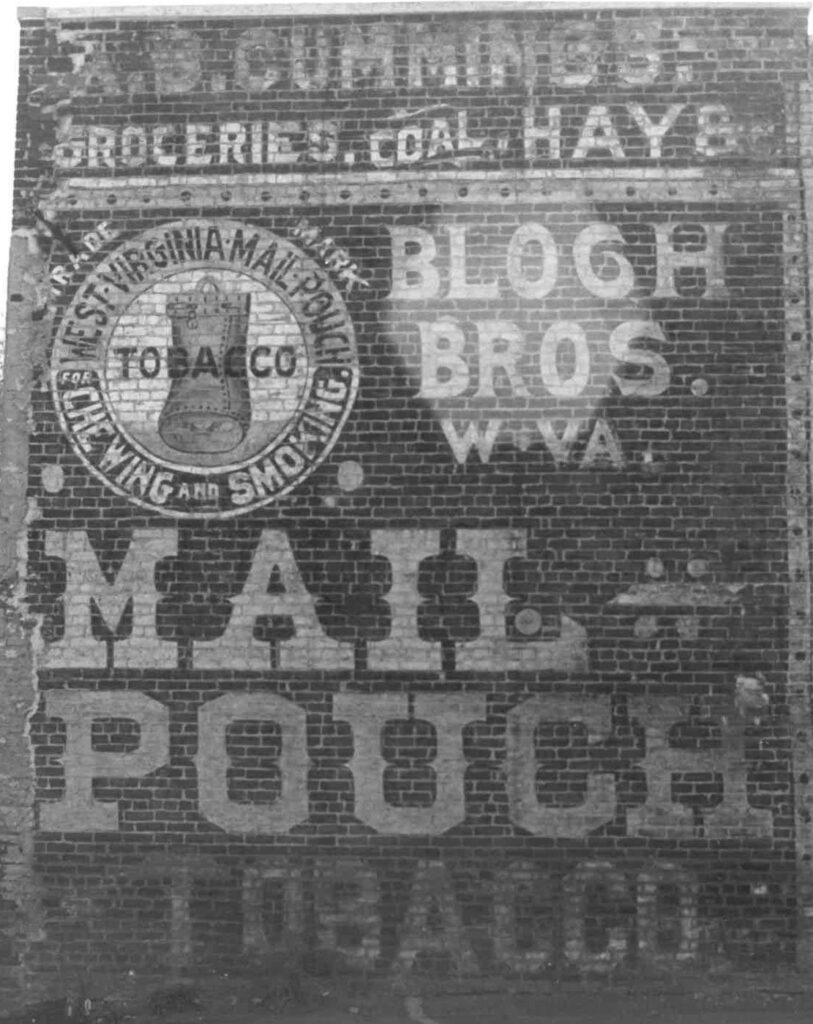
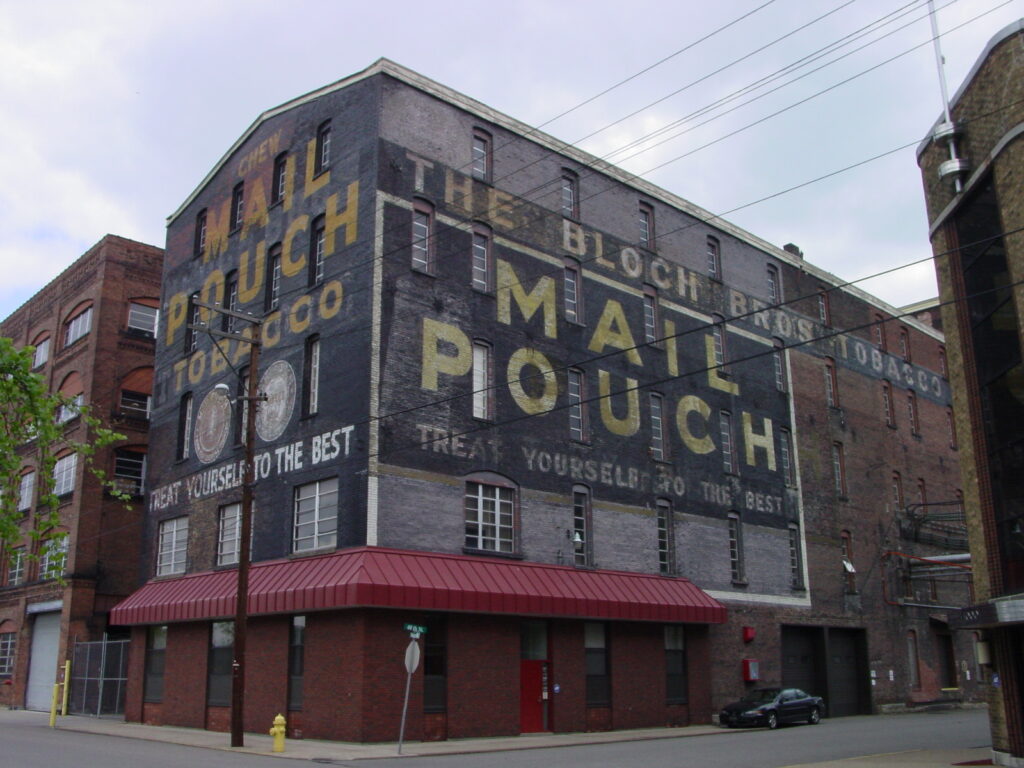
Mail Pouch did not limit advertising to the sides of barns. Other avenues served as sites for advertisements: newspapers, periodicals, billboards, and displays inside stores all were utilized to draw in prospective patrons. Still Mail Pouch pursued another avenue to entice customers. The Company offered vouchers that were offered with every purchase of Mail Pouch Tobacco. A myriad of marketing items could be exchanged for those vouchers. The catalogue listing the items for barter was free for the asking. The items were touted as “valuable and useful articles for ladies and gentlemen.” But a number were aimed at the younger set such as, boy’s baseball gloves, and gold pins for girls.
The Mail Pouch signs were mostly painted freehand. The colors usually used are black or red with yellow or white capital lettering that read, “Chew Mail Pouch Tobacco—Treat Yourself to the Best.” Sometimes, this message is encased in a thin vertical blue border on both sides.
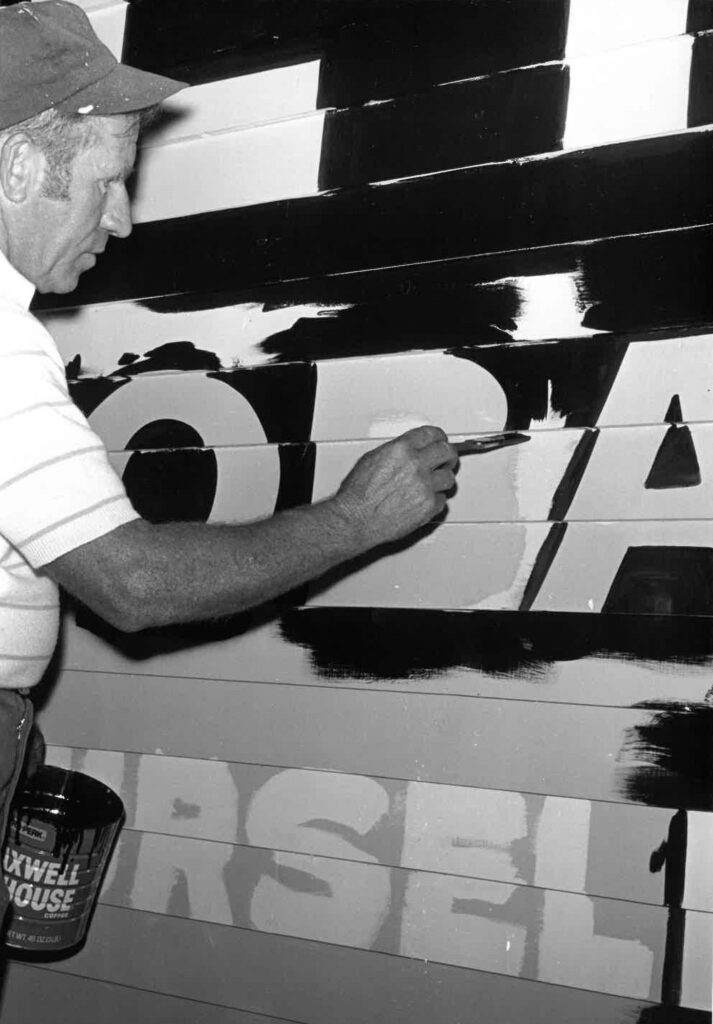
“‘Cutting in,’ the step in sign painting requiring the most skill. Warrick uses no penciled lines, only the brush, freehand style. The final step, ‘filling in,’ completes the black background of the sign.” — from GOLDENSEAL Volume 2 Issue 4
The Company contracted with independent contractors to paint the company’s logo. The crews would run the rural roads of the aforementioned states. Many of the painted barns have been razed merely by age, abandoned or the logo blocked out by a coat of paint. Others are still standing today, with many of the signs repainted to bring back their vibrant colors.
One painter in particular can be attributed to painting a great number of barns. Following the Second World War, much of the painted advertising was done by Harley Warrick, a Belmont County, Ohio resident. Warrick guesstimated that he had taken a brush to 20,000 barns in his lifetime. Each task required about six hours to complete.
For some reason, Warrick started lettering with the “E” in the word “Chew.” Warrick’s career lasted more than a half-century. Warrick along with a partner traveled the countryside in a pickup truck. While his partner applied the black background, Warrick painted the text. The pair working in tandem could finish two barns a day. The Smithsonian Institution has exhibited Harley’s work. Of special note are his appearances on Good Morning America as well as being highlighted on a segment of On the Road with Charles Kuralt.
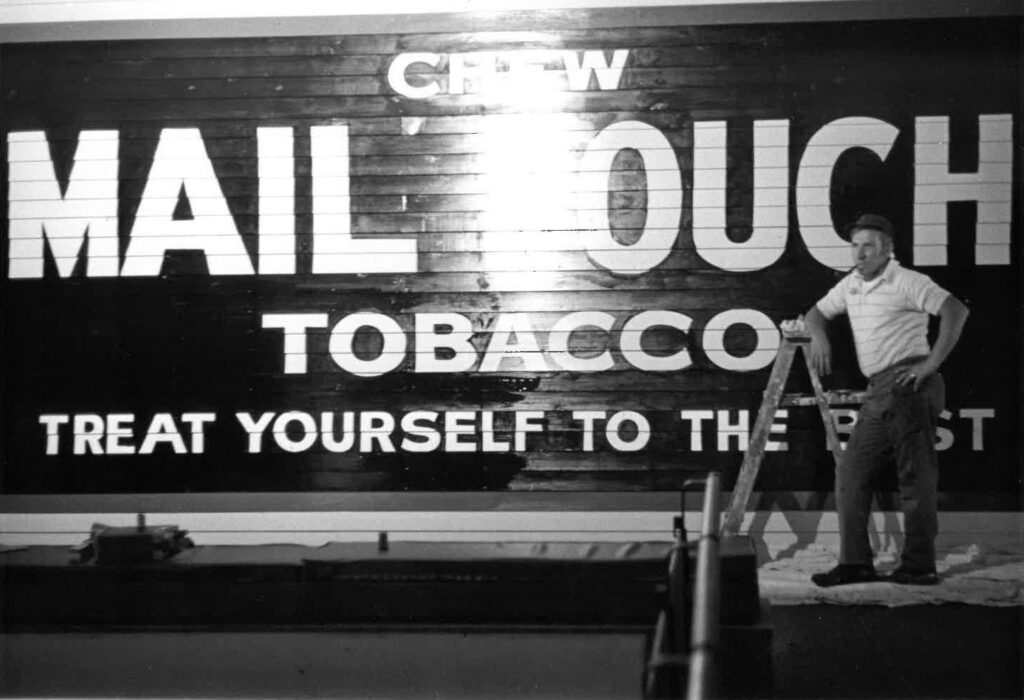
Over the years, there were a number of others who practiced their craft as barn artists including Mark Turley, Don Shires, and Dick Green. But several others can be added to this list. Some sign artists added their initials to their work and some can still be located on some barns painted into the blue border on the front, or in some cases closer to the roof. In 1992, the Swisher International Group—the owner of Mail Pouch Tobacco at that time—suspended the barn advertisements with Warrick’s retirement.
In 1965 the government wanted to limit what they perceived as signage pollution found near highways and passed The Highway Beautification Act. But Mail Pouch barns, seen for the treasures they really are, were declared exempt in 1974 by West Virginia Senator Jennings Randolph who recognized them as historic landmarks.
Barn advertising saw its heyday during the first half of the twentieth century. Although many companies used that same regimen of painting advertisements on barns, Mail Pouch was the only entity that advertised so extensively, and for such a long time—101 years.

DAVID McCORMICK
McCormick, David. “Mail Pouch Barns.” Goldenseal West Virginia Traditional Life, Fall 2025. https://goldenseal.wvculture.org/mail-pouch-barns/