By Jean Hazel
Mary Williams McBride was the younger sister of my father’s mother, Velma Williams Moore, who had died when my father was 12 years old. Since I had never known my grandmother, my aunt was extra special to me. Little did I know at the time, her impact would follow me all the days of my life, for just as she became a writer in her later years, so did I. She was a woman who loved the Lord and shared His wisdom with me and with those whom she touched through her writing. Still, I wondered how did my Aunt Mary go from being a weekly columnist for a local newspaper, The Jackson Herald, to being featured on the front page of a renowned national newspaper, The Wall Street Journal? I had to find out!
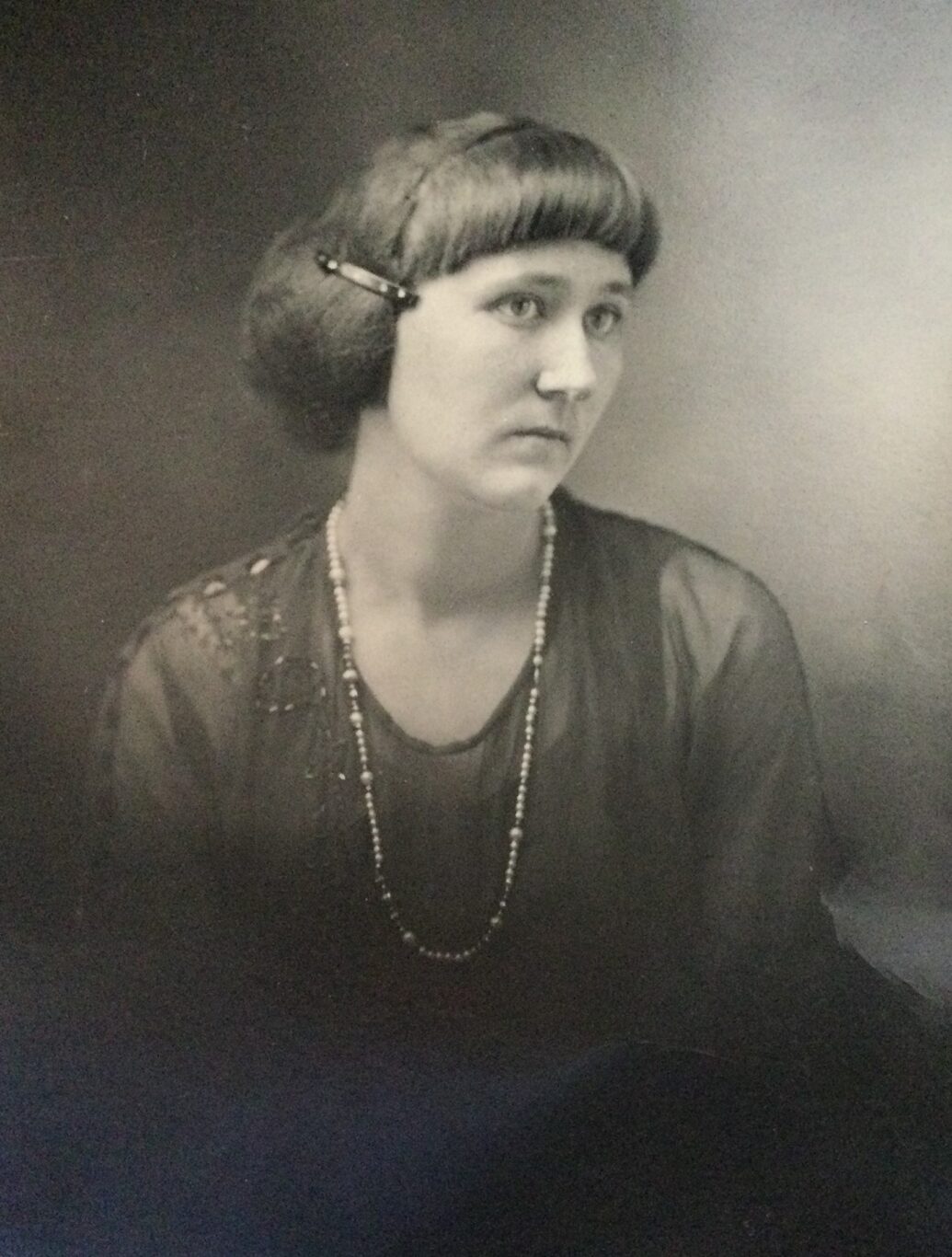
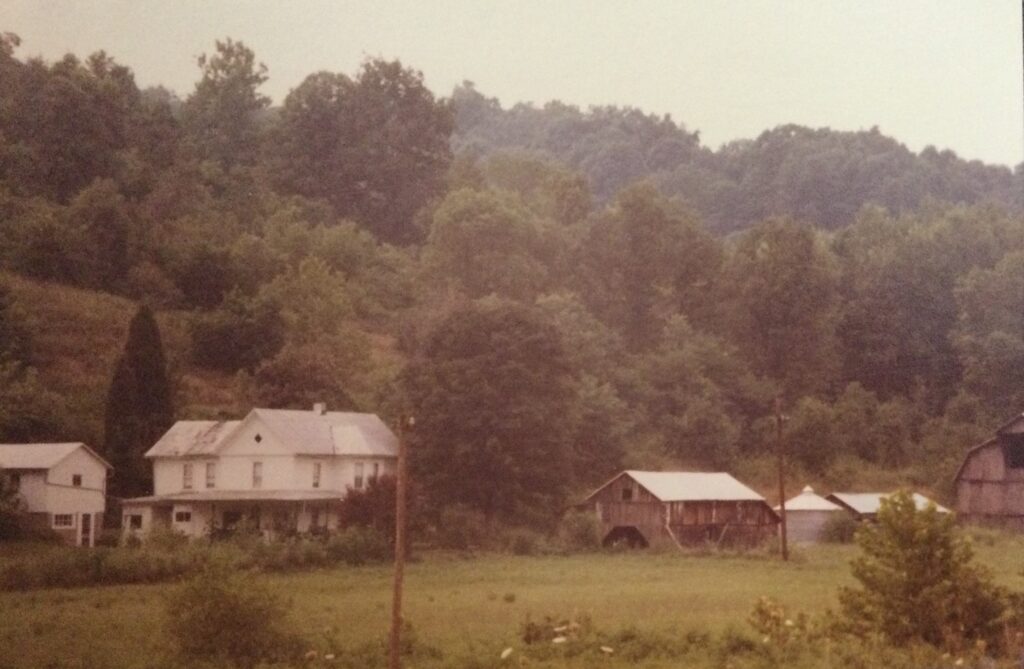
Mary Jane Williams was born on May 28, 1904. She was the fourth of five children born over a period of nearly 20 years to James H. and Sarah Brown Williams on a farm along Nesselroad Run near Beatysville in Grant District, Jackson County. Mary had two older sisters and two brothers, one older and one younger. Her mother died when Mary was only 16. With her sisters married and no longer at home, housekeeping chores, gardening, preparing meals, doing laundry, and such fell on Mary’s shoulders. She would often tell of the hardships of maintaining a household of farmers. One particular favorite story was about washing the clothing worn by the men and hanging the heavy overalls out to dry. Wintertime made the task even more difficult as those items often froze and became as stiff as boards, giving the appearance of soldiers standing at attention along the clothesline. Life was certainly challenging for Mary during her younger years.
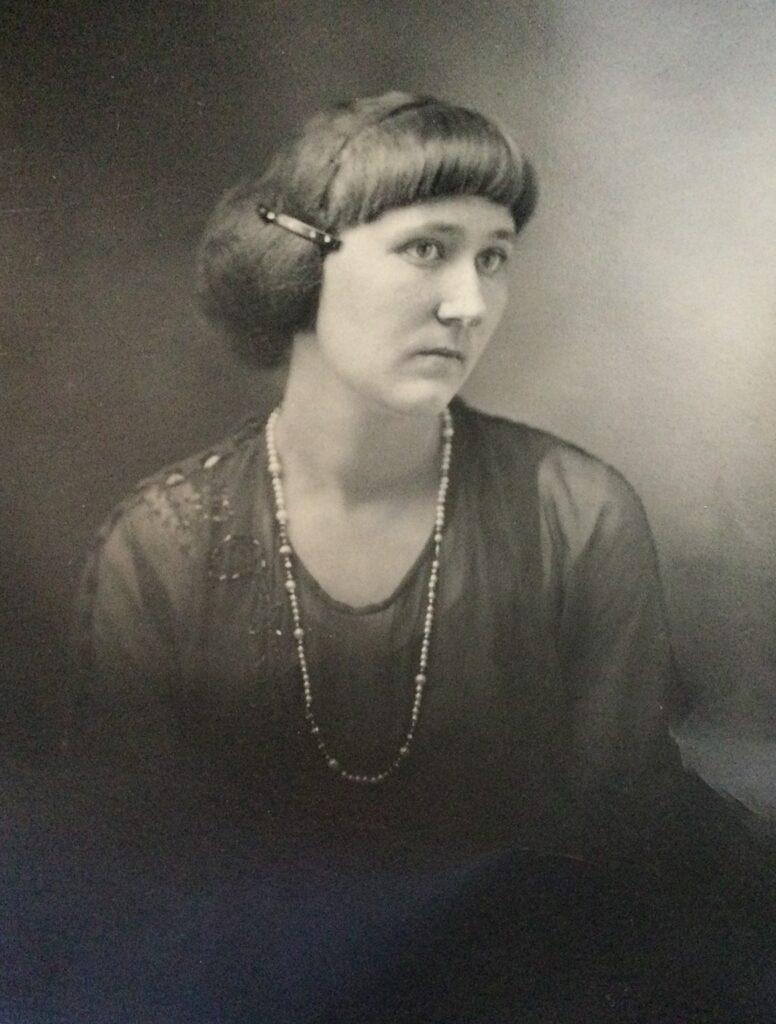
Mary had attended school through at least part of the sixth grade. It’s not known which of the local schools she attended (Beech Grove School or Mountain Flower School). Nonetheless, she continued to educate herself by reading and writing. The Bible may have been a favorite textbook, as Mary was committed to her faith and to the Lord all the days of her life.
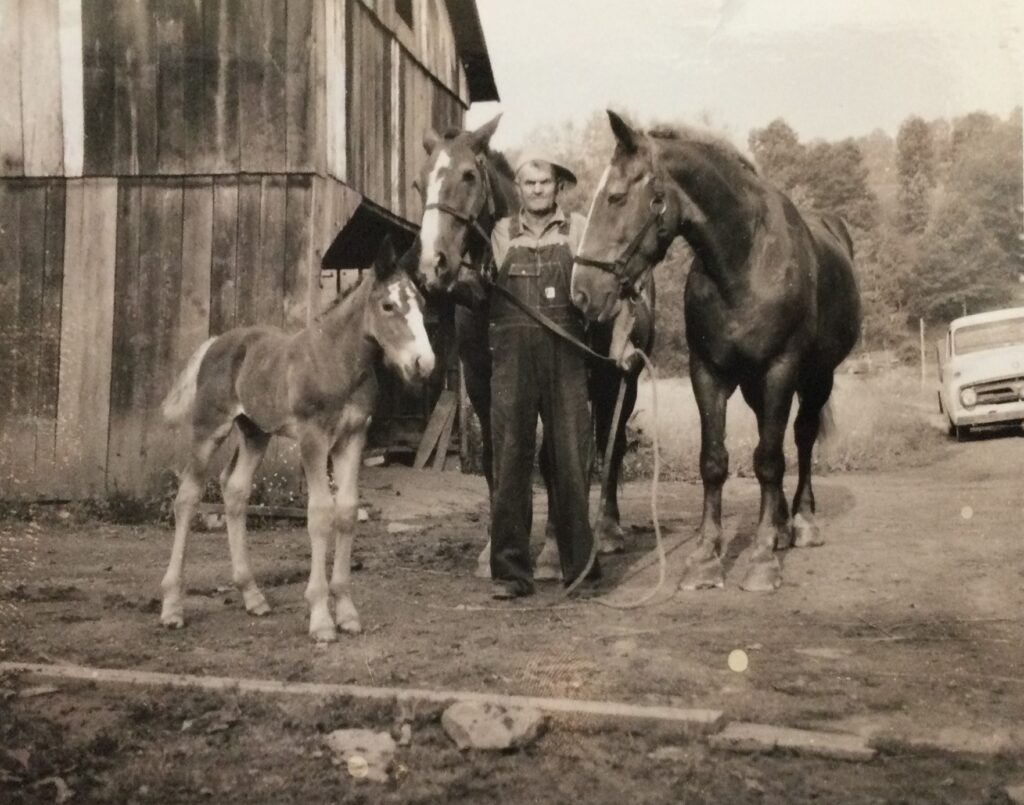
Lovely Mary Williams married widower Martin “Mart” McBride in 1924 on a trip of more than 50 miles to Marietta, OH. The couple traveled by train from Ravenswood to Parkersburg, WV and continued by streetcar to Saint Luke Church in Marietta. After they were married by the Rev. Edgar Tiffany, the newlyweds returned to Medina in Jackson County to the homestead Mart shared and worked with his parents, Nate and Effie Logston McBride. Mart and his father Nate were farmers, growing various staple crops and tobacco. Mart had been married previously to Lona Alexander. They had become parents of a daughter, Glada. Sadly, tragedy took both his wife and child in February 1915 when a fire consumed their house on the hill above the McBride home. Mart and Mary McBride eventually had two daughters of their own—Jo was born in 1936 and Jean only a year later in 1937.
No records were available to indicate how Mary’s father-in-law, Nate McBride, had become involved as a columnist for The Jackson Herald for years until he died in 1964. The owners of the Herald, as Medina folks called it, had received many requests from readers to feature more local correspondents in their publication. They contacted Mary shortly after she and Mart McBride had celebrated their fiftieth wedding anniversary on February 28, 1974 and convinced her to take over Nate’s old assignment. Many late nights, Mary could be found at her old oak dining table writing the local news in longhand. She continued preparing the weekly column, simply entitled Medina, for fifteen years.
Fortunately, in conversations with Aunt Mary’s daughter, Jean Wilkinson, I learned that one of Mary’s granddaughters, Sandy Wilkinson, had lovingly preserved all of her grandmother’s columns and other memorabilia in five large albums. I knew a visit to Jean’s home near my hometown of Parkersburg was in order. What a treasure trove I found! I felt like Aunt Mary was right there with me as I pored over page after page of yellowed, cutout newspaper clippings, which had been so meticulously archived.
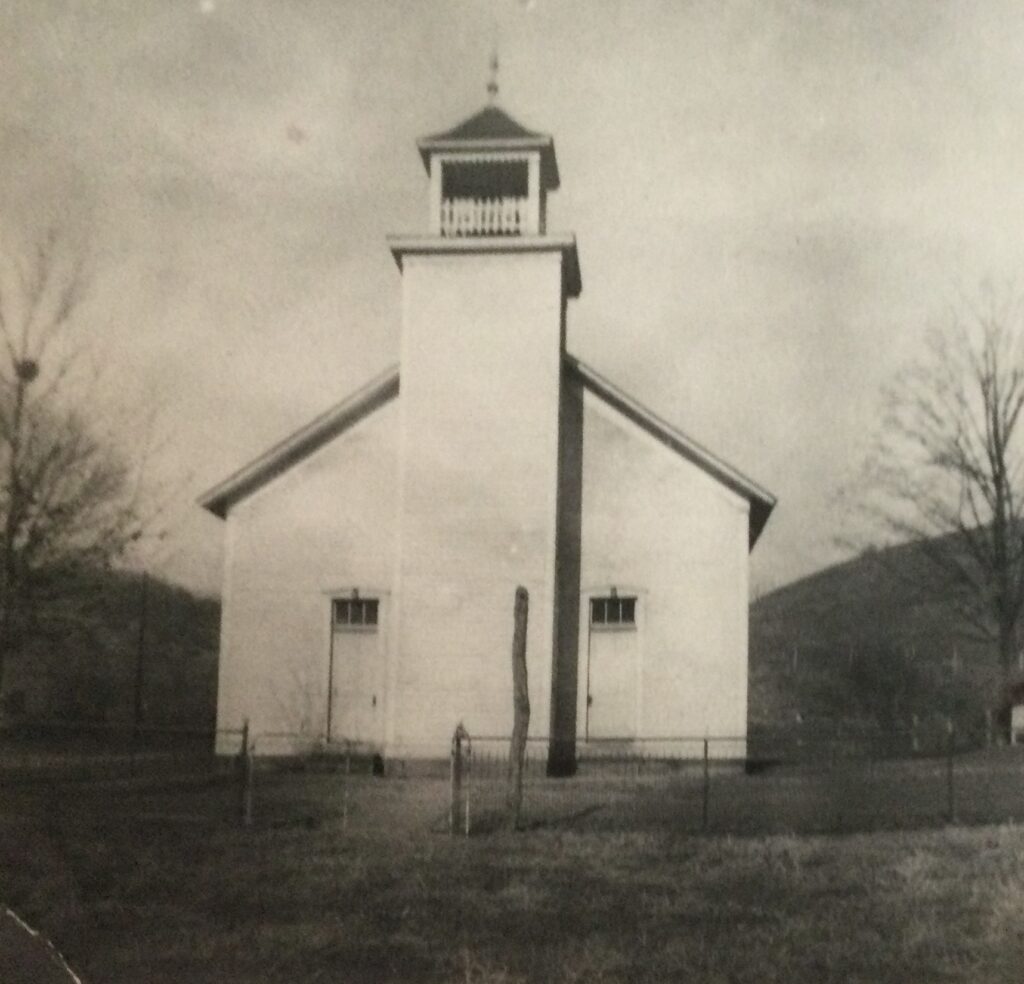
In addition to writing her columns, Mary compiled a history of Medina’s Warden Chapel Church on September 21, 1975. The church was built in 1887 on land donated by William Grandon. This gentleman was also known as the largest contributor to the enterprise ($500, which was an exorbitant sum for the time). She documented the various additions to the building, such as painted scenery behind the pulpit and the installation of an 800 lb. bell that could be heard throughout the community. She also noted that Okey Morrison was the church superintendent as she was writing, and she listed the names of the many of the ladies who taught Sunday school, including herself. Warden Chapel, once the heart of Medina, was vacated long ago and was demolished in the past few years to allow for construction of a pipeline. A simple field now remains in its place.
During the years of Mary McBride’s weekly columns, she always wrote as if she were talking to friends, which, of course, she was. She would comment on the weather—if it was unbearably hot or there had been no snow yet. She informed her readers about who was visiting and/or who was helping whom, who had deer hunters coming to stay, who had lost a job and needed a new one, and who was in the hospital, injured, or having surgery. She would tell about making braided rugs and doilies, wallpapering rooms with the help of a friend, tending gardens and plants, and cooking up squirrels someone had brought.
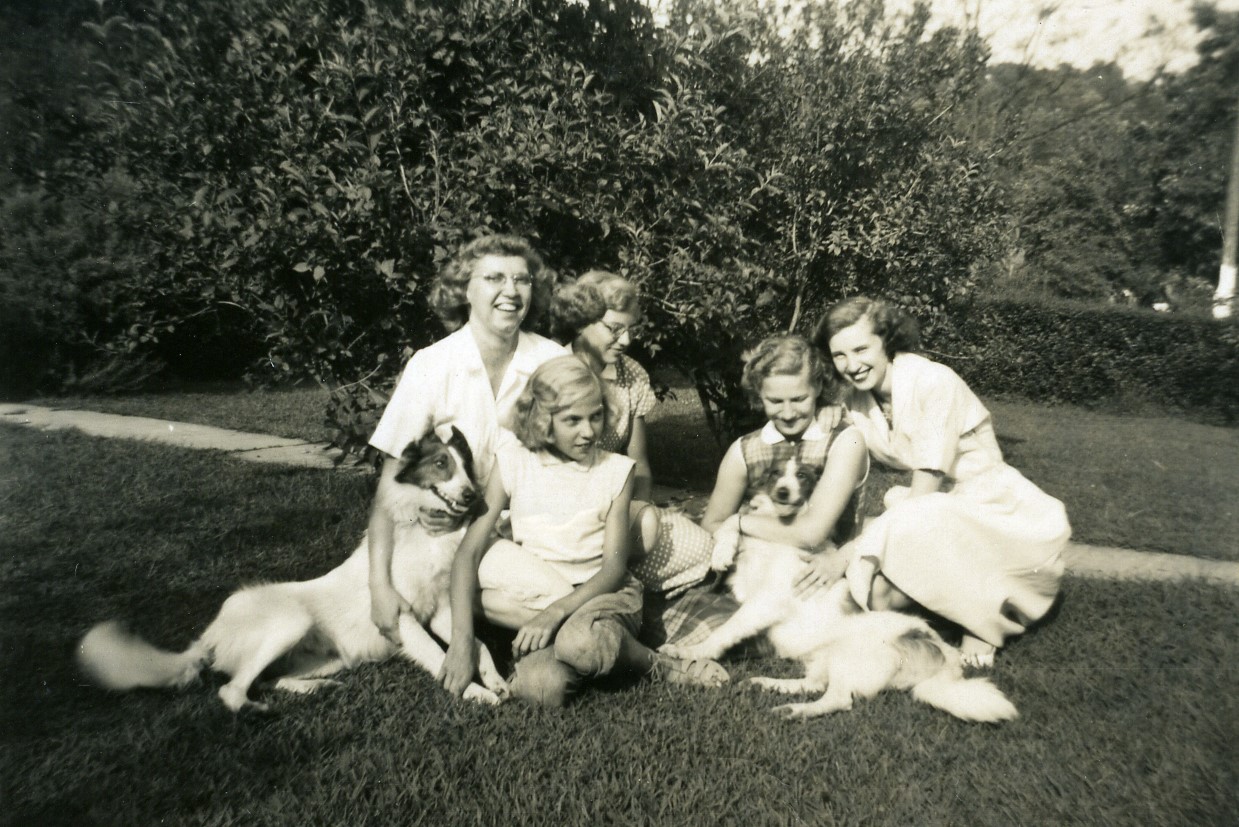
Mary frequently shared stories about farm animals and pets. She lovingly cared for her healthy and sick chickens. (Who knew that one could treat sick chickens and other animals with liniment, Epsom salts, Pepto Bismol, and buttermilk-soaked bread?) Everyone became especially familiar with her dog Jake, as she would praise him for being such a good companion and so well behaved. Mary only had to give him instructions once and he would remember.
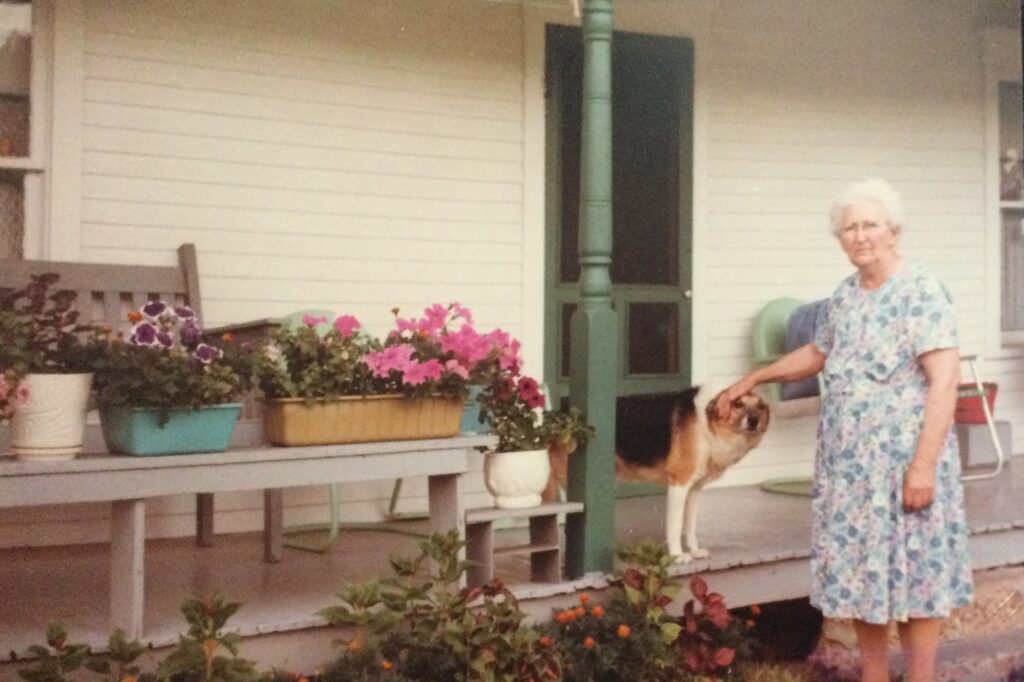
She loved to talk about the greeting cards, letters, and Christmas mail she received. She was pleased to celebrate birthdays, anniversaries, and the arrival of new babies. Mary far too frequently had to extend sympathies and comfort to those who had lost loved ones.
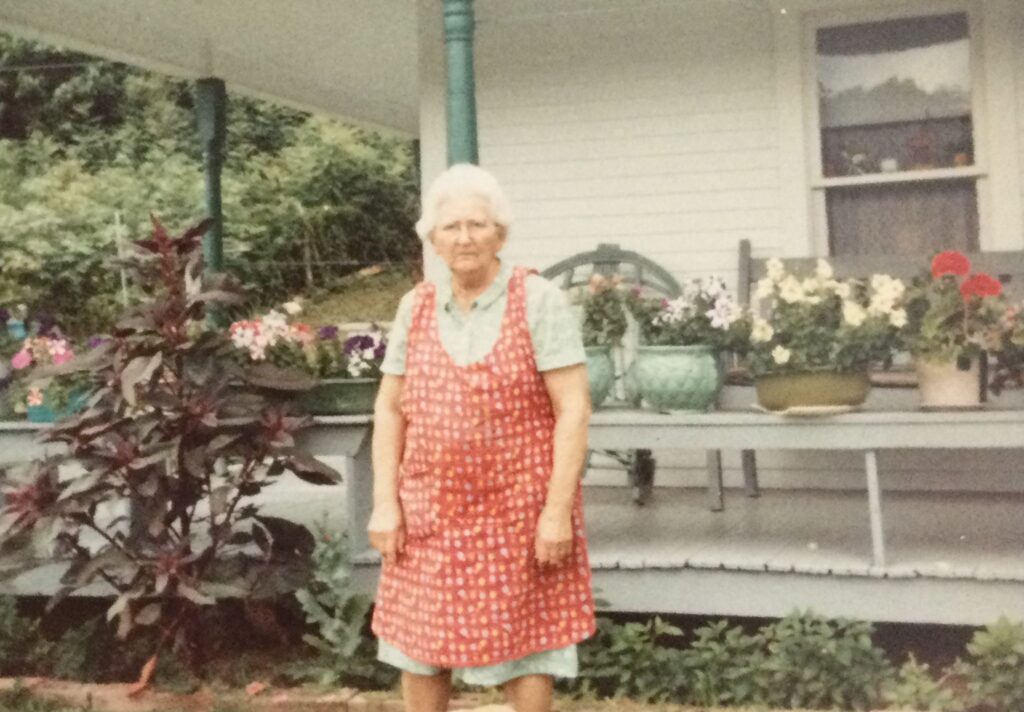
I particularly enjoyed how Aunt Mary used old-fashioned words, such as ‘catarrh’ for sinus problems, ‘apoplexy’ for stroke, and ‘tangle foot’ for the fly paper laid around the dinner table to mind the flies. And oh, the stories she could relate about the old days! She would reminisce about dust caps, sun bonnets, feather dusters, and about going to various auctions in years past. She amused her readers with tales of old ladies smoking gray clay pipes, wearing Sunday bonnets and aprons (she still had her aprons), and about getting home permanents (oh, the smell of those).
Then there were the many mentions of what Aunt Mary cooked on her old wood-burning stove. I am not sure how she managed to prepare so much in her kitchen, as the old house did not have running hot and cold water until 1981. But nevertheless, she was a great country cook and she shared recipes in every column: hot rolls, graham cracker cake, pumpkin bread, sugar cookies, Sally Lun bread, soda cracker fudge, and more. But her molasses cookies were mentioned most often (recipe below, as printed in her columns). They are still absolutely the best.

Aunt Mary’s Molasses Cookies
One cup sugar, 2 eggs, 1 cup molasses, 1 teaspoon salt, 2 teaspoons cinnamon, 1 teaspoon soda, 2 teaspoons baking powder, 1 cup sour milk, 2 teaspoons ginger, 1 ½ sticks butter.
Beat eggs and sugar together. Add molasses and sour milk and soda. Add cinnamon and ginger with eggs and sugar. Add baking powder with the flour and mix until stiff enough to roll out. Bake at 350F. Watch closely as they burn easily.

Aunt Mary was a kind and gentle woman, who never spoke a harsh word to anyone. She personified one of her favorite quotes: “The life you live may be the only Bible some people ever read.” She loved to share her country wisdom and thoughts from the Bible, and she genuinely believed that “it is no secret what God can do.” She would say that “it is better to get your hands dirty and eat than to be too proud to work and starve.”
In September of 1976, an enterprising staff reporter from the Pittsburgh, PA office of The Wall Street Journal decided to investigate local homespun reporting, which was dwindling in print by the year. Journalist Eric Morgenthaler searched papers in eastern areas of the United States for the right columnist to feature, and he came across several columns that he considered to be good reporting on rural America. He chose Mary McBride from the three possibilities. Traveling to her farm residence at the Medina exit off I-77, he met Mary and found her to be as personable and loving as everyone else did. She allowed him to review her notebooks of columns and to make his own notes about her lively commentary.
After a few days spent in the area and at the Herald offices, Eric made a last stop to say goodbye to his new friend before heading north. He ended up staying most of that day visiting Mary in her comfortable home and sampling her country cooking, especially her tasty molasses cookies. He called her several days later to say that his lengthy story about her and her success as a grassroots journalist would be featured on the front page of the Monday, November 15, 1976 edition of the national Journal! A few days later, Mary McBride was also featured, again on the front page, of the local Herald to the surprise of her daughters, family, and friends. She had modestly kept it a secret from everyone. That was so like Aunt Mary!
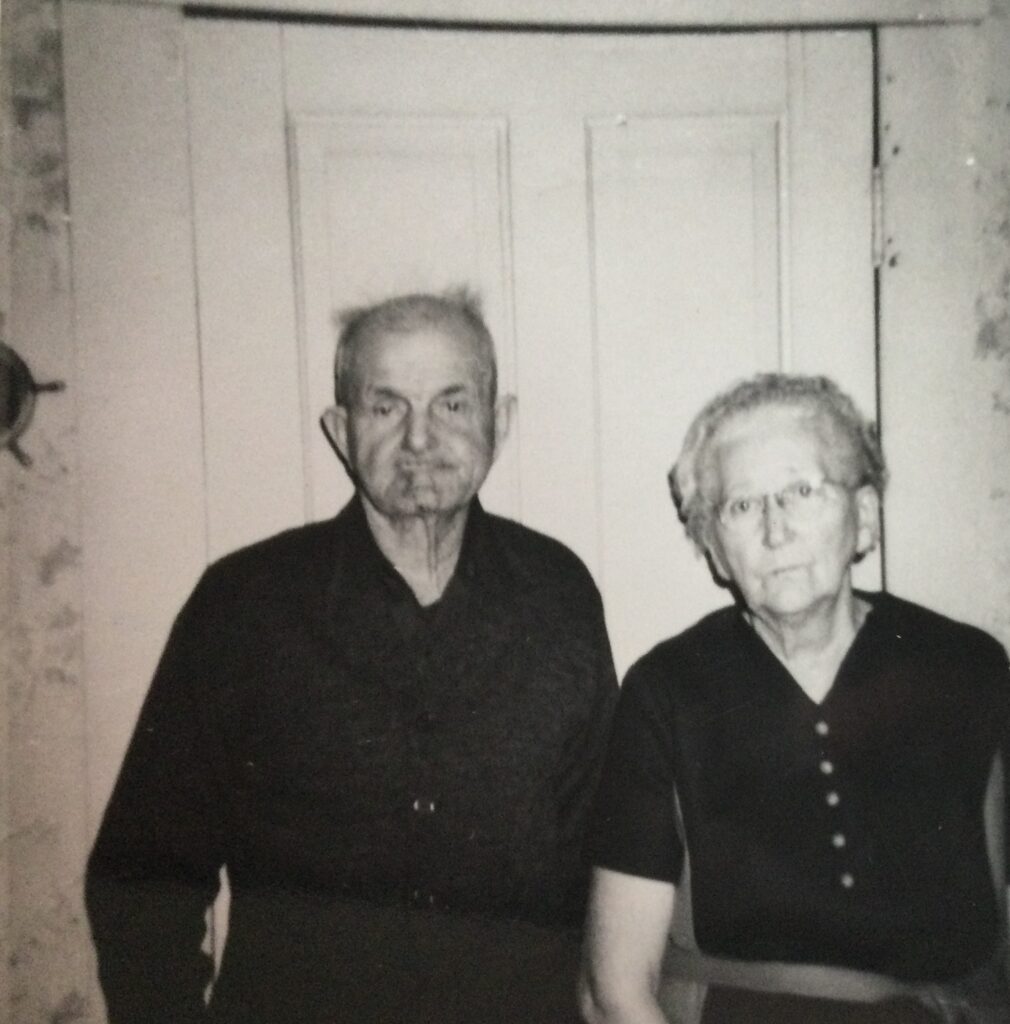
Mary’s columns reminded me that throughout every generation, people have sought to keep up with their communities and with the world in which they lived. In a strange way, a rural correspondent for a county newspaper fulfilled the “need to know” that the internet and social media provide today. Her local contacts and family members would call her on the “party line” phone to share their current news and community events. Her columns entertained, informed, taught, sympathized, and much more. She became friends with people who had moved away from Jackson County and wanted to feel like they were still connected. Mary had admirers from around the country and the world, and she never failed to mention their names: Moore, Beymer, Wyers, Carmichael, Thompson, Naylor, Wilkinson, Smith, Williams, and countless more. Mary’s writing kept her busy after her husband died in March 1980. She continued to write until she herself passed away after a short hospital stay on March 11, 1989.
Aunt Mary once wisely wrote that “a smile goes a long way, but it usually comes back home.” Those are true words, indeed. Personally, I could not help but smile when I read in one column that she offered “a humble apology to those who don’t want publicity,” as she “would never want to offend anyone.” My heart was blessed to read that even my daughter and I were mentioned in several of my aunt’s columns—I was not the least bit offended, Aunt Mary.
I am delighted that I found out how you came to be a national and local Jackson County, WV celebrity. I believe you would be just as delighted to know that your niece is now following in your footsteps as a writer. Aunt Mary, you were and are still loved by many!

JEAN (MOORE) HAZEL
Hazel, Jean. “Mary McBride: The “Talk” of Medina, West Virginia.” Goldenseal West Virginia Traditional Life, Winter 2025. https://goldenseal.wvculture.org/mary-mcbride-the-talk-of-medina-west-virginia/