

By Joe McHugh
This is a story about how I came to meet three remarkable West Virginia women who were kind enough to share their stories with me. The year was 2000 and my wife Paula and I were living in Nevada City, a former Gold Rush town located in the Sierra foothills of northern California. For more than forty years I’d made my living as a storyteller and folk musician. When I perform, I like to weave together a variety of humorous anecdotes and tall tales—the yarn about a lawyer’s encounter with a flock of three-legged chickens is always a big hit—and perhaps I’ll include a story about one of Jack’s many adventures or the goings-on of the fairy folk of Ireland. I might also recite a poem such as the “Cremation of Sam McGee,”—then add in a fiddle tune or two and finish up with an old-fashioned ghost story. But as I grow older, and I hope a bit wiser, I find I’m increasingly enchanted by a particular kind of story—the family story.
Now I’m not talking about long comprehensive family histories but the kind of short incidental stories we like to share with others about our families. Stories about the time Uncle Henry buried his false teeth in the backyard at midnight because they hurt so much, or how grandma made the difficult journey from Russia to Portsmouth, England, with her year-old child only to arrive too late to catch their ship to America—and that ship was the Titanic. There are stories about immigration, cherished heirlooms, sibling rivalries, political shenanigans, coal mine accidents, life on the farm, war, encounters with famous people, ghostly visitations—well you get the idea—stories that touch on nearly aspect of human existence and that are memorable and meaningful enough to get passed down from one generation to the next.
So I decided one day to take to the road and record people telling these kinds of stories. Partnering with public radio stations in California and Virginia, I held events at libraries, grange halls, houses of worship, museums, colleges, and even an ethnic festival or two where I talked about the importance of family stories in both our personal lives and in the collective life of our nation. Then I would play a story or two from our collection of recorded stories and ask if anyone cared to come forward and share a family story of their own. And if I heard a good one, I’d ask the person to return the next day so I could record them.
Eventually these stories were featured on a series of holiday specials for Mother’s Day, Father’s Day, Thanksgiving, and Christmas. Individual stories also aired on nationally syndicated public radio programs such as Morning Edition, Weekend America, and Inside Appalachia, and once each week for two years on the show Main Street that was produced by Voice of America for an audience of ninety million listeners around the world.
During all this story collecting, however, I kept two thoughts in mind: the West Virginia Belles and a farm I once owned on Wolfpen Run in Gilmer County, West Virginia—a few of those back-to-the land stories I shared previously with Goldenseal readers.
So I’ll begin with the Belles. The reason I fell in love with the fiddle and with the art of oral storytelling was because the town of Glenville, near where I lived in the early 1970s, hosted a festival every June that featured some of the best old-time musicians in that part of the world. There were fiddle and banjo contests, shape note singing performances, a quilt show, food competitions, and a lively square dance held each night where they’d blocked off one of the streets. And of course there was lots of jamming, in parking lots, on street corners, and inside hotel rooms, that went on all day and most of the night. As a twenty year old who could only strum a few Peter, Paul, and Mary chords on the guitar, I found the festival intoxicating and in short order I found myself shopping around for a fiddle of my own. And there was one more component to the festival, a very special and unique component—the West Virginia Belles. Here is how it works.

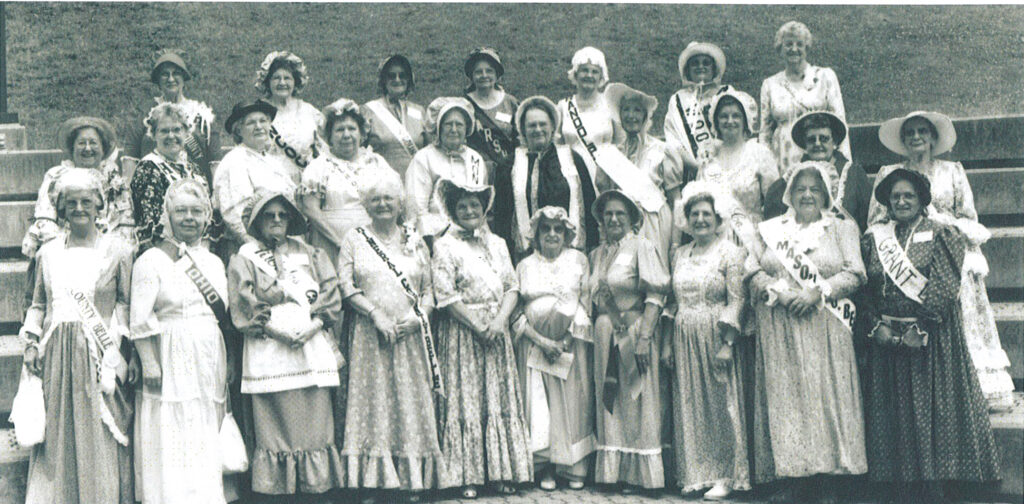
It begins with each of the fifty-five counties in the state sending a woman over the age of 70 to represent them at the festival. These ladies arrive by bus decked out in old-fashioned dresses to participate in the festival parade and to attend a special picnic held in their honor. Well, I knew they would have some great family stories so in 2000 I flew to Charleston and rented a car and drove up to Glenville in time for the festival. I also tacked on a couple of extra days following the festival so I could visit the farm where I once lived and where, as the singer Neil Young captured in one of his songs, “And in my mind I still need a place to go, all my changes were there.”
But I’m getting ahead of myself. When I arrived at the festival with fiddle in hand I contacted Irene Powell, the wife of the president of Glenville State College, who had been put in charge of making sure the Belles were well taken care of. Irene is a lovely woman and at the first meeting of the Belles, she set aside time for me to make my pitch. I talked about my connections to West Virginia and my love of family stories. I then described the radio series I was producing featuring such stories and would any of them care to share a story or two with me. With Irene’s help, I’d set up a recording studio in one of the music practice rooms in the basement of the Fine Arts Center.
And that was it. I’d made my pitch and sat off to the side at a table waiting for the Belles to come over and sign up for a recording session. Only not a single one of the fifty-five women came over. My great ambition was dashed. Oh well, I decided to go and record some of the other folks who were attending the festival, musicians such as Lester McCumbers, Patty Looman, Melvin Wine, and John Lilly (former editor of Goldenseal Magazine), as well as the gifted storyteller George Daugherty, aka The Earl of Elkview, and the poet Kirk Judd.
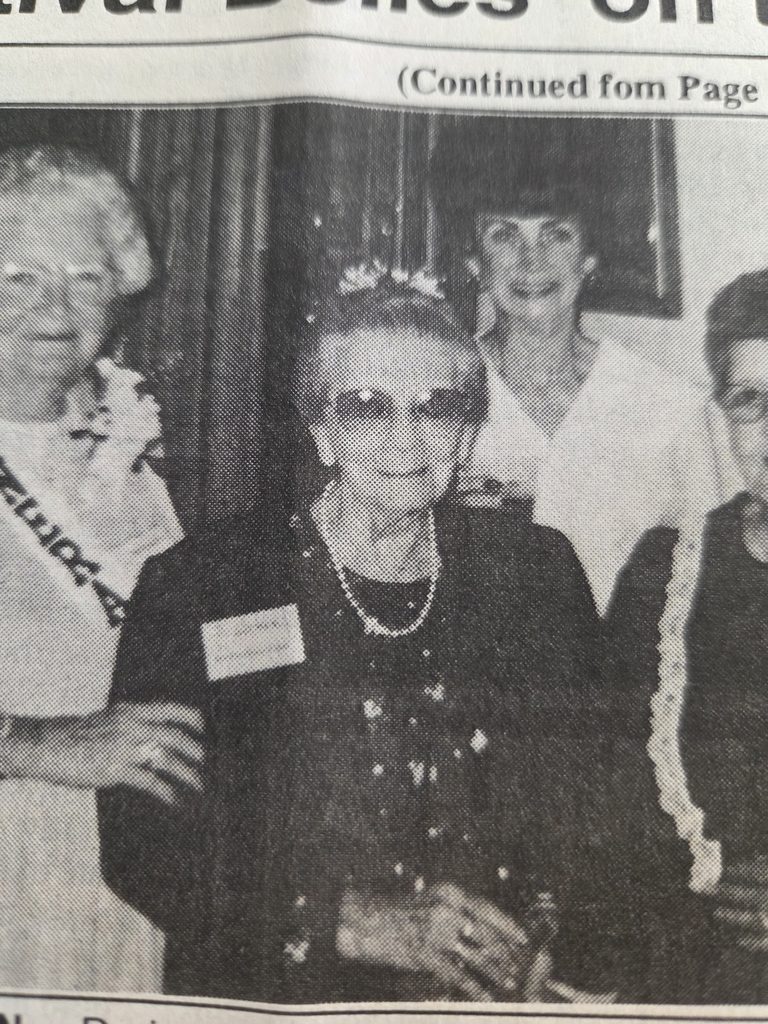
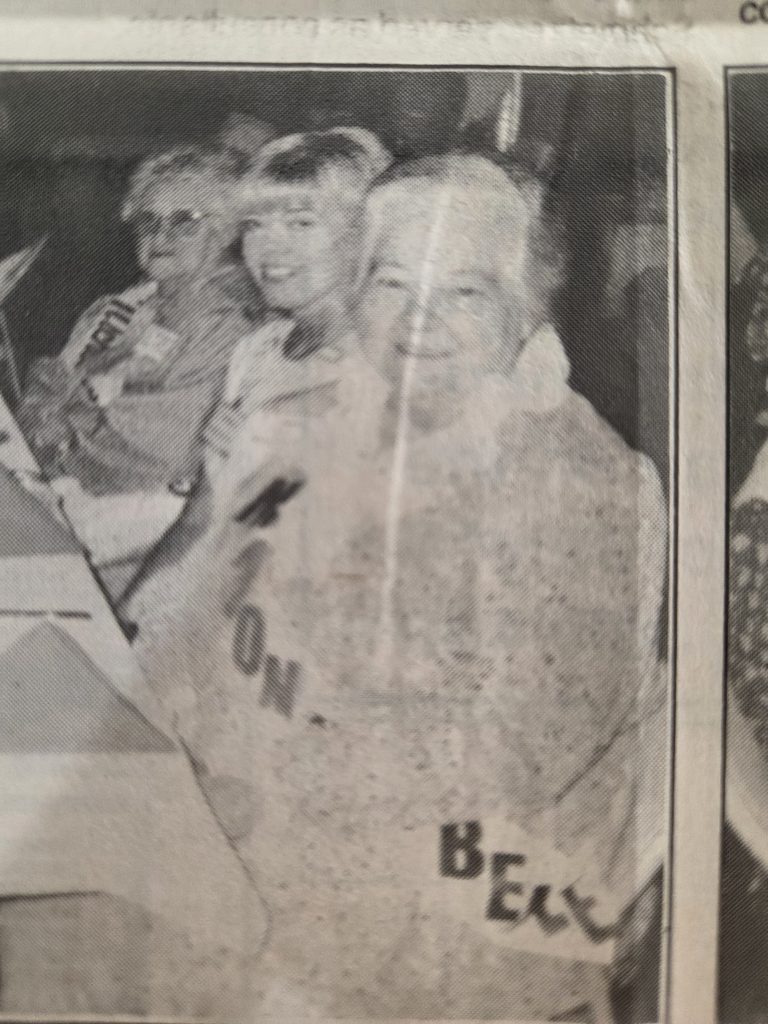
I also played my fiddle to my heart’s content. Still, I did regret not getting to sit down with at least one Belle and hear her stories. Then it came to me in a flash, as often revelations do. These elderly women were not self-promoters. Their sensibilities were more in keeping with the 19th century than these modern times of ours where self-aggrandizement is all the rage and where so many strive to become celebrities, or even better, “influencers.” They weren’t about to come forward and say, “I’ve got some really great stories. Want to hear them?” No, they would need to be asked, not collectively, but one-to-one as individuals.
So I talked this over with Irene and she agreed. “I think you should attend the picnic,” she told me. “After the meal, we ask each Belle to talk a little about themselves. That might give you an insight into what kind of stories they might be willing to share.”
And that’s how it happened. I listened to each Belle talk about her life, her family, and the deep love that she had for her county and for the state of West Virginia. Afterwards, I approached a number of the belles and asked each to be part of my project and they all agreed. Thus we were off to the races, as my own mother would say.
At the venerable age of ninety, Oleta Singleton (Gilmer County) was hands-down one of the finest storytellers I ever had the pleasure to know. She wasn’t someone who ever told a story on stage or on the radio. All the same, she was a natural storyteller whose lively voice had a cadence and tonality that made me think of the fiddle tunes I love that come from that part of the mountains. She was also very, very funny.
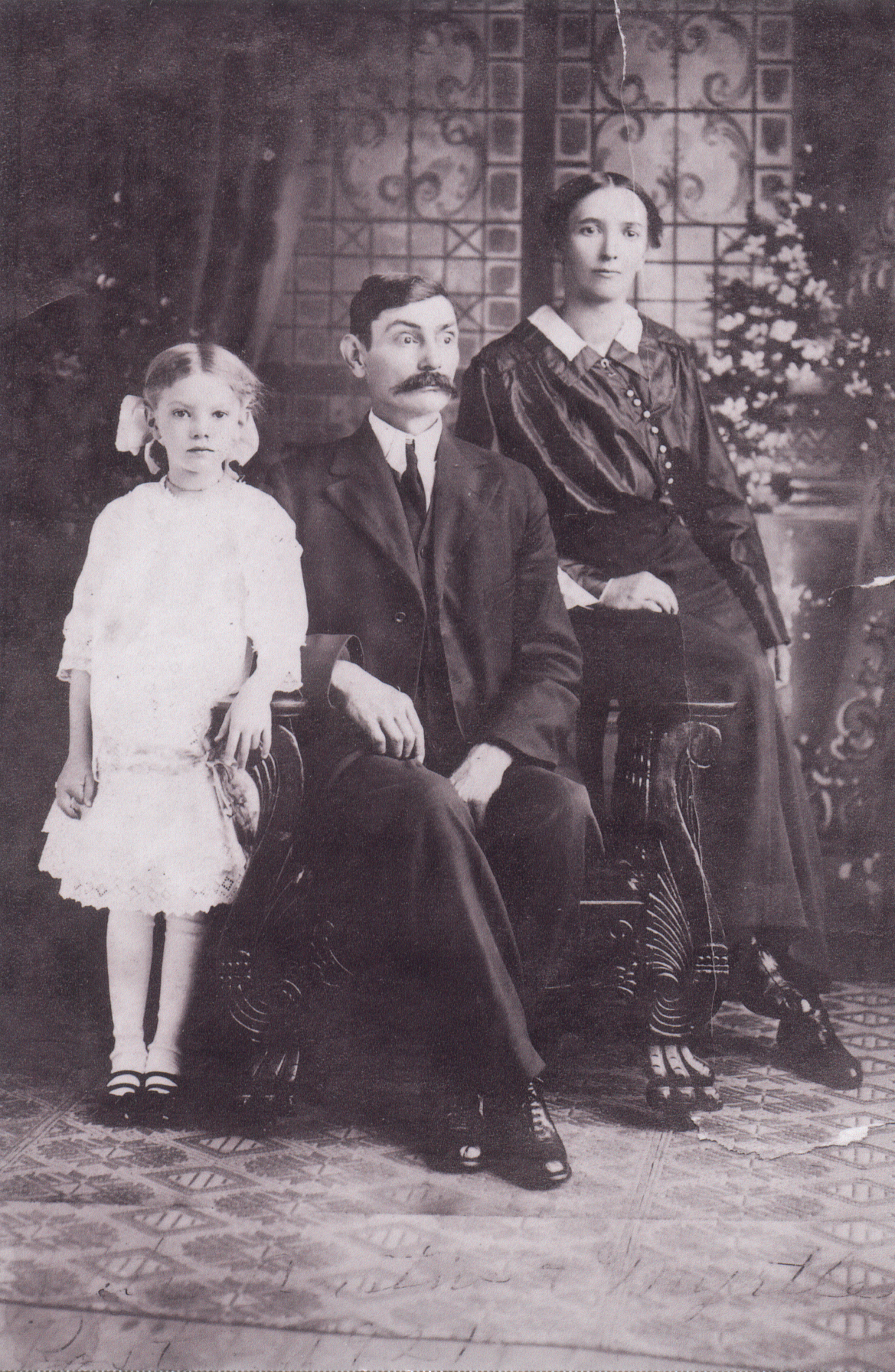
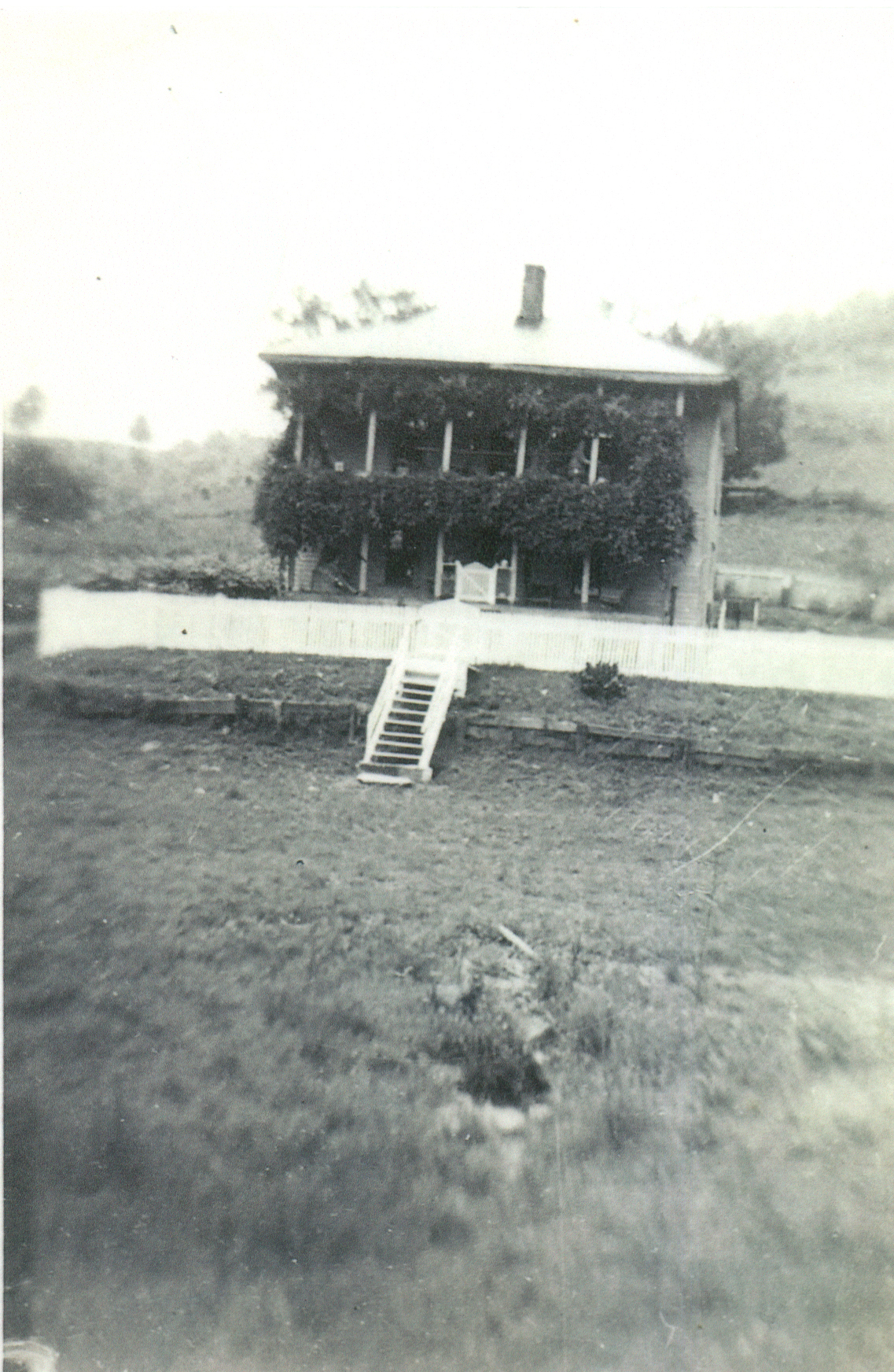
Among the many stories she shared with me was one about attending a square dance that was held over a funeral parlor and another about confronting a mean-spirited farmer when she was a little girl to get the man to return her five pet turkeys, all the while her daddy sat on the hillside and watched. She also told me how her mother one Christmas bought her a doll that cost $12—“an unheard of thing at that time”—with money she earned by carrying eggs, butter, and milk on horseback to a coal mine, and how one time when she was helping lay out an old woman for burial she accidentally caused the corpse to make “a little gurgle” that scared the other women out of their wits. There was a story about a witch and another about the ghost of a murdered peddler. At the end of our recording session when I complimented her on her wonderful stories, Oleta laughed and said, “Do you think I could get a license to tell stories?”
My next Belle to share her stories was Betty Farmer (Mason County). Like Oleta, she was also a master storyteller with an infectious laugh and a moral philosopher of the first order. Many of her stories were about acts of generosity and gratitude. But there were also stories about human folly, all of these played out within the context of her extended family.
One story that stood out was when she was a little girl and her mother told her to plant a sack full of beans. Well, she planted some of the beans but soon grew tired and bored with the job, as children oft will do. So she poured the rest of the beans into an old hollow tree stump. Her ruse, however, was discovered some time later when the beans sprouted and began growing out of the stump for all to see. Her last story concerned the years she spent caring for her ailing mother and how she came to see that their roles were reversed. She was the child who was cared for by a loving mother but then she became the mother and her mother the child in need of her caring. It’s a simple insight but the way Betty told it left an impression upon me that remains to this day.
And another lesson I received from the stories Betty told was that perhaps we should question the assumption that we should always strive to get the best of everything, or to always be first. Betty believed that occasionally we should step back and let others get the best, or be the first. Again, a simple idea but one that I realized sprang from a truly generous spirit.
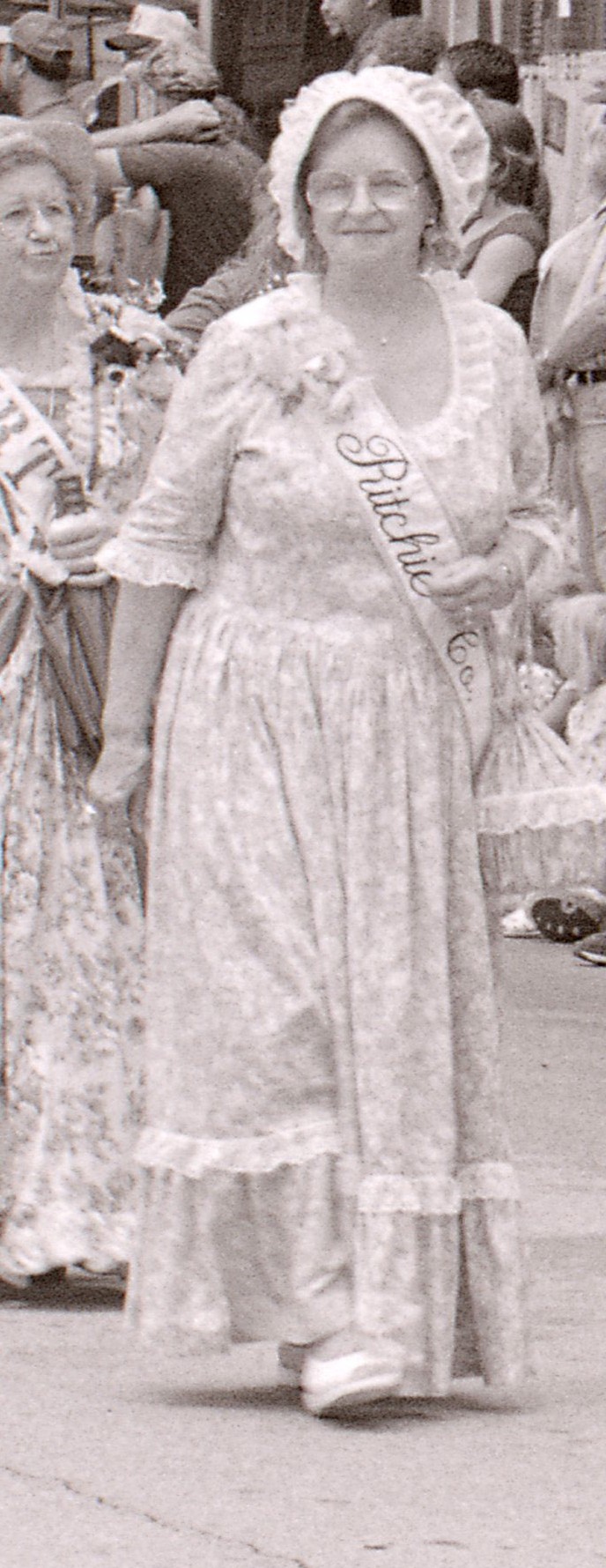
The last belle I will talk about is Mary Sommerville (Ritchie County). When she gave her little talk at the Belle’s Picnic she held up a self-published book that chronicled her childhood growing up on a farm at “the head of the holler,” during the early years of the twentieth century. She decided to write the text, select the photographs, and take them to a printer to be made into a book that she could give to each of her grandchildren and great-grandchildren. Well, I figured if she went through all of that she must have some family stories to tell.

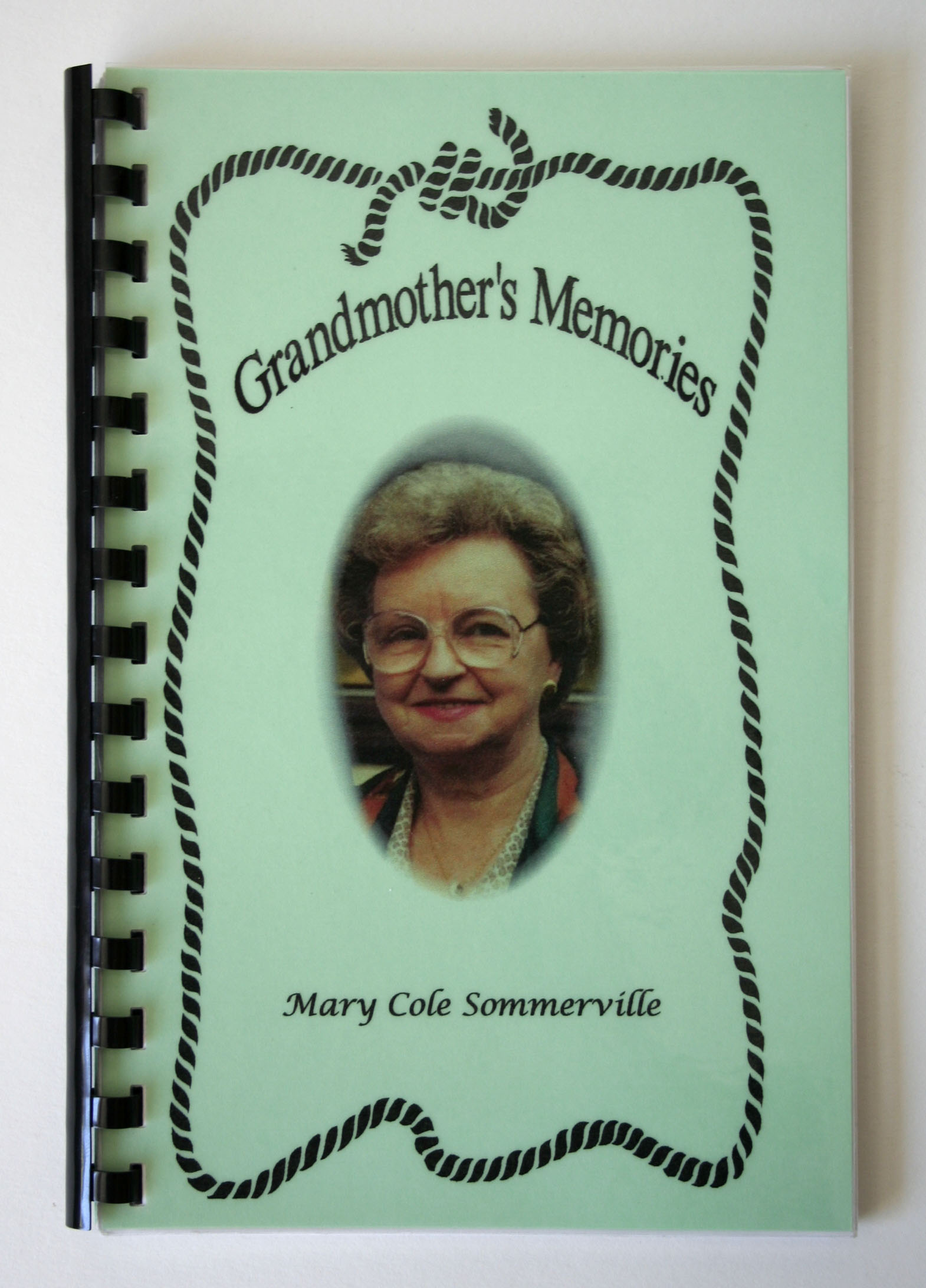
“I had only one book left after I gave one to everyone,” she said, “and for some reason I threw it in my bag when I came here. Now I know why I did that. It’s because I want you to have it.”
And, of course, she did. One had to do with how her father would hitch up a horse and pull a sled down the holler on snowy winter mornings so he could pick up all the children and deliver them at the one-room schoolhouse at the mouth of the holler. Having once owned a farm located at the head of the holler, I could picture all of this in my mind, especially since we had a no-longer-used white one-room school house at the mouth of our holler.
So after a half hour or so of recording her stories we went out into the hallway to where her patient husband was waiting. We kept chatting and then she asked me a question.
“You mentioned when you introduced yourself to us that you once lived on a farm in Gilmer County. I’m curious, where was that?”
“It was near the town of Troy. My farm was on Wolfpen Run. In fact, I’m planning on visiting the farm after the festival.”
Mary then gave me a look of great intensity. “Where on Wolfpen Run was your farm?”
“It was at the head of the holler, like the farm you grew up on,” I said. Mary reached over and put her hand on her husband’s arm as if to steady herself. I didn’t know what was going on.
“That’s where I grew up,” she blurted out. “On Wolfpen Run.”
But I thought you were from Ritchie County,” I said, my own thoughts in a jumble of confusion.
“No, I grew up in Gilmer County, on Wolfpen Run, and only moved to Ritchie County after I married my husband.”
This is all true. We both had to brush tears from our eyes. She and I had loved the same farm. I could only wonder, what were the odds for that to happen?
The next day was Sunday and the festival was winding down. I happened to walk past the dormitory where the Belles had been housed and I found them now standing out front in their “street clothes,” the old-fashioned dresses packed up in their suitcases, waiting for the bus that would take them home.
Well, I joined the group and promised the ladies I’d interviewed that I would send them a copy of their interviews so they’d have them for their own families. Mary Sommerville was also there, and with a grand smile she handed me a copy of the book she had written.
“I had only one book left after I gave one to everyone,” she said, “and for some reason I threw it in my bag when I came here. Now I know why I did that. It’s because I want you to have it.”
Had she handed me a pouch of gold coins, I couldn’t have been more pleased. Again, we both had to fight back tears as we hugged. Then the bus pulled up and the women climbed aboard. I kept waving as they drove away. And that’s the story of my encounter with the Glenville Belles.
The 2026 West Virginia State Folk Festival will take place June 18-21. Visit https://www.wvstatefolkfestival.org/ for more information! -ed.


JOE McHUGH
McHugh, Joe. "The Belles of Glenville ." Goldenseal West Virginia Traditional Life, Summer 2026. https://goldenseal.wvculture.org/the-belles-of-glenville/