By Dr. Katharine Lane Antolini
The weather forecast for Buckhannon the first week in November 1985 predicted “breezy, rainy weather” courtesy of Hurricane Juan. By the end of that week, an estimated ten inches of rain fell on West Virginia. Throughout the state, rivers crested ten to fifteen feet above flood level, and rising waters overwhelmed communities by the pre-dawn hours of November 5. President Ronald Reagan designated 29 counties eligible for federal relief assistance in the wake of 47 deaths and an eventual tally of $500 million in property damage statewide.
Accounts compared the devastation in specific communities to that commonly seen in war zones. It was as if areas were hit with “an atomic bomb filled with water,” described one witness. Three thousand National Guardsmen traversed the state, invoking images of 1940s war-torn Europe, according to The Inter-Mountain, as the soldiers “huddled about open fires giving the devastated little West Virginian towns the appearance of liberated French or Italian villages in World War II.” Perhaps The Record Delta best expressed the legacy of the event in the state’s memory: “The day of the flood is stamped forever on the consciousness of West Virginians as indelibly as the day John F. Kennedy was shot.”
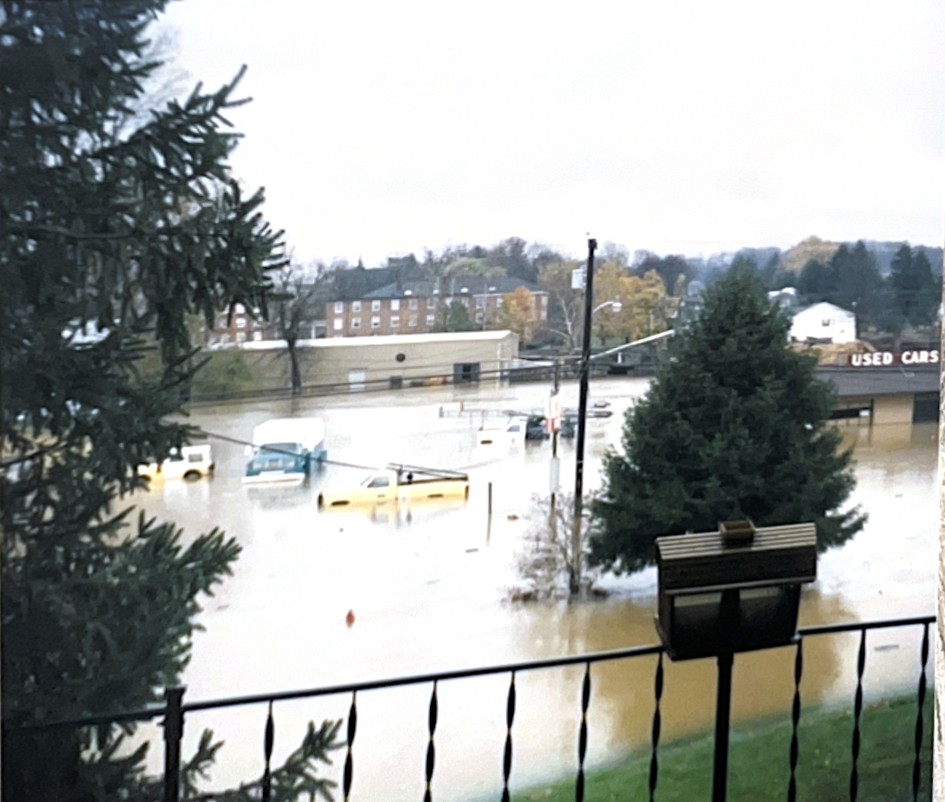
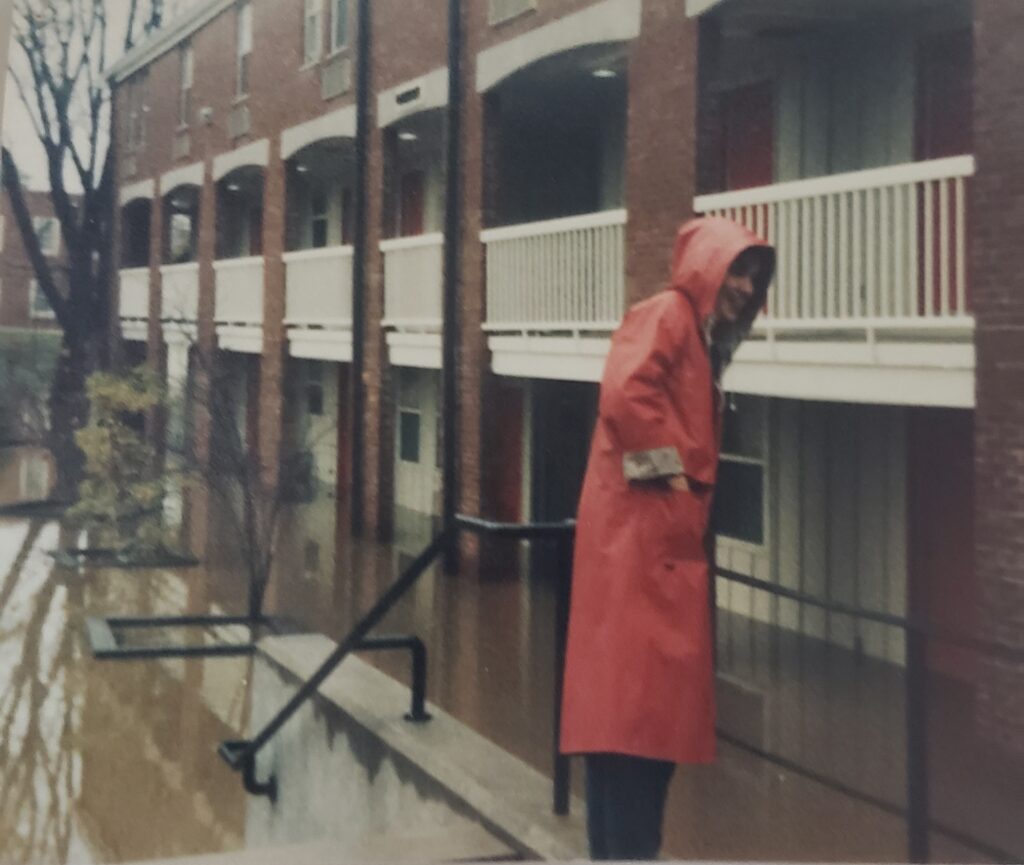
The rising waters threatened the campus of West Virginia Wesleyan College, a small liberal arts college with 1,300 students located in the city of Buckhannon, Upshur County. “It was just raining cats and dogs. I mean it was a real rain,” recounts Jeff Hutchinson (Class of 1986). As he watched the river swell, he remembered warning his friends, “Boys, this [expletive] is about to get really serious.” But they did not believe him. As a precaution, he moved his new Bronco truck to higher ground, fearing potential repercussions from his father. “I figured if the water got that high, then I had bigger problems than Dad.”
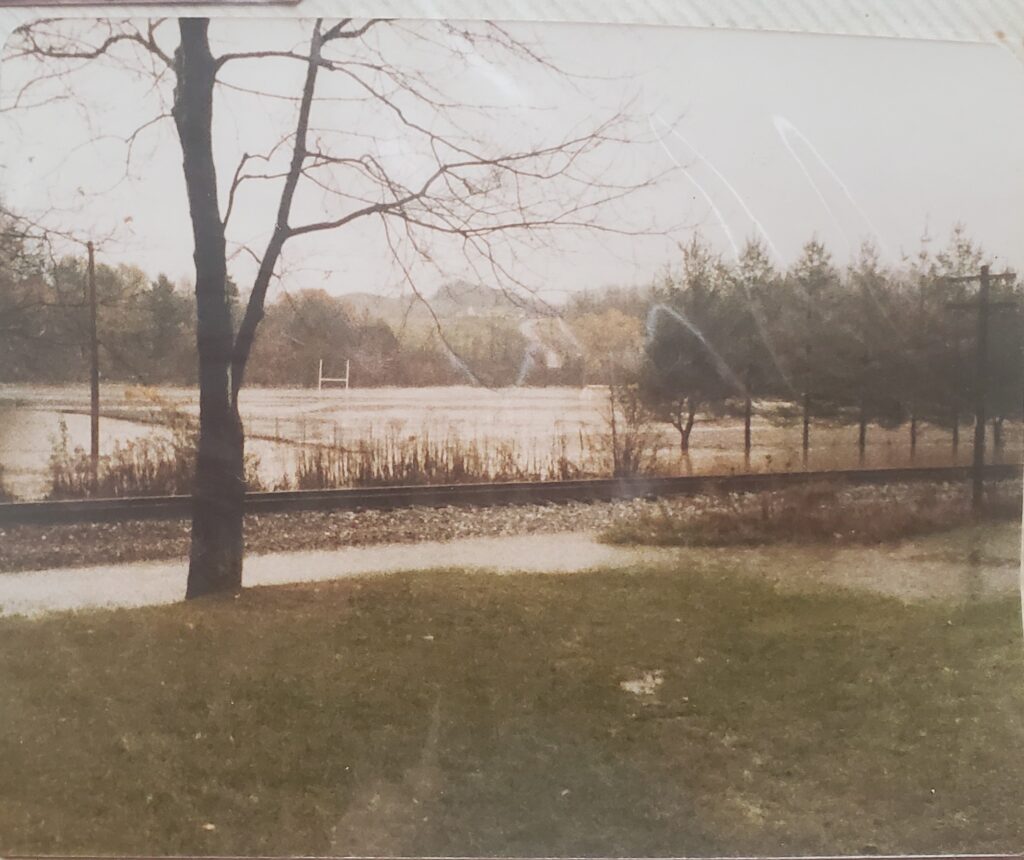
Hutchinson’s prediction was correct. The Buckhannon River that winds the outskirts of campus overflowed its banks at 10 pm Monday, cresting at 30 feet (7 feet above flood level) the next morning. The water rushed into the college’s maintenance building and practice football field, closest to the river. Kirk George (Class of 1986) swears the water touched the crossbars of the goalpost.
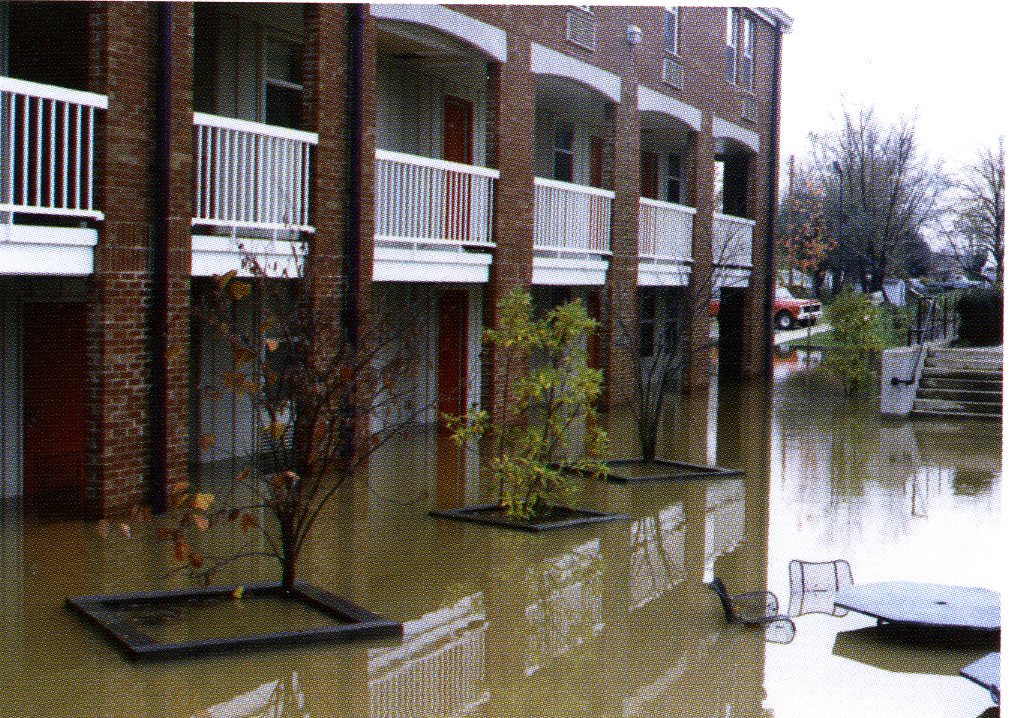
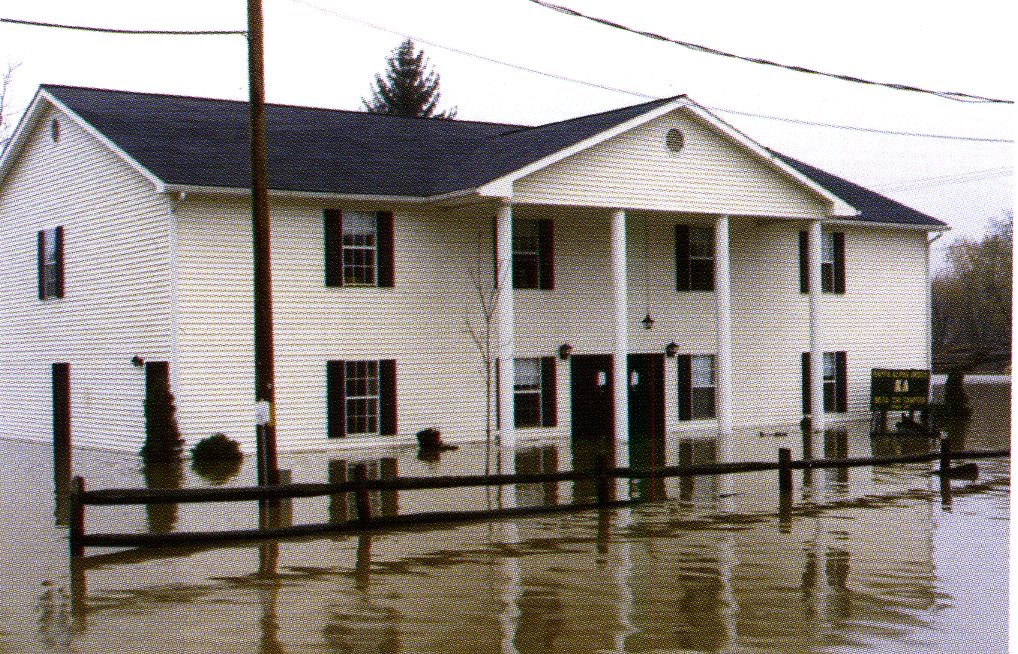
On the east side of campus, the water reached the Camden Apartment complex. From her second-floor balcony, Donna Cowan Crafford (Class of 1986) and her roommates watched the rising water, thankful they were not on the ground floor. Soon, security guards told everyone to evacuate and led them through waist-high water toward the center of campus. “It was dark and ominous,” she remembers. “We could hear the water moving in the distance.” Those on the first level had enough time to secure belongings atop bunk beds and closets before evacuating. Out of an abundance of caution, Lough Roberts (Class of 1986) decided to take his television, carrying it over his head as he waded through the water. Three feet of water would swamp his first-floor residence by 2 a.m.
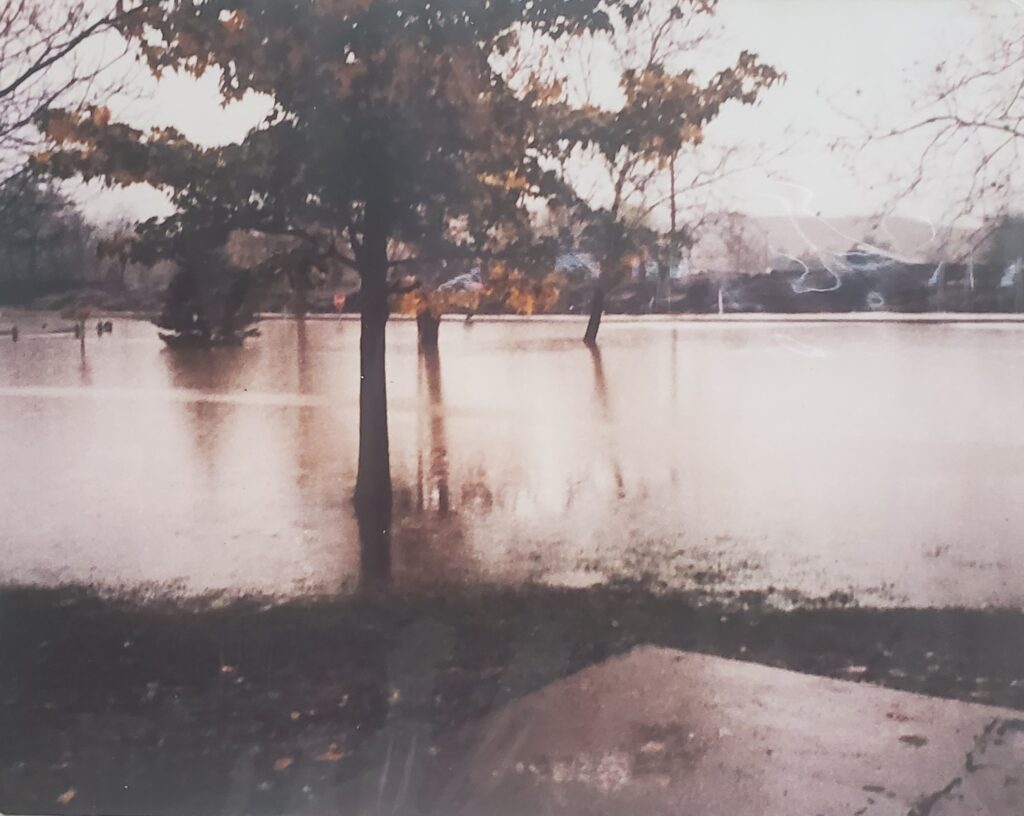
On the west side of campus, groups of male students physically lifted cars out of the water’s path in low-lying parking lots. And the brothers of the neighboring Kappa Alpha house evacuated all those sheltered upstairs as the water inundated the first floor. They jokingly shouted “Women and children first!” as girlfriends scrambled into awaiting boats and the men ferried them to higher ground, wading alongside in 4 feet of water. For years, an interior wall of the house bore a memorial mark of the water level.
The entire campus was plunged into a brief period of uncertainty following the loss of electricity, heat, phone service, and an implemented boil-water advisory. Many alums have only hazy memories of those few days. They recall being wet and cold and sitting together in dorm hallways lit by candles. Although the electricity was restored by Tuesday afternoon, the boil-water advisory meant eating cold cereal and sandwiches from disposable plates and utensils in the dining hall, and refraining from taking showers.
Others remember waiting it out at off-campus parties after rescuing merchandise from a local liquor store that was forced to clear its stock. (The state drinking age was still 19). Several students were tempted to canoe and even swim across flooded quads and athletic fields. “Thank goodness for the lack of wisdom when you’re 18 to 21, because you have great memories of swimming through the flood waters, right?” reflects Jennifer Johnson Bunner (Class of 1987). Fortunately, she knew better than to play in water mixed with debris and sewage; thus, she was spared the requisite tetanus shot.
George Perry (Class of 1982) was watching Monday Night football with former fraternity brothers at Phi Sigma Epsilon when the river rose and blocked his way home. When telephone services were restored, he volunteered at the campus switchboard to answer the surge of incoming calls. Local media outlets mistakenly reported that the campus was deeper underwater and closed. Such a report, mingled with the national media accounts of the statewide crisis, naturally led concerned parents to call for more information. He reassured parents that everyone on campus was safe. Yet one mother was harder to convince, remembers Perry. “No, you don’t understand. My son would be the idiot out kayaking in the flood waters,” she insisted. Soon after, the Dean’s office received a report of a student kayaking through Wendy’s restaurant drive-thru. “I never confirmed if the two were related,” admits Perry, “but it was always funny to think it was the woman’s son.”
The campus resumed regular operations as quickly as possible. Students evacuated from the upper floors of the Camden complex returned to their apartments by Wednesday. The damage to the first floor was minimal. The carpeting was the primary casualty, and the maintenance staff began the repair work the next day. Two other residence halls had flooded basements due to backed-up drains, but the water easily receded. More importantly, classes recommenced after one day. Hutchinson takes pride in the resilience of his generation. “When I went to college, we stopped for nothing—sleet, snow, floods—nothing.” Admittedly, attendance may not have been as high as expected. In a few cases, faculty members were unable to make it to campus due to blocked roads or the need to address flood damage to their own properties. For students, not being able to shower for two days was a significant deterrent to attending class.
“For most alums, the flood was “just a blip” or a quirky memory from their college experience. Yet, for a few, it was a watershed event in their young adult lives.”
Not all student experiences were mundane; some alumni have profound recollections of events beyond campus life. For those students with families directly in the flood’s path, the memories are sharper. The devastation in other counties was more severe than in Upshur, and Nancy Henderson White (Class of 1987) left campus to help relatives in Hampshire County tackle the flood damage. (It remains that county’s worst natural disaster). Yet there were two fatalities in Upshur County. In Adrian, swift waters swept Jean Lane, age 57, as she attempted to reach her neighboring Aunt and Uncle’s farmhouse in the middle of the night. The couple called emergency services when they could no longer see the flickering of her flashlight.
Lane’s niece, Marie Lane Kantola (Class of 1988), was a Wesleyan sophomore. During the same night, firefighters evacuated her maternal grandmother from her house in central Buckhannon. Kantola’s Zeta Tau Alpha sisters provided emotional support as she waited for her parents to arrive from Ohio. Then, once the water receded, sorority sisters pulled soaked carpeting and discarded everything from the bottom kitchen cabinets in her grandmother’s home as the family made arrangements for her Aunt’s funeral.
Members of several Greek organizations participated in the cleanup efforts. Despite the mess in their own house, Kappa Alpha brothers unloaded supplies from National Guard trucks and removed debris from local businesses. “A lasting memory was walking toward KA’s fraternity house,” recounts Michael Perkins (Class of 1988), “and seeing the doors open, and a group of students come rowing out in a canoe. Off they went to find some way of helping.” Throughout campus, individual students set out on their own or organized under faculty leadership to assist flood victims.
Dr. Katharine Gregg led her students into the community on Thursday, November 7, instead of conducting the scheduled environmental biology lab. The class reported to the Wesleyan Chapel, where they were divided into small groups equipped with “2 mops, 2 brooms, and a bucket filled with cleaning supplies,” recalls Gregg. They walked to the small neighborhood between the river and the campus, which had been under nearly five feet of water just two days before. Under the leadership of Chapel Dean Jerry Wood, the campus coordinated volunteer crews, offered childcare and transportation, and distributed donated cleaning supplies, clothing, and furniture to those in need.
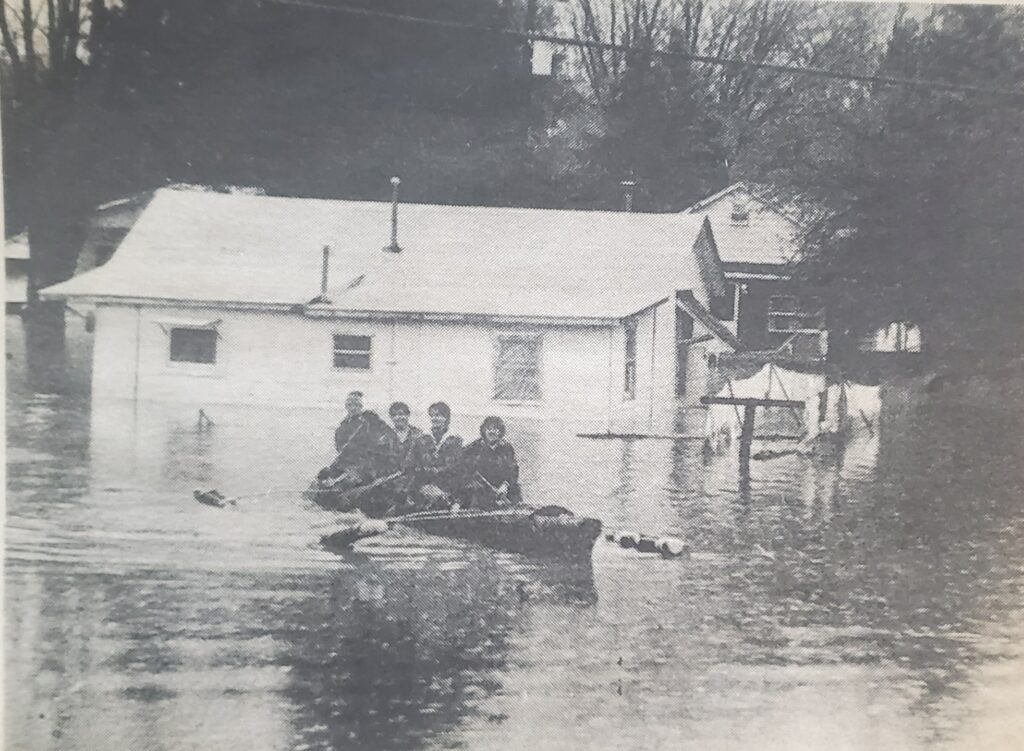

Over 350 Wesleyan students participated in the relief work. “Our students had classes to go to, and some were displaced themselves, but there was a general sense that something had to be done,” recounts Dean Wood. Decades later, alumni recall their volunteering experiences amid such devastation—one account estimated over 800 Upshur County homes and businesses were affected by the floodwaters. “I went with another to help clear mud from a woman’s flooded house,” remembers Cindy Wise Milner (Class of 1989). “The damage was extensive. We worked for hours and barely made a dent in the mess. I remember feeling so bad for that person.” Jennifer Bunner aided in the cleanup of northern Buckhannon, nicknamed the Island. Almost entirely surrounded by the river, it was one of the hardest hit areas. It was also the location of the county’s second fatality, Joseph Gould, age 59. Bunner’s memories include meeting Gould’s mother, Sylvia, as they salvaged items from her son’s home. For unknown reasons, he had refused to be evacuated alongside his neighbors Monday night.
Wesleyan’s outreach efforts did not go unnoticed by the community. Residents expressed their appreciation in the local newspaper: “Thanks to the four student nurses from the college,” read a letter to the editor. “They were wonderful, caring for the people and helping serve our food to us. They will all be good nurses, and may God go with them in their field.” Throughout November, The Record Delta chronicled the services of the Red Cross Center and the Disaster Assistance Center (DAC) located in Wesleyan’s McCuskey Hall. Paid government workers and volunteers responded to the immediate needs of flood victims and opened 400 case files applying for extended federal assistance. Students willingly worked double and triple shifts for these agencies.
The 1985 Flood left a varied legacy for the West Virginia Wesleyan campus and students. For the college, the crisis ultimately brought growth. The neighborhood caught between the Buckhannon River and the campus has now dwindled to a few houses, providing space for additional Wesleyan athletic fields and a walking trail. For most alums, the flood was “just a blip” or a quirky memory from their college experience. Yet, for a few, it was a watershed event in their young adult lives. Mark Nolan (Class of 1986) was the editor of the student newspaper, The Pharos, that fall. As Wesleyan students, he reminisces, “We were living this protected, easy life that so many of us were blessed to have.” Beyond their sheltered life on campus, however, families were losing their homes, livelihoods, and loved ones. He admits to having been shaken by that revelation. Forty years later, Nolan stands by the sentiment he expressed in The Pharos as a college senior: “As odd as it may sound,” he had written, “I think the flood was, for many of us, a very good experience. It is my hope that memories of the flood and the services of both volunteers and campus organizations will not be soon forgotten.”

KATHARINE LANE ANTOLINI
Antolini, Dr. Katharine Lane. “Wesleyan Under Water: Remembering the Flood of 1985 on the West Virginia Wesleyan Campus.” Goldenseal West Virginia Traditional Life, Fall 2025. https://goldenseal.wvculture.org/wesleyan-under-water-remembering-the-flood-of-1985-on-the-west-virginia-wesleyan-campus/